Guest lecture at Hasanuddin University

As I mentioned in an earlier post, my research in Indonesia would not be possible without the help of local counterparts. I work with some excellent people at Universitas Hasanuddin in Makassar, Sulawesi.

Banner

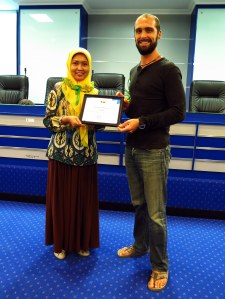
Last week I was invited to teach a lecture about the research I have been doing so far. The idea was to share ideas with local researchers and to suggest potential areas of research for students at the faculty of marine science and fisheries. I was honoured to get such an invitation. As a researcher you are often working on your little island (often literally in my case) and we sometimes forget that sharing knowledge should be the ultimate goal of doing your research.
FrameI feel this is even more important when working in countries like Indonesia. Places which are rich in biodiversity and natural resources, but often lack the infrastructure and resources to protect it in a way that benefits the local people. Over the last years I have met many very motivated and talented researchers, but all too often they do not have the resources to reach their full potential. Things that seem simple for those of us fortunate enough to be based in a first world country often are complicated for those who don’t. Whether it’s attending international conferences to stay up to date with what is new and network with other researchers, buying good quality equipment to do your research or writing scientific papers in a language that is very different to your own…

To me it seems logical to try and work with researchers and give something back for letting me do my work in their home country. Too often researchers or big international companies come in, do their thing (and in some cases make a huge profit out of it) without giving something back. “Bioprospecting“, the search for natural products or compounds to use and commercialise is becoming more common and is an important source of new medicines (among others). However, sometimes this turns into biopiracy, when compounds are taken without permission or without compensation. Which is why there is such a thing as the Convention on Biological Diversity and the newly ratified Nagoya Protocol. It is also one of the main reasons why the process of obtaining research permits in Indonesia is rather…complicated.

Group photo.jpg

So I talked about my research and why I think it is important and very exciting. I also talked about some of the new things I found out (hopefully more about that in the near future) and about some of the ideas I have for new areas of research. Hopefully this was the start of more future collaborations with researchers and students in Hasanuddin. The little critters I’m studying can definitely do with some more research attention!

I’d also like to use this blog to say a big thank you to the people at Unhas who invited me (ibu Rohani and pak Jamaluddin) and to the people who showed up for my little talk. It was a great experience for me and I hope it won’t be the last time I visit.


The story of a science hobbit

Luke, science hobbit

Luke, science hobbit

The research project I am working on might be one I designed and that will (hopefully) result in me getting a PhD degree, but I could never succeed in this without the help of many other people. I have got three supervisors in Australia, local counterparts here in Indonesia, connections in the dive world, friends and family who provide moral support,… And then there’s my trusty science hobbit, Luke. As much as everyone else has supported me and helped out so far, I could not have achieved a fraction of what I have in Indonesia without Luke’s help. So I am using this blog to thank him and to tell his story (and to shamelessly promote his awesome photography work while I’m at it).

Luke and I met in 2011 where we were both working for Coral Cay Conservation in Napantao, Philippines. He was one of the two science officers, while I was responsible for making sure everyone was diving safely. Luke and Jen (the other science officer) were amicable kown as science hobbits, a title that I have kept on using ever since. We shared a room for months, so we got to know each other very well. Besides sharing a passion for nudibranchs and by extension any other ocean critter, it turned out we also make great dive buddies.

Luke and me in Philippines, 2011

Luke and me in Philippines, 2011

As most divers will know, diving with some buddies just works better than with others. It’s more than just safety and doesn’t necessarily have anything to do with how well you get along on land. I have dived with partners and friends who were great divers, but which just didn’t work as a buddy. Vice versa I’ve dived with people that I hardly knew on land, but with whom diving just went super smooth. Anyone who has ever had the chance (or bad luck) to dive with Luke and me will contest to the fact that we work well underwater. We not only know each other’s dive style, air consumption and intentions, we actually manage to have proper conversations while we’re diving. I have vivid (and hilarious) memories of us discussing which species of nudibranch we found on a dive in Komodo, ignoring the ripping currents because we needed to settle that particular point right then and there 😀

Photographing manta rays in Ecuador

Luke photographing manta rays in Ecuador

So who is this science hobbit really? I can tell you that he is not only a great diver, he is also one of the most knowledgeable field marine biologists I have ever met. You need coral identified? Ask Luke. Not sure what fish it is? Ask Luke. Need to know more about coral nurseries? Ask Luke. Want to build a coral reef aquarium, do fish surveys, know more about conservation, diving in Fiji, Madagascar or Philippines? Luke’s your man! I even have to admit that he might be better at spotting baby frogfish than I am. On top of all that, he is also genuinely a nice guy who is great fun to work with. All of this is probably why he has been asked to work with so many NGOs and researchers in places like Fiji, Philippines, Maldives, Madagascar, Ecuador, Indonesia,… It is definitely the reason why I asked him to come and help me in Indonesia for the past 3 months.

To add to those skills, he is also not half bad as a photographer. When I say not half bad, I mean pretty bloody amazing! Most of the pictures on this blog are his work, so go back, read through some of the posts and have a look at the pictures. Even better, check out his website or facebook page. You can even order prints of his pictures as well, so check it out! On the site you can order prints of some of his best shots. At the moment Luke is giving 50% off prints for the first 20 prints ordered, just use the code FROGFISH when ordering your prints. If anyone is still looking for Christmas or birthday present ideas for ocean lovers, it’s your chance to get a good deal.

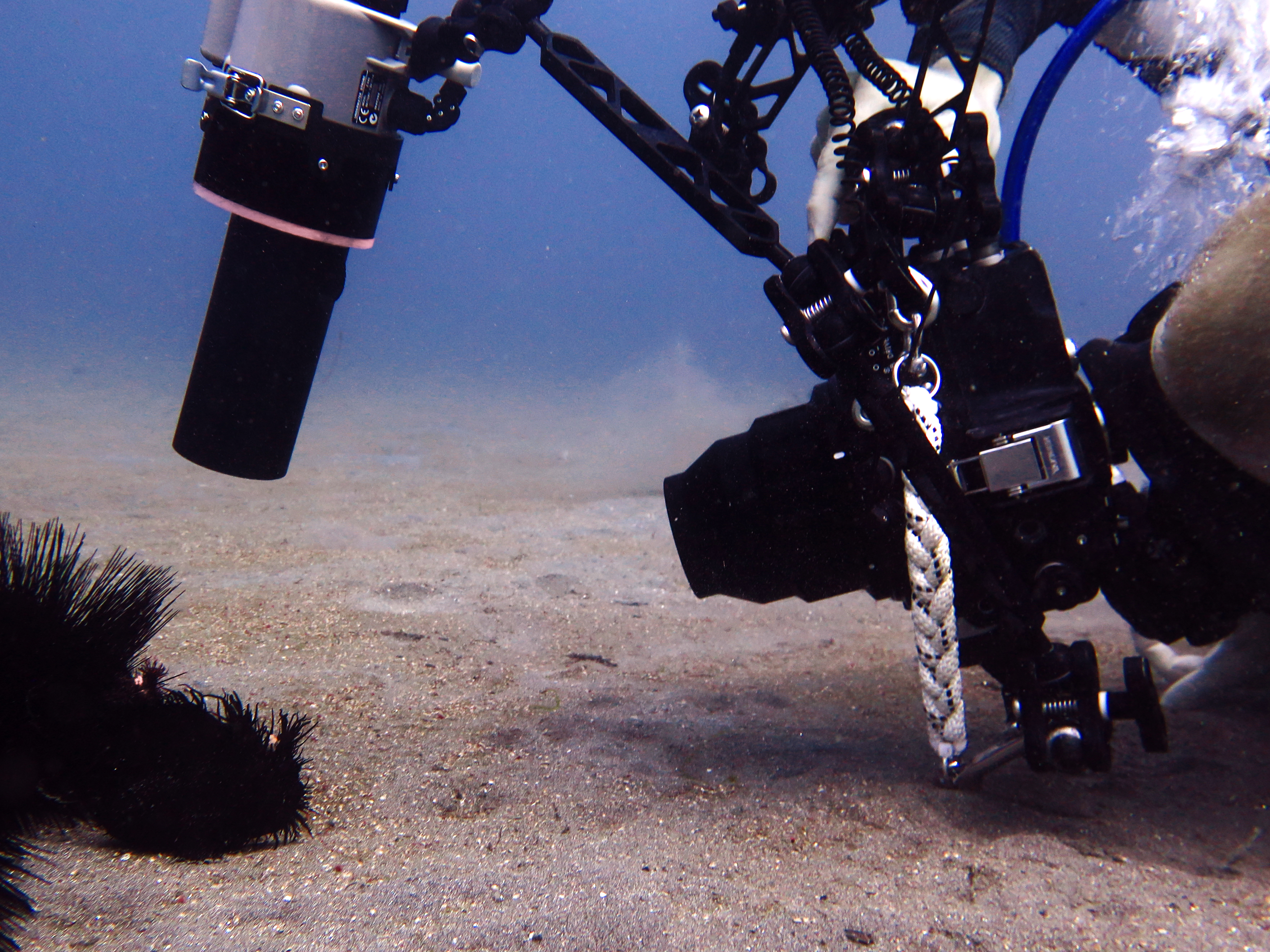
Luke in action, find the black frogfish

Luke in action, find the black frogfish

Unfortunately I had to say goodbye to one of my best friends and greatest colleagues ever. He has been whisked away to Australia by his girlfriend to go and explore that part of the world. In all fairness to Katie, she did let me use him for a good 3 months, significantly postponing their Australia plans. Besides that, she is just as amazing a person as Luke is, so I am wishing both of them all the best on their new adventures. I sincerely hope they have the best of times together and that they get all the good luck they both deserve.

Once again a massive thank you Mr. Luke, hoping our next dive together will be sooner rather than later!

Moving on

It has been a while since the last blog, mostly since we’ve spent the last week in places with very limited internet access. Here’s what we’ve been up to…

We left Lembeh last week.  Having done 5 weeks worth of research in a muck divers’ paradise, it was to move on. During our time in Lembeh we spent more than 100 hours under water, collected nearly 100 sediment samples, did 70 transects, built a coral nursery, wrote a small fish-ID guide, took well over 2000 photos, collected dozens of surveys, talked to divers and diveguides and had an ab-so-lutely amazing time! You would think that after all of that diving over sand we might have been ready for a break. So the first thing we did when we left Critters@Lembeh, was head straight to another island for some more diving.

Part of the team in Critters@Lembeh

Part of the team in Critters@Lembeh

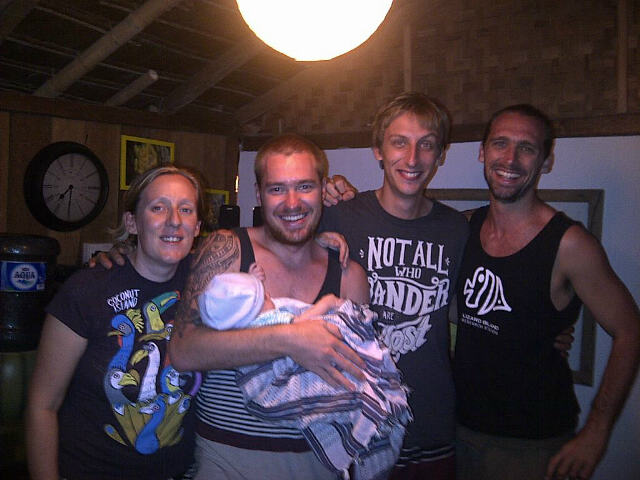
As it happens, good friends of Luke (Sophie and Simon) own Nomad Divers, a small dive resort on Bangka Island. Bangka is a 3 hour boatride away from Lembeh, and is a relatively un-explored dive destination. It is close to both Lembeh Strait and Bunaken, two of the world’s most renowned dive destinations, but it can hold its own between those bigshots. With loads of pygmy seahorses, great reefs, access to muck dive sites and even the occasional dugong, it’s not a bad place to dive 😉

Sophie, Luke, Max, Simon and me

Sophie, Luke, Max, Simon and me

Pygmy Seahorse

Pygmy Seahorse (Hippocampus bargibanti)

You might have heard about Bangka recently, as it has been in dive and conservation-news a fair bit. A tin mine had been built illegally on the island a few years ago, and multiple NGO’s and divecentres have been fighting a long legal battle to close it down. With success, as last week the mining company lost the court case, effectively shutting down further mining. Which made our dives there even more enjoyable. Besides pygmy seahorses, we obviously had to check out the muck dives Bangka had to offer. We weren’t disappointed, as we found some beautiful little critters, some of which we hadn’t even seen in Lembeh.

Tarsier (or a Gremlin, not entirely sure)

Tarsier (or a Gremlin, I’m not entirely sure)

We said goodbye to Sophie, Simon and their (very cute) 3-months old son Max yesterday. Since we can’t dive before flying, we made decided to make the most of our forced terrestrial time, by visiting the Tangkoko National Park. The park is home to Crested macaques (endemic to Sulawesi!), Tarsiers and apparently a lot of birds as well. Which we only noticed by the swarms of bird watchers in the guesthouse where we were staying. If you think I am going overboard in my passion for marine critters, I invite you to come to Tangkoko and have a look at these bird-people, it’s rather entertaining really (and something of a terrestrial mirror for me as well). In any case, I guess we were not sophisticated enough for the bird watchers, but Luke and me did have a great time watching a large troop of macaques and 4 tiny little tarsiers.

Luke and black crested macaques

Luke and black crested macaques

The next stop is Bali, where more critters are waiting to be surveyed. We will also be deploying SMURFs in the water, more about them in a next blog!

Research and paperwork

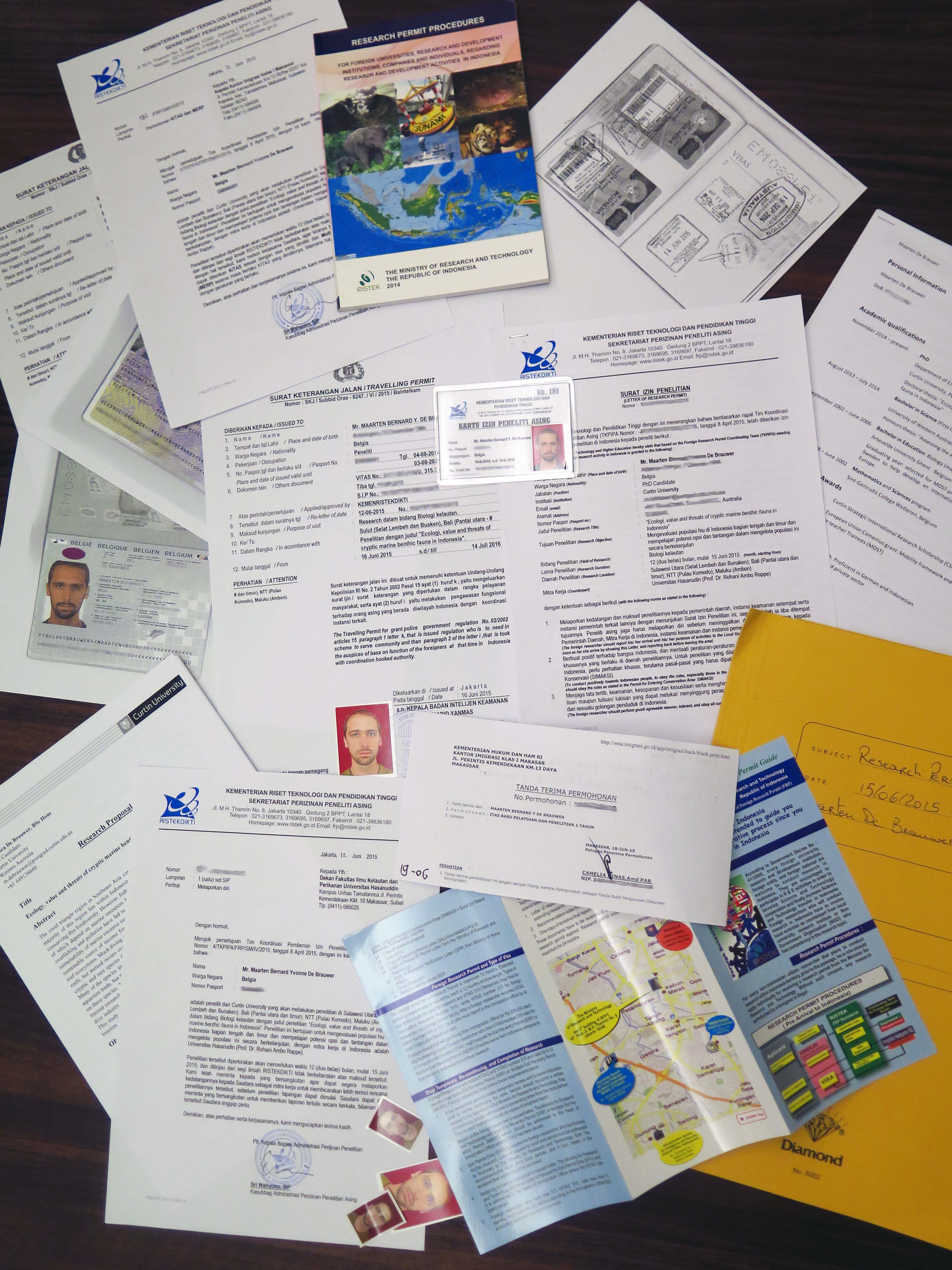
Research permit paperwork fun!

Research permit paperwork fun!

Some reactions I often get when explaining what I do for a living are: “You’re so lucky!”, “Do you need someone to come along?”, “How did you pull that one?” or anything along those lines. While this is undoubtedly true – I AM very lucky to be doing this, I do occasionally need assistance in the field, working my ass off – there is more to research than diving in gorgeous locations and looking at amazing critters. A lot of my work happens behind a desk, I’m not just talking about the analysing data, before you can even start collecting any data all, there’s preparation. And preparing for an extended fieldwork season in Indonesia and Philippines takes patience, lots of paperwork and a certain brand of single-minded pigheadedness.

So what did it take to get me here? The key thing anyone who wants to do research in Indonesia needs is a research permit. They are notoriously hard to get, so much that there are stories out there of universities actively discouraging research in Indonesia, since it’s too much hassle. I started looking into the details almost a year ago (before I even knew for sure if I had funding for my project). Besides a lot of standard paperwork, the crucial point of any application is an Indonesian counterpart. This would preferably be someone in a respected university or government organisation. I work with the kind people at Hasanuddin University in Makassar. Besides the counterpart you also need: research proposals, references, copies of passports, cv’s, pictures, proof of funding, medical clearance, equipment lists,… If you manage to assemble all of it, you can apply and hope for the best. For me, it took about 7 months between starting the procedure and getting notice that my application had been accepted.

Prof. Jamaluddin and Prof. Rohani, my counterparts at Hasanuddin University

Prof. Jamaluddin and Prof. Rohani, my counterparts at Hasanuddin University

This, however, is not the end of the road. It get you two things: a visa for a year, and the privilege of getting to know many of the Indonesian administrative buildings and staff up close and personal. At the moment I am spending my days in Jakarta and Makassar running (well, strolling really, or taking taxis, it’s hot here) to various government agencies to get: research permits, letters of the police to allow me to travel, notices from the department of forestry that allow me to conduct research in national parks, documents from immigration that allow me to do my work, etc. I am hopeful to get all I need to start research by the end of next week.

But that only gets you permission from the Indonesian government to do research here. When working at a university, you also need their permission to do all the things you want to do. My research requires me to travel, dive, observe animals, interview people and do internet surveys. This means university requires me to do even more paperwork than the Indonesian government. Some of the documents I have prepared over the last months include:

  • Risk assessments
  • Travel applications
  • Animal ethics applications
  • Human ethics applications
  • Dive medicals
  • Travel diaries
  • Fieldwork plans
  • Travel checklists

This list is by no means exhaustive. I estimate that up until now, I have spent about 75% of my time on paperwork or other various administrative processes. But you know what the funny thing is?

I still think it’s amazing and love every bit of it!