Fieldwork 2.0

It’s that time again, after a few months of hiding behind my computer I’m starting the second big fieldwork season to collect data! I just arrived in Bali to sort out the last preparations for what will hopefully be a productive three and a half months of data collecting. I’m pretty excited about this trip, as I will be visiting some amazing places again where I’ll be working with great people!
IMG_0346

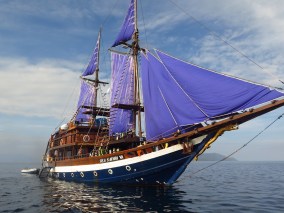
Home for the next 2 weeks

It all kicks off early tomorrow morning, when I’m leaving on a liveaboard trip to Komodo for two weeks. Safari Bali has once again kindly offered me a place on the Sea Safari VII, so I should be very comfortable while I’m trying to find frogfishesghostpipefishes and maybe the occasional manta ray or dragon. Once I get back from Komodo, I’ll be spending a fair bit of time in Bali again before heading to Lembeh Strait. The main thing I’m trying to figure out in Indonesia this year, is which human factors have the biggest impact on muck critters.

Like last year, I will again be doing presentations about marine biology and having long conversations with divers while I’m on the boat and staying at dive resorts. Some people might see this as a time consuming interruption of valuable research-time, but I really enjoy this aspect of my fieldwork. I feel it’s important as a researcher to share what you are doing with people who aren’t in academia themselves. What would the point be of all the work we do, if only a very select group of other researchers get to know about it?
ADEX

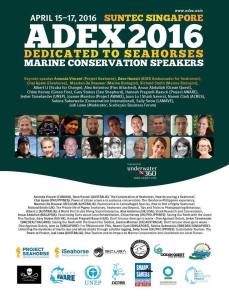
Which is why I am looking forward to the next stop after Lembeh: ADEX in Singapore. ADEX is the largest dive expo in Asia, with thousand of divers coming over to try to decide where to go for their next trip or what the newest trends are in the scuba diving world. I am very excited to have been invited to give a few talks about my research. In line with the theme of ADEX this year (Seahorses), I’ll be talking about pygmy seahorses, which I haven’t really done yet on this blog…

For the final leg of this trip I am heading back to Dauin in Philippines. Those of you who have been following the blog, will understand that I am rather happy that my good friend Luke (aka the Science Hobbit) is joining me again! Together we will be trying to figure out the best methods to study newly settled (=baby) critters. If you want to know how we’re planning to achieve that and whether or not we’ll succeed, keep an eye on the blog 😉

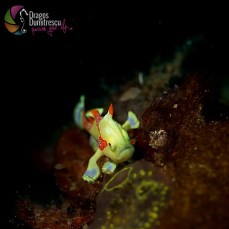
A pictus_juvMDB.jpg

Baby frogfish (A. pictus), finger for scale
Video Interview: The science behind the critters

A few months ago the Department of Environment and Agriculture at Curtin University asked me if I wanted to do an interview to explain what my PhD is all about. Since I am part of that department and I love to share how amazing my weird critters are, I obviously said yes.

The underwater footage was taken by myself, Luke and one of my supervisors during fieldwork in Indonesia and Philippines last year. You can watch the video on the Environment and Agriculture website, or right here:

On the move again: Dauin

After a few weeks of visiting my family in Belgium and loading up on chocolate, beer and hugs of my little niece, it was time to get going again. Just over a week ago I flew back to Asia and the first stop was a small town in Philippines called Dauin.

IMG_4430-p-web-logoSome of you might have already heard about Dauin. You might have heard/read me ranting on about how great the muck diving is, dived there yourself or maybe you’ve seen some of the many underwater photos appearing on various social media.  For those of you who haven’t heard of it, Dauin is a small town of about 25000 inhabitants in the south of Negros. The place is close to the city Dumaguete and sometimes the two are used as synonyms in dive circles (they are not). Dauin is a sleepy coastal town where most people used to make a living from fishing or farming. “used to”, because it’s rapidly getting renowned for its awesome muck diving.
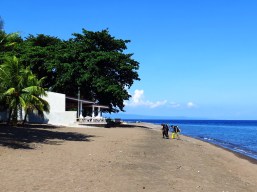
In all fairness, the story actually began with coral reef diving. Facing Dauin lies a small island called Apo. The reefs around Apo were the very first MPA (Marine Protect Area) in the Philippines and have been a poster child for MPAs in developing countries ever since. The fame of Apo brought in divers and it did not take too long before people discovered that the shore dives off Dauin were something quite special.

DauinThe beaches of Dauin are mostly made up of volcanic sand, though they are not as black as the ones you find in Lembeh. While there are a few small coral patch reefs, the real treasures are found in the sand. It’s muck diving at its best: you’ll find frogfishes, seahorses, mimic octopuses, flamboyant cuttlefishes, … The fact that most sites are easily reached and that there is a growing muck dive industry makes it an ideal area for me to conduct research.

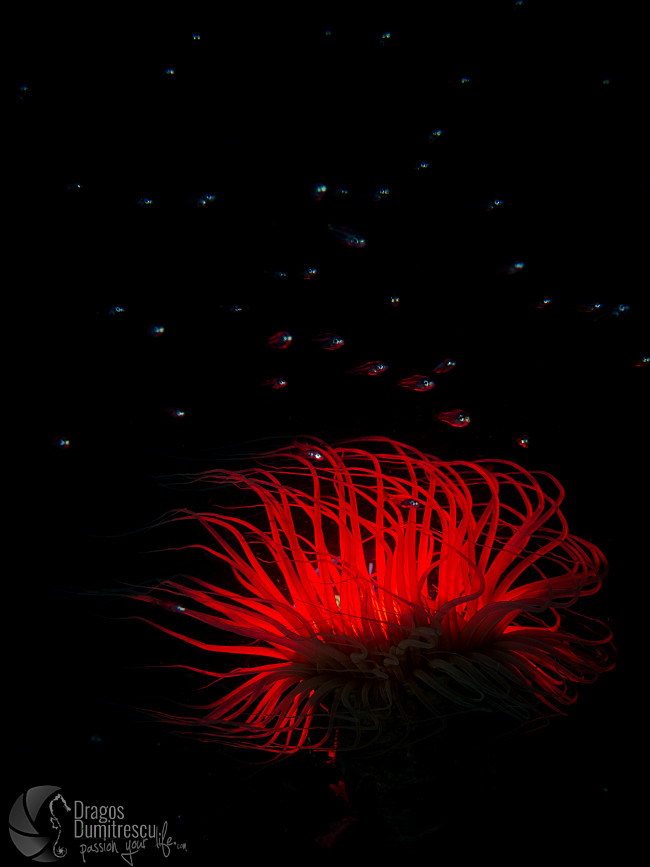
Last year I spent most of May in Dauin, doing a lot of diving and a lot of running around between divecentres to talk to people about dive tourism. This time I just went back for 5 days to talk to a few more people to fill in some gaps in my data on the socio-economic value of muck dive tourism. So unfortunately no research dives this time. Luckily I did manage to meet up with my good friend Dragos, who uses Dauin as a base to take some pretty sweet underwater photos. The underwater pictures in this post are his. If you want to see more of his (award winning) work, check out his site here.

img_9635-pm

The small trip to Dauin was the end of a productive, exhausting and entertaining research trip. I am writing this post in Manila airport, as I’m finally on my way back to Perth. After nearly 8 months of fieldwork and traveling it’ll be great to see my colleagues again and to start writing up some of my results. So keep an eye out on the blog for updates of what is going on. Or if you’re in Singapore in April, come and have a chat at the ADEX Dive expo, I am giving a talk and will be presenting some of my results.

img_2482-p-web

Guest lecture at Hasanuddin University

As I mentioned in an earlier post, my research in Indonesia would not be possible without the help of local counterparts. I work with some excellent people at Universitas Hasanuddin in Makassar, Sulawesi.

Banner

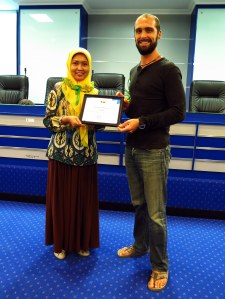
Last week I was invited to teach a lecture about the research I have been doing so far. The idea was to share ideas with local researchers and to suggest potential areas of research for students at the faculty of marine science and fisheries. I was honoured to get such an invitation. As a researcher you are often working on your little island (often literally in my case) and we sometimes forget that sharing knowledge should be the ultimate goal of doing your research.

FrameI feel this is even more important when working in countries like Indonesia. Places which are rich in biodiversity and natural resources, but often lack the infrastructure and resources to protect it in a way that benefits the local people. Over the last years I have met many very motivated and talented researchers, but all too often they do not have the resources to reach their full potential. Things that seem simple for those of us fortunate enough to be based in a first world country often are complicated for those who don’t. Whether it’s attending international conferences to stay up to date with what is new and network with other researchers, buying good quality equipment to do your research or writing scientific papers in a language that is very different to your own…

To me it seems logical to try and work with researchers and give something back for letting me do my work in their home country. Too often researchers or big international companies come in, do their thing (and in some cases make a huge profit out of it) without giving something back. “Bioprospecting“, the search for natural products or compounds to use and commercialise is becoming more common and is an important source of new medicines (among others). However, sometimes this turns into biopiracy, when compounds are taken without permission or without compensation. Which is why there is such a thing as the Convention on Biological Diversity and the newly ratified Nagoya Protocol. It is also one of the main reasons why the process of obtaining research permits in Indonesia is rather…complicated.

Group photo.jpg

So I talked about my research and why I think it is important and very exciting. I also talked about some of the new things I found out (hopefully more about that in the near future) and about some of the ideas I have for new areas of research. Hopefully this was the start of more future collaborations with researchers and students in Hasanuddin. The little critters I’m studying can definitely do with some more research attention!

I’d also like to use this blog to say a big thank you to the people at Unhas who invited me (ibu Rohani and pak Jamaluddin) and to the people who showed up for my little talk. It was a great experience for me and I hope it won’t be the last time I visit.