Fieldwork 2.0

It’s that time again, after a few months of hiding behind my computer I’m starting the second big fieldwork season to collect data! I just arrived in Bali to sort out the last preparations for what will hopefully be a productive three and a half months of data collecting. I’m pretty excited about this trip, as I will be visiting some amazing places again where I’ll be working with great people!
IMG_0346

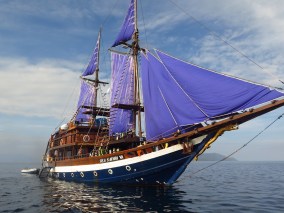
Home for the next 2 weeks

It all kicks off early tomorrow morning, when I’m leaving on a liveaboard trip to Komodo for two weeks. Safari Bali has once again kindly offered me a place on the Sea Safari VII, so I should be very comfortable while I’m trying to find frogfishesghostpipefishes and maybe the occasional manta ray or dragon. Once I get back from Komodo, I’ll be spending a fair bit of time in Bali again before heading to Lembeh Strait. The main thing I’m trying to figure out in Indonesia this year, is which human factors have the biggest impact on muck critters.

Like last year, I will again be doing presentations about marine biology and having long conversations with divers while I’m on the boat and staying at dive resorts. Some people might see this as a time consuming interruption of valuable research-time, but I really enjoy this aspect of my fieldwork. I feel it’s important as a researcher to share what you are doing with people who aren’t in academia themselves. What would the point be of all the work we do, if only a very select group of other researchers get to know about it?
ADEX

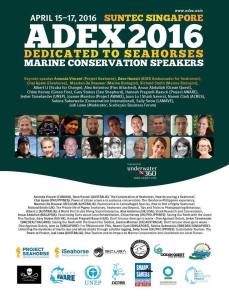
Which is why I am looking forward to the next stop after Lembeh: ADEX in Singapore. ADEX is the largest dive expo in Asia, with thousand of divers coming over to try to decide where to go for their next trip or what the newest trends are in the scuba diving world. I am very excited to have been invited to give a few talks about my research. In line with the theme of ADEX this year (Seahorses), I’ll be talking about pygmy seahorses, which I haven’t really done yet on this blog…

For the final leg of this trip I am heading back to Dauin in Philippines. Those of you who have been following the blog, will understand that I am rather happy that my good friend Luke (aka the Science Hobbit) is joining me again! Together we will be trying to figure out the best methods to study newly settled (=baby) critters. If you want to know how we’re planning to achieve that and whether or not we’ll succeed, keep an eye on the blog 😉

A pictus_juvMDB.jpg

Baby frogfish (A. pictus), finger for scale
Psychedelic Frogfish!!!

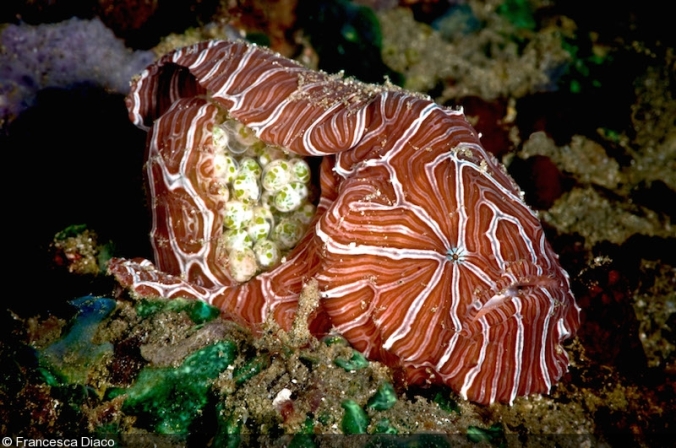
There was some VERY exciting news last weekend, the elusive Psychedelic Frogfish (Histiophryne psychedelica) has been spotted again in Ambon! This very rare and very trippy frogfish has only been described in 2009 and has hardly been seen again since. Practically nothing is known about them, except for the fact that they are amazing! Here is a video (property of Dive into Ambon) to prove it:

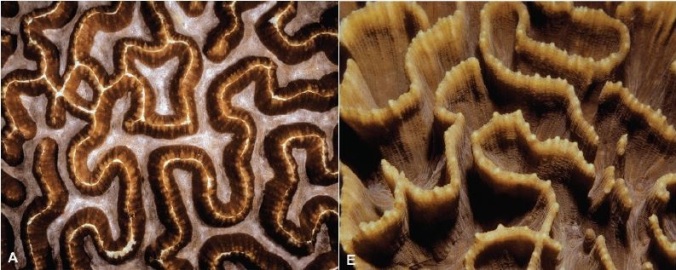
The psychedelic frogfish has only ever been seen alive in Ambon and they don’t seem to get much bigger than 10cm. Their exceptional colouration provides excellent camouflage and is thought to mimic coral species like Symphyllia sinuosa, Pectinia lactuca and other corals with similar morphology.

Symphillia and Pectinia

S. sinuosa (A) and P. lactuca (E). Photos: D. J. Hall from Pietsch et al. 2009

As a species of the genus Histiophryne, Psychedelic frogfish are “egg-brooders”, meaning they keep their eggs attached to their body to protect them from predators. It is even believed that they might use their eggs as bait to lure fish in that don’t recognise the eggs are attached to a predator larger than themselves! This is what it looks like:

Psychedelic frogfish_eggs

Psychedelic frogfish with eggs. Photo: Francesca Diaco from Dive Photo Guide

Who could not get very enthusiastic about a fish this bizarre and beautiful? Just too bad I don’t have time to go to Ambon myself any time soon 😉

Who pays for science?

I frequently talk to divers who are very enthusiastic about marine life and want to learn more about their favourite critters. It often comes as a surprise to these critter-lovers that hardly any research is done on most of the animals they’ve just seen. There are quite a few reasons for this, but one of them is: Science is Bloody Expensive! There might be many people out there wanting to do research on your favourite fish, coral, bird, tree, … But more often than not, the reason they’re not doing that research is lack of money to pay for it. When I say paying for research, I mean paying for all research costs and those often run very high, very quickly.  

In my case, the most obvious cost might be fieldwork, but that includes more than just boat hire, accommodation and food. Fieldwork also means flights, visas, permits, insurance, specialised equipment, other transport costs,… Not just for me, but also for any volunteers or supervisors that come out to help. As much as I am passionate about what I do, I also need to live, so I need to be paid a salary. When I am not doing fieldwork, I need an office, desk, computer, specialised software, access to scientific journals, equipment to do analyses, etc. Again, I don’t work alone but get help from supervisors, administrative staff at the university, etc. all of which need to get paid as well. It’s not hard to see how this can get expensive, but even I was surprised to learn that the global cost for all research is estimated to be as high as 1 trillion dollar!!!

PhD Grant

So who pays for all of this? Where does the money come from to develop a cure for cancer, send people to space or let me look at weird fish? As you might expect, it’s complicated. A lot of it is funded by governments, so actually by yourself through paying taxes (Thanks!). Applied research such as engineering or chemistry is often partially funded by industry partners to find direct solutions to problems. Then there is a part of funding that comes through NGOs, rich benefactors, etc.

The next question is, who decides which research gets money? The most common way is through the process of scientific grants. The baseline of grants is: you write a proposal of the research you want to do, submit it to the agency who gives the grants (can be any of the funding bodies mentioned earlier) and they decide which project deserves the money most. As you might imagine, this process is VERY competitive and success rates tend to be relatively low. There are many different types of grants (lots of money, little bit of money, small projects, long-term projects,…) and in general a higher value means more competition and lower success rates. Having to apply for grants and the insecurity of continued funding is often cited as one of the most stressful things about scientific research.

Genie grantsIn case you were wondering, my research funding is a merry mix of all of the above. The biggest part is paid by a scholarship I got from Curtin University (so indirectly the Australian government). Most of my fieldwork  is funded through the lab  of my supervisors (which itself is funded by a variety of grants), or by in kind donations from the divecentres I do fieldwork with. Recently I was also awarded a grant from the Society of Conservation Biology. The grant I received was to assess the population status of pygmy seahorses in Bangka Island in North-Sulawesi, Indonesia. This island is under threat from mining, but turns out to be rather rich in pygmy seahorses. I am currently preparing a publication on this research, so I should be able to tell you more about it in the near future.
 

On the move again: Dauin

After a few weeks of visiting my family in Belgium and loading up on chocolate, beer and hugs of my little niece, it was time to get going again. Just over a week ago I flew back to Asia and the first stop was a small town in Philippines called Dauin.

IMG_4430-p-web-logoSome of you might have already heard about Dauin. You might have heard/read me ranting on about how great the muck diving is, dived there yourself or maybe you’ve seen some of the many underwater photos appearing on various social media.  For those of you who haven’t heard of it, Dauin is a small town of about 25000 inhabitants in the south of Negros. The place is close to the city Dumaguete and sometimes the two are used as synonyms in dive circles (they are not). Dauin is a sleepy coastal town where most people used to make a living from fishing or farming. “used to”, because it’s rapidly getting renowned for its awesome muck diving.
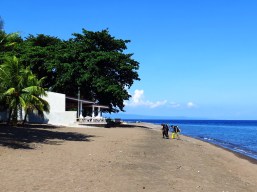
In all fairness, the story actually began with coral reef diving. Facing Dauin lies a small island called Apo. The reefs around Apo were the very first MPA (Marine Protect Area) in the Philippines and have been a poster child for MPAs in developing countries ever since. The fame of Apo brought in divers and it did not take too long before people discovered that the shore dives off Dauin were something quite special.

DauinThe beaches of Dauin are mostly made up of volcanic sand, though they are not as black as the ones you find in Lembeh. While there are a few small coral patch reefs, the real treasures are found in the sand. It’s muck diving at its best: you’ll find frogfishes, seahorses, mimic octopuses, flamboyant cuttlefishes, … The fact that most sites are easily reached and that there is a growing muck dive industry makes it an ideal area for me to conduct research.

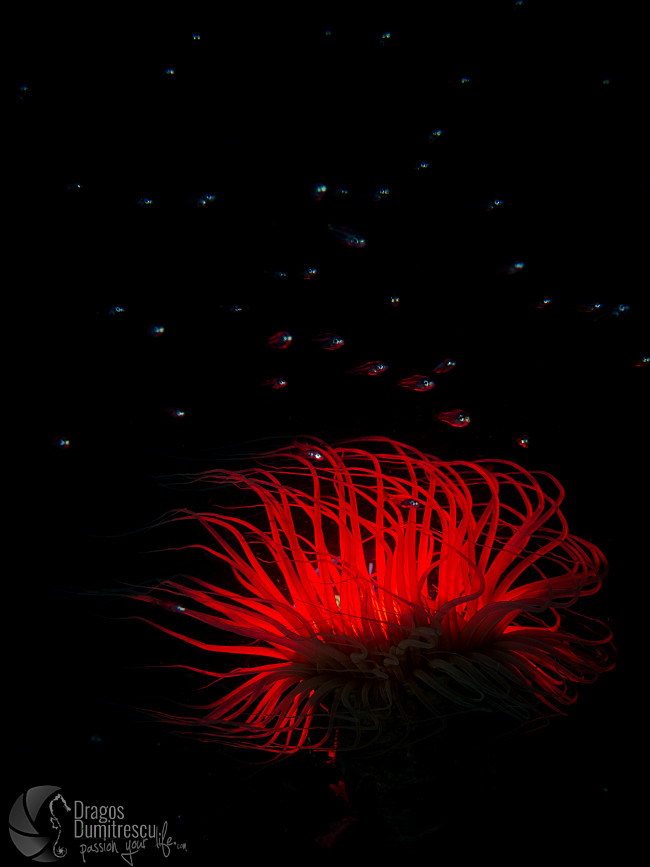
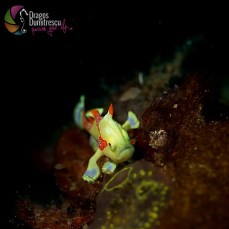
Last year I spent most of May in Dauin, doing a lot of diving and a lot of running around between divecentres to talk to people about dive tourism. This time I just went back for 5 days to talk to a few more people to fill in some gaps in my data on the socio-economic value of muck dive tourism. So unfortunately no research dives this time. Luckily I did manage to meet up with my good friend Dragos, who uses Dauin as a base to take some pretty sweet underwater photos. The underwater pictures in this post are his. If you want to see more of his (award winning) work, check out his site here.

img_9635-pm

The small trip to Dauin was the end of a productive, exhausting and entertaining research trip. I am writing this post in Manila airport, as I’m finally on my way back to Perth. After nearly 8 months of fieldwork and traveling it’ll be great to see my colleagues again and to start writing up some of my results. So keep an eye out on the blog for updates of what is going on. Or if you’re in Singapore in April, come and have a chat at the ADEX Dive expo, I am giving a talk and will be presenting some of my results.

img_2482-p-web