Exciting things ahead

I may not have been blogging much recently, but a lot has happened in the last few months. First and foremost, I completed and handed in my PhD-thesis. Since then I have been teaching, writing grant and job applications, and I’ve had a nice long holiday relaxing and traveling in Europe and diving in Indonesia.

In all honesty, handing in my PhD-thesis isn’t really news anymore since it’s been almost four months ago. That does not change anything about how happy and relieved I am that I managed to finish this epic project. Although this happiness might also have a slight tinge of regret as it means the end of more than 3 fantastic years of being absorbed by something that I love doing very much. By now I have also received the examiners’ comments back from my thesis, which were very positive, meaning that the whole process of finalising the PhD might be even quicker than I’d really like to.

PhD Defense

Yours truly during my PhD-presentation, very happy days!

Why quicker than I’d like to? Mostly because it means I have to find a job now! I really, really like doing research, especially when it involves little critters or sandy ocean floors. So I will try my very best to keep on doing research on this, but post-PhD research jobs (so called “post-docs”) are hard to come by. Even harder when you study sand and animals that look like sand 😉 So I have been applying for positions all over the world, ranging from Australia, to Germany, the UK, Indonesia, etc.

This is all very exciting, since I might literally end up anywhere in the world. But as you can imagine, it also means a fair amount of insecurity of what life will look like in a few months time. The excitement about new projects and adventure always wins over the worries though 😀

But, just in case you’d happen to know someone who is looking for a researcher who knows his way around Southeast Asia, soft sediment, and cryptobenthic fauna, do give me a ring 😉

There are more exciting thing going on than just job-hunting! As a matter of fact, August will be a pretty busy, action-packed month. At the moment I am in Perth airport, almost ready to fly to South Africa. As you may or may not remember, a few months ago we (my friend Louw and me) received a grant from the Mohammed bin Zayed Species Conservation Fund to conduct research on the endangered Knysna Seahorse (Hippocampus capensis). We have been working behind the scenes and preparing since, but now it is finally time to do the fieldwork portion of the work!
Knysna-seahorse

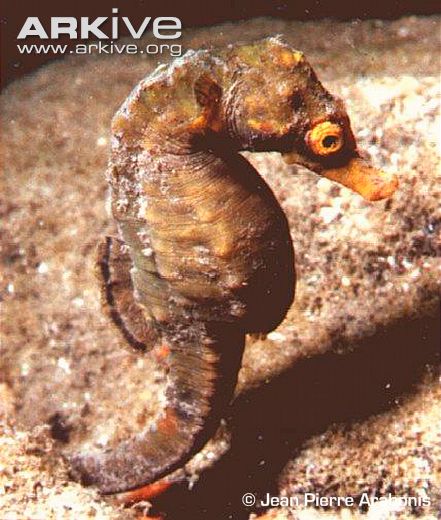
The species we’ll be studying: the Knysna seahorse (Hippocampus capensis)

To try and give everyone who is interested an idea  of what marine science fieldwork is like, I am planning to blog frequently during the next 2 weeks. No promises about just of frequently, but I will do my very best to document trip and give you an insight of what it’s  like (for me) to do the data collecting that is behind most of the stories I share here.

If you do not want to miss anything, you can always follow the blog (there’s a button on the site somewhere), you don’t need an account, you can just get the updates via email. Alternatively, I’ll try to post (almost) daily pictures on Instagram (crittersresearch) and Twitter (@DeBrauwerM) as well if you can’t be bothered reading and just want to see what it all looks like.
 

Musings on the 4th Asia-Pacific Coral Reef Symposium

downloadI am writing this blog while in transit in Kuala Lumpur, traveling from Cebu (the Philippines) to Perth. I was in Cebu to attend the Asia-Pacific Coral Reef Symposium (APCRS 2018). In the past I have written about the reasons why as a scientist I like visiting conferences, such as IPFC or ICRS. Those reasons have not changed: hearing about new research, meeting up with colleagues and friends, discussing new collaborations, and sharing my own research with people working on similar topics.

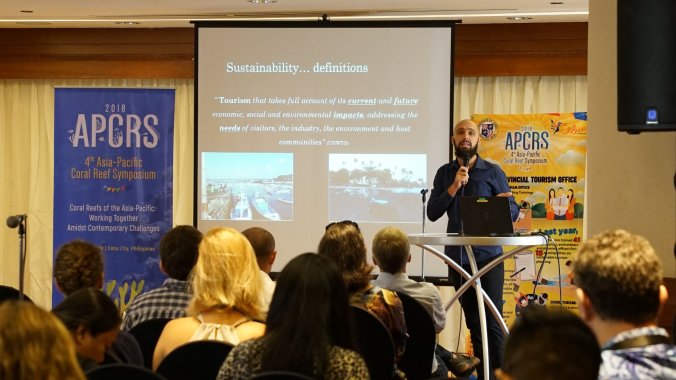
What was different atthis conference, is that it was my first international conference after submitting my PhD thesis. This was also the first time that I was invited as a  keynote speaker (for a mini-symposium that was part of the bigger conference). The conference had a strong regional focus, so many of the people attending conduct their research in the same region as I do. So there were a lot more opportunities for developing new collaborative projects than on larger conferences.

APCRS
Presenting my first keynote on the Sustainable Coral Reef mini-Symposium parallel to APCRS 2018 (Photo credit: Sugbu Turismo)

Here are some of my impressions while the last days are still fresh in mind….kind of fresh at least, the conference organisation was very generous in the amount of free San Miguel beer provided at the dinner last night 😉

More than other conferences I attended, APCRS 2018 had a strong management and practical feel to it. Many conversations I had and most of the presentations I heard had a strong underlying theme of developing solutions that could actually be used for managing reefs. What really made it interesting was that not only scientists, but also some managers and conservation organisations were presenting their work. I might be a bit too optimistic, but I feel that in the last years, many of the idealistic, but completely unrealistic ideas are being replaced by a more realistic approach that does not turn a blind eye to the real problems.

APCRS_presenters
Presenters of the Sustainable Coral Reef Tourism session (Photo credit: Sugbu Turismo)

Talking about how to use research results for management with the people working for organisations like Reefcheck, GreenFins, or CMAS was sometimes confronting, but also a great way to start having an impact beyond mere suggestions in scientific papers. Besides discussing future projects that will result in helping management, I also had some very inspiring talks with other researchers. If all goes well, the end of 2018 could become even more fun than I already expected. Hopefully more on that later!

There was another interesting theme that kept on coming back through many of the conversation I had: “What are we trying to achieve as scientists?” Or even more fundamental: “Why are we REALLY doing what we do”? It might seem obvious; most scientific papers will state that one way or another they want to understand the world better, and usually that they want to make a positive difference. But it can be interesting to ask if that’s what we are really doing? To what extent are we actually making a difference, or just following our curiosity? Are we willing to do the extra effort that is needed to truly have a positive impact? Or are we sometimes forgetting about the world beyond academia and writing papers because that is what you do when you want a career in science?

There is no judgement in any of these motivations, most of the scenarios are equally valuable. But realising why you do the research that you do, might help you to be more focused and get the results you aim for. At least it does for me…

This conference was probably one of the most productive and inspirational conferences I have attended since I started my PhD in 2014. I am very much looking forward to the next one in Singapore in 2022, and the new projects that I’ll be working on in between!

APCRS_Crowd
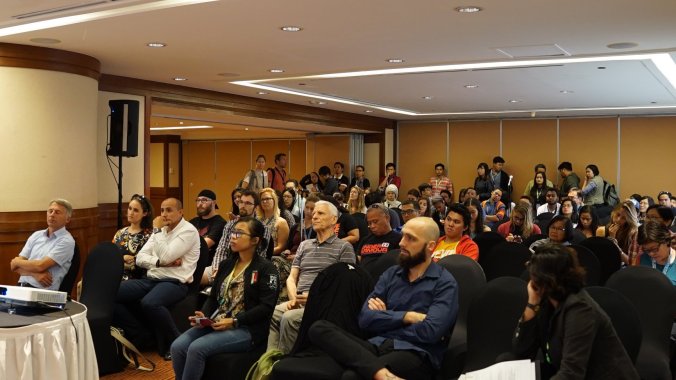
Audience at the sustainable tourism session – APCRS 2018 (Photo credit: Sugbu Turismo)


Video: PhD fieldwork compilation

During my PhD I spent almost a year doing fieldwork in Indonesia and the Philippines. Besides conducting all kinds of serious science, I also entertained myself by filming some of the amazing marine life I encountered.

Now that the thesis has been submitted, I have finally taken the time to put a video together that should give you some idea of what life was like in the field. All footage was either filmed by myself or by Luke Gordon.

New publication: How well do divers, cameras, and critters play together on the sand?

A new paper from my PhD research was published two weeks ago. This paper is the first of two papers that investigate the impacts of scuba divers. The title of this one is: “Time to stop mucking around? Impacts of underwater photography on cryptobenthic fauna found in soft sediment habitats” and was published in the Journal of Environmental Management. In the paper I describe how divers behaved while interacting with critters on muck dive sites and coral reefs.

_MG_6706

Underwater photography is fun, but what are the impacts? (Photo: Luke Gordon)

First a bit of context to this particular piece of research. It is well known that divers can cause serious damage to coral reefs, for example by accidentally kicking down coral with their fins, dragging equipment over the fragile bottom, or even breaking off bits of coral as a souvenir. We also know that wildlife photographers (under water and at the surface) can sometimes get carried away in their quest for the perfect picture, and show some very unethical behaviour while doing so. I have written about this before on this blog, but the recent story of yet another wildlife photography winner that was disqualified shows just how common this problem can be.

The goal of my research was to investigate how diver behaviour changes when divers are close to critters, if there is a difference between photographers / non-photographers, and how this changes on the sand versus coral reefs. Importantly, my goal was NOT to investigate if muck diving is a bad thing, or if photography should be banned. Ultimately, what this paper aims to achieve, is to help improve the sustainability of dive tourism.

I had some good fun observing divers in Indonesia and the Philippines during the fieldwork for this research. Divers were not told what research I was doing, to make sure they did not change their behaviour. Instead I explained that I was investigating the habitat requirements of little critters. This meant I had to pretend to be very interested in the bottom, while cheekily observing what divers were up to. To the point where all my notes had to be coded, so divers could not accidentally read what I was doing either.

So I was basically doing university-approved spying on people…the kind of things you end up doing for science 😉 In case  you were worried, all divers were informed of the real purpose of the research afterwards, and were asked for permission to use the (anonymous) data I collected.

The results of the research mostly confirmed what I expected and won’t come as a surprise to people who often go muck diving. When divers were close to critters (either just watching or taking pictures), they caused more impacts than when diving around normally.  During these “critter interactions”, divers touched the bottom three times as much than when they were not close to critters. During these interactions, divers that were taking pictures touched the bottom much more than the divers that were just watching marine life, or showing it to their buddies.


Luke1

Luke photographing like a pro: great buoyancy control, no equipment dragging over the bottom, and touching nothing except his camera

Divers on coral reefs had much less contact with the bottom than divers on muck dive sites, until they started observing or photographing critters. Once divers were near small marine life, they touched the bottom just as much on corals as on sand. Basically, divers pay attention not to damage coral reefs, until they get distracted by an interesting little critter.

Using a camera underwater caused some clear impacts. Compact camera users caused more damage than divers without a camera, or those with a dSLR camera. All camera users touched the bottom more often than non-camera users. Finally, divers with a camera spent much more time interacting with critters than divers without a camera.

Picture1Finally, throughout this study, I very frequently  observed divers touching marine life. Despite the fact that every dive training organisation teaches people not to touch anything underwater, touching animals seems to be a common thing while observing and photographing critters. Sometimes this touching is limited to a minor “prod”, but at its worst, divers can rip of arms of feather stars, smack fish around (you read that correctly!) or crush frogfish under big cameras. It is clear that this cannot be the goal of muck diving.

How can we use these results to improve the sustainability of dive tourism? These three guidelines could already make a big difference:

  1. Better education for divers and dive guides on how unethical behaviour impacts marine life. At the very least during briefings, but ideally using programs such as Green Fins or by incorporating it in diver training.
  2. Developing a (region-specific) code of conduct that is supported by all local stakeholders. This would include: dive centre operators, dive professionals, local government, training agencies, NGOs, etc.
  3. Increasing awareness of the impacts of wildlife photography on a global scale. This can only be achieved when the big players get involved. By this I mean not only organising committees of photography competitions, but also dive magazines, dive expos, wildlife magazines like National Geographic,… If all these organisations would send a clear signal to no longer publish pictures that were clearly the result of wildlife manipulation, keen divers would be far less likely to try and do it themselves.

In conclusion: muck diving and underwater critter-interactions have clear impacts, but it is possible to do something about it. The most important thing to start with is changing the mentality of quite a few divers who seem to think that their pictures are worth more than the damage they might cause to marine life.

PS: The paper is behind a paywall, but if you want to read it, please contact me via email or in a personal message on any social media (instagram, twitter, researchgate)