Dragons, Currents and Hidden Gems

Komodo tripThere hasn’t been much activity on the blog recently, mostly since I’ve been stowed away on various boats exploring the marine life around the Komodo Islands. I just got back from a very comfortable liveaboard trip ran by Safari Bali, who have been kind enough to let me hop on the Sea Safari 7 as resident marine biologist. In return for the trip I do presentations for the guests, help them identify creatures they’ve seen, or generally answer any ocean-related question they might have. A great deal if you ask me, since it gives me the chance to do research in one of the best dive destinations in the world.

Komodo has been one of my favourite spots since I dived it the first time six years ago. The enormous diversity in marine life and dive sites is hard to find anywhere else. Raja Ampat might have more species, but to me Komodo is more interesting. There are more muck sites, stronger currents, lots of weird critters and they’ve got dragons…it’s hard to top dragons.

Komodo Dragon

Komodo Dragon (Photo by Jennifer Tambosco)

Komodo national park was established in 1980 and was declared a World Heritage Site in 1986. The park was originally designed to protect the endemic Komodo Dragons. They are the world’s largest reptile and are only found in the Komodo National Park and a few areas on the west coast of Flores. It was quickly recognised that the diversity in the surrounding ocean was a lot bigger than on land and protection was put in place for the marine environment as well.

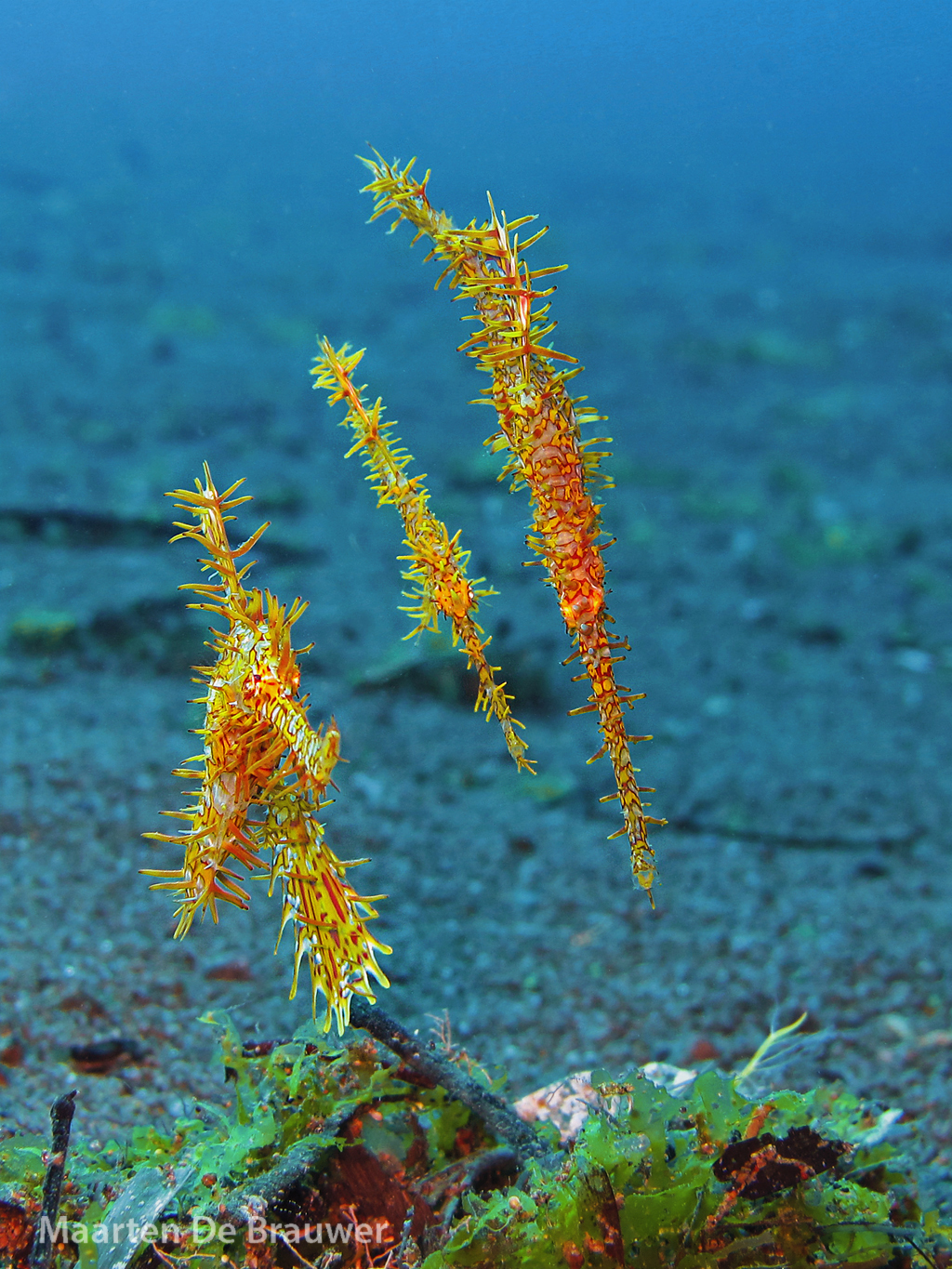
Ghostpipefish party, six Solenostomus paradoxus hanging out

Ghostpipefish party, six Solenostomus paradoxus hanging out

Life under water is governed by the strong currents around the islands. The Komodo islands form a passage between the Pacific and Indian Ocean, the water flowing between them causes the famous currents in the area. These currents bring in important nutrients on which the marine life depends and it doesn’t take many dives in the area before you realise just how much of an effect they have. Diving in Komodo is always exciting, not just because you’re often flying around under water at exhilarating speeds, but also because of the enormous diversity of life that is created by these currents.

Pygmy Seahorse (Hippocampus bargibanti)

Pygmy Seahorse (Hippocampus bargibanti)

Explaining just how diverse and exciting diving in Komodo is very difficult. To make life easier for myself, here is an excerpt from my logbook from the trip: manta rays, sharks, eagle rays, frogfishes, octopuses, turtles, napoleon wrasses, seahorses, ghostpipefishes, giant trevallies,… On top of that reefs are generally very healthy, with huge clouds of reef fish hovering around them. From the boat we’ve seen at least 3 different species of dolphins and a whale. In this crazy fish soup I spent most of my time looking for pygmy seahorses, which greatly confused some of the other divers on board. Why bother with critters 1cm in size if you’ve got manta rays and sharks flying overhead? This is a fair point, but I am trying to get an idea of how many pygmy seahorse are out there, so the manta rays will have to wait… In all fairness, I might have gotten distracted a few times, but who can blame me for that?

Selfie time with the local kids :) (Photo  by Jennifer Tambosco)

Selfie time with the local kids 🙂 (Photo by Jennifer Tambosco)

I am also using these trips to explore other sites in the area for critters. There are over 17000 islands in Indonesia and the best way to explore them is by boat. Some of the places we dived at along the way are absolutely beautiful and still pretty unexplored. One of my favourites was Sangeang, an active complex volcano (it has 2 cones) with 2 small villages on its slopes that specialise in traditional boat building. The dive sites around Sangeang are phenomenal; great muck diving, loads of critters, and mostly unexplored. Another gem (though better known) is the south of Komodo. The waters around Nusa Kode are cold (20°C) but very rich, it had some of the highest concentrations of anemonefishes I’ve seen in Asia. A night dive in the bay made it in my top 3 of best night dives ever, I won’t bore you with details, but if you like weird and wonderful critters it’s an absolute must!
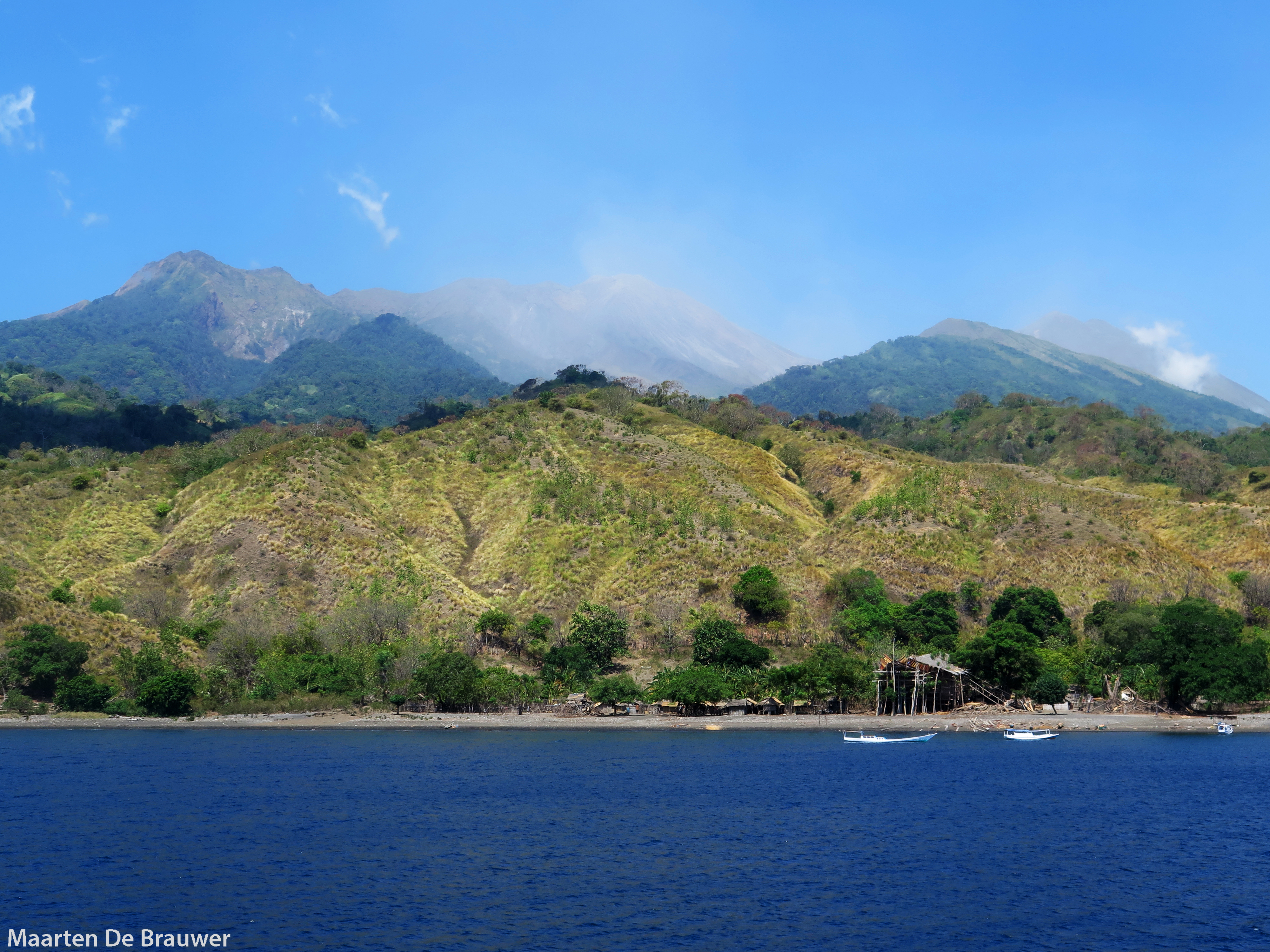
Bontoh village, Sangeang volcano in the background

Bontoh village, Sangeang volcano in the background

Ornate Ghostpipefish

So far most of the critters I’ve written about were true benthic ones; Frogfishes, Scorpionfishes, Pipefishes, they all spend the vast majority of their time laying on the bottom. The next little guys are a bit different, they are (only slightly) less lazy and spend their time hovering close the bottom. May I present to you the Ornate Ghostpipefish!

Ornate Ghostpipefish (Solenostomus paradoxus)

Ornate Ghostpipefish (Solenostomus paradoxus)

The Ornate Ghostpipefish (Solenostomus paradoxus) is another one of those truly bizarre creatures you can find when you have a good look around you while diving. They look very flamboyant and ornate, but they are remarkably hard to spot. The fact that they don’t get bigger than 12cm might have something to do with that. So if you’ve never seen them before, it might take the help of a friendly diveguide to have the pleasure of seeing them.

Ghostpipefishes belong to the order (=one level up from family) of “Syngnathiformes”, which is the same order in which you’ll find seahorses and pipefishes, but also razorfishes and even trumpetfishes and cornetfishes! So all these weirdly shaped critters are related in one way or another.

Male Ornate Ghostpipefish

Male Ornate Ghostpipefish

Male Ornate Ghostpipefish (Picture by Luke Gordon)

Male Ornate Ghostpipefish (Picture by Luke Gordon)

There still is a lot of confusion about how many species of Ghostpipefish actually exist, but there seem to be at least four. For this post, I’m sticking to the best known and most flashy one. Describing an Ornate Ghostpipefish to someone who’s never seen one is interesting. Usually it goes a bit like this:  “It’s a fish that swims upside down, with the head of a seahorse, a wide fan-like tail, a pouch like a kangaroo and it has got little filaments growing all over its body….Oh, and it also changes colour, any colour you’d like. Really, it’s a thing that actually exists!!!” Luckily there are plenty of photos to prove it.

While Ghostpipefishes are closely related to seahorses, there are a few major differences. As you may or may not know, in seahorses it’s the male that gets pregnant and gives birth. Ghostpipefishes are a bit more old-fashioned and don’t want anything to do with that modern male kind of stuff. With them, it’s the female that has a brooding pouch, gets pregnant and gives birth. Although there might be a little twist…Very little is known about them, but it is believed (not proven) that all Ghostpipefishes start out as males and later change sex to become female.

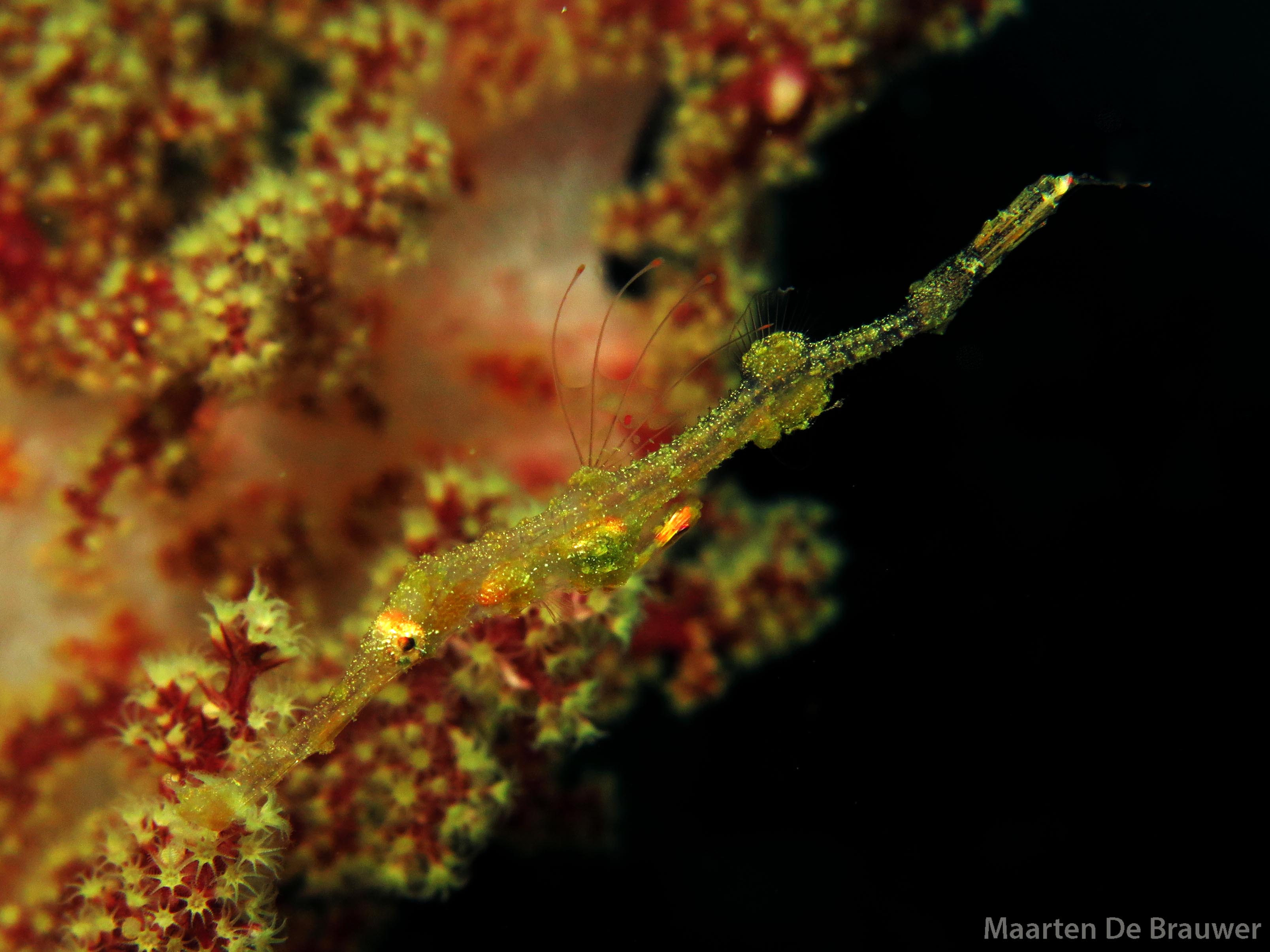
Juvenile Ornate Ghostpipefish - Still partially transparant

Juvenile Ornate Ghostpipefish – Still partially transparant

There is a LOT more we don’t know about Ghostpipefishes. For example, we don’t have a clue how long they live and it’s unknown how long they float in the open ocean as larvae. It looks like these animals spent most of their lives as larvae, floating around and then only “settle” to mate, after which they supposedly die. None of this has been properly tested, as Ghostpipefishes are notoriously difficult to keep alive in aquaria, let alone breed them in captivity, making close observations or experiments to test these hypotheses very difficult.

Social group of Ornate Ghostpipefish

Social group of Ornate Ghostpipefish

If you do want to see them for yourself, or maybe you are even ambitious enough to solve these riddles in the name of science, here is where you’ll find them. They are mostly tropical species which can be found from the east coast of Africa all the way to Fiji, but they are spotted most frequently in Indonesia and Philippines. During the last months of surveying, we found the highest numbers in Dauin with Lembeh Strait a close second. They are usually found in areas with some current and always hide in larger objects such as featherstars. You can also look for them in seafans, black corals or even rubbish. Ghostpipefishes often hang out in small social groups, so if you find one have a close look around to maybe find some more.

Pair of Ornate Ghostpipefish - If you look closely, you can see the eggs in the pouch (Picture by Luke Gordon)

Pair of Ornate Ghostpipefish – If you look closely, you can see the eggs in the pouch (Picture by Luke Gordon)

Once you’ve found them, try to see if there is a female, she’ll be the one with the brooding pouch. The pouch is formed by the pelvic fins and if you are lucky, you might be able to see eggs inside it. Unlike other brooding fish species, ghostpipefishes will have eggs in all stages of development, so at the same time there might be freshly laid eggs in there and eggs that are ready to hatch. As far as I am aware no photos or videos exists of the little ones hatching (let me know if you do!). But what really interests me is what happens to the little guys after they hatch and start drifting in the water column….

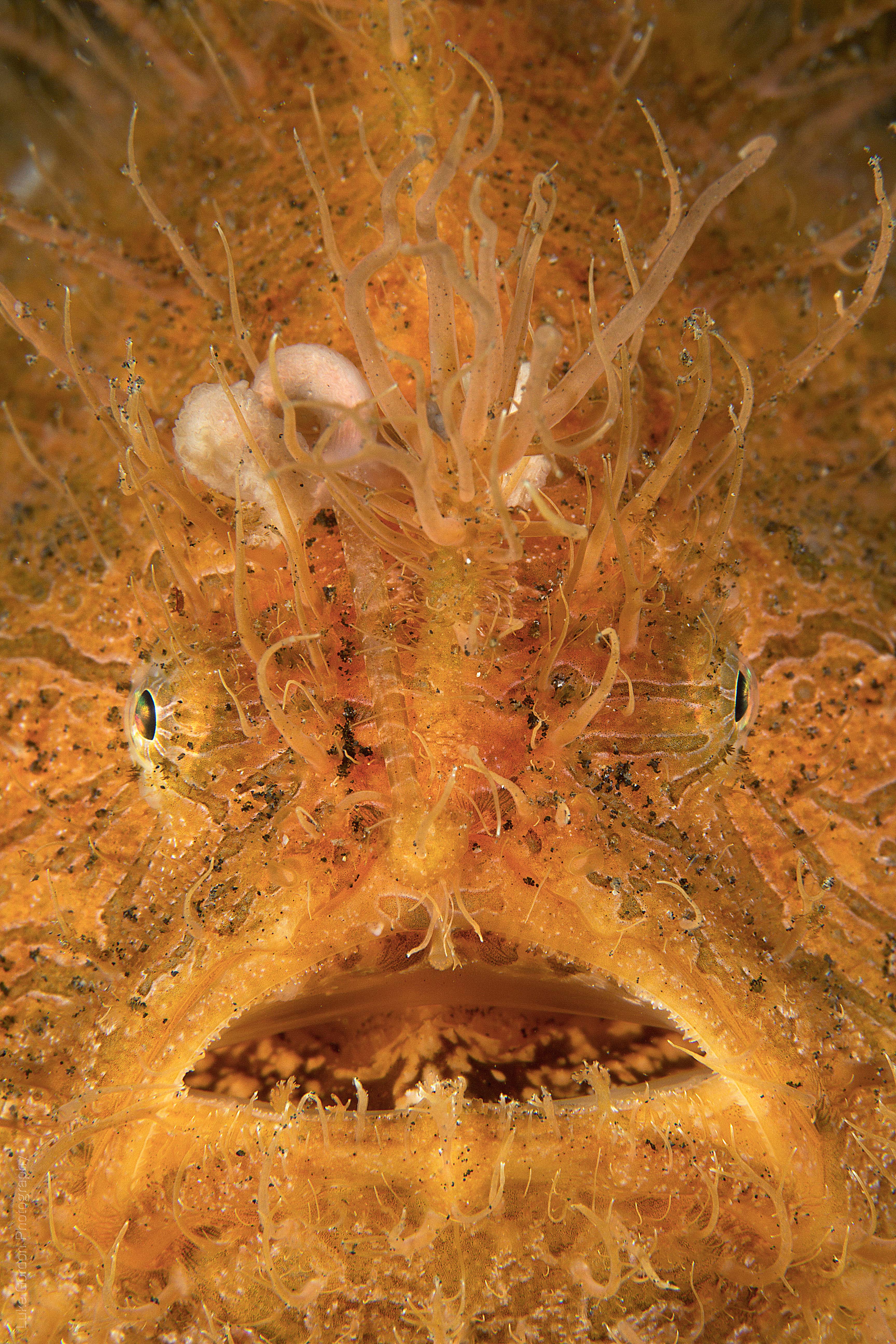
Hairy Frogfish

It is clear that there is no shortage on weird critters in the ocean. Most of these happily bumble along the sea floor without attracting undue diver attention besides maybe the occasional researcher. But then there are those critters that stand out and are absolute favourites with divers and photographers. These superstars are on the wish-list of any diver who’s ever seen pictures of them. One of these absolute superstar critters, is the Hairy Frogfish.

Hairy Frogfish (Antennarius striatus) are one of those fish that make you stare and think “Why?”, “How?” or alternatively just “Huh?”. Besides being a Frogfish (which is reason enough to be interesting), they often are – as the name suggests – HAIRY. Yup, you’ve read that correct: a fish with hair on it. Or at least something resembling hair. To prove my point, here is a shot of a prime specimen:

Hairy Frogfish (Antenarius striatus)

Hairy Frogfish (Antenarius striatus)

In case you would be asking why, here’s is what we know: As many of the other critters I’ve written about, the main goal seems to be camouflage. This species seems to become hairy in areas with high filamentous algae growth, the hair mimics the algae and breaks up their body outline. However, Hairy Frogfish are not always hairy, they are relatively frequently seen without hair, but in that case they don’t always get recognised as “Hairy Frogfish”. As a matter of fact, their scientific name (Antennarius striatus) relates to the fact that they have stripes on their sides.

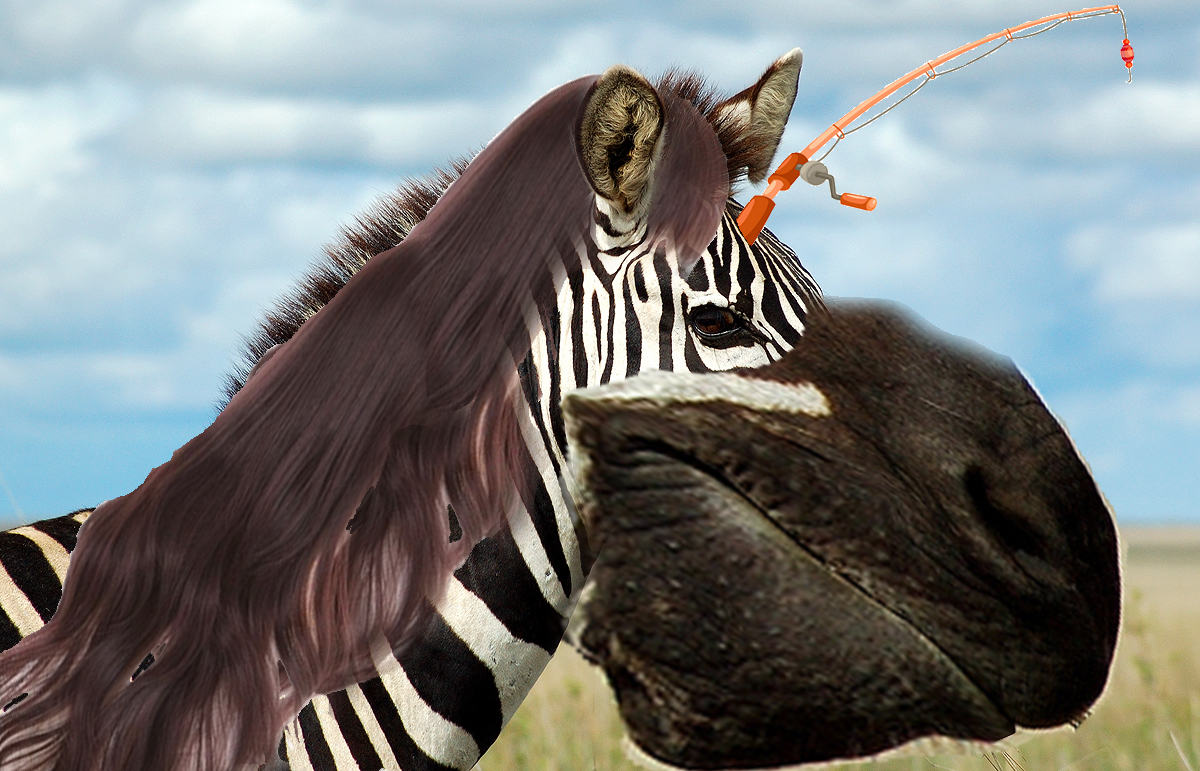
So seeing a hairy Antennarius striatus is as if you’d suddenly see a zebra covered in very long hairs….with a fishing rod growing out of its head….and a mouth so big you could fit an antelope in it…Let me just share this mental image to show you how VERY weird a hairy frogfish really is:

A terrestrial interpretation of a Hairy Frogfish..

Terrestrial interpretation of a Hairy Frogfish..

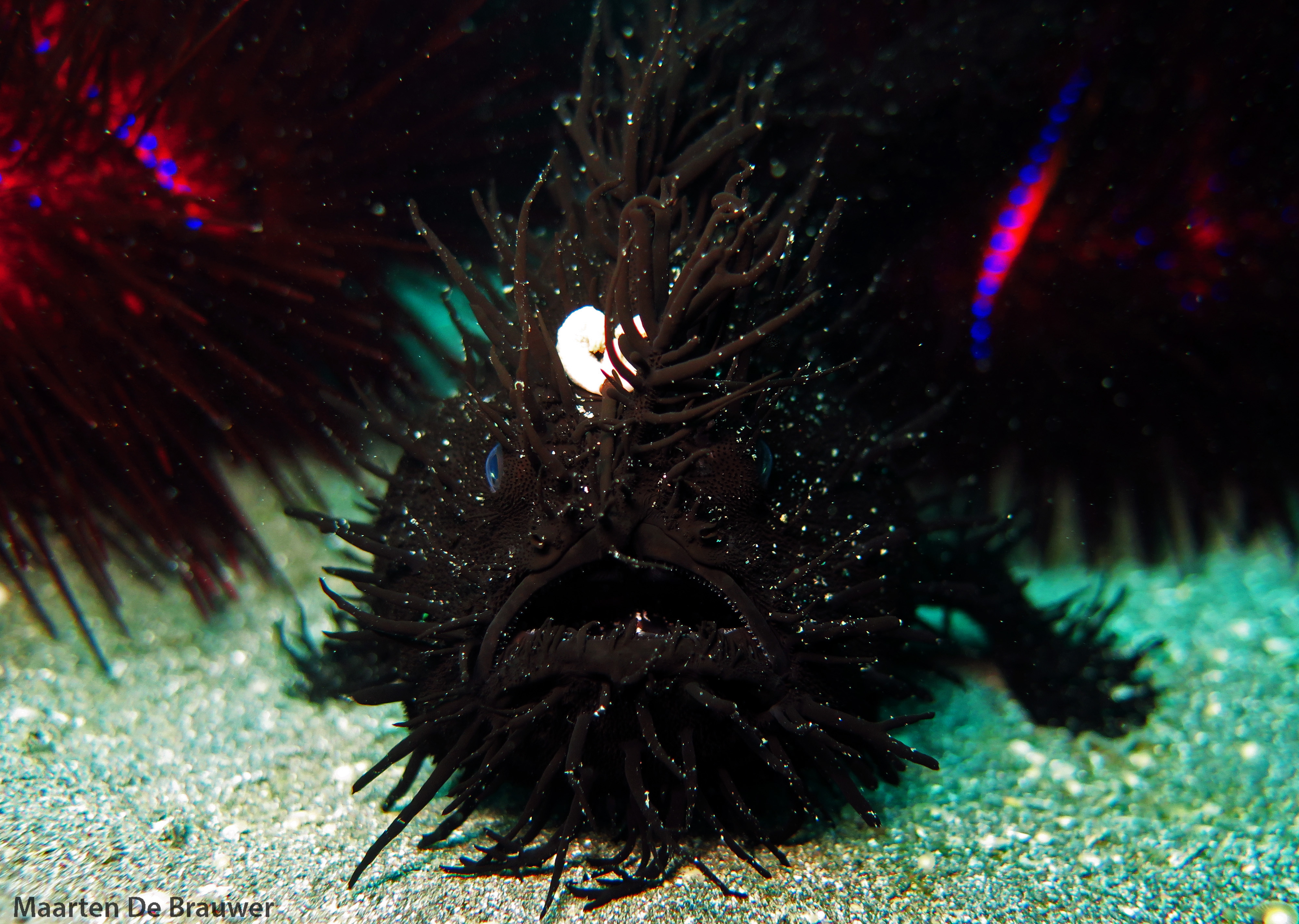
On top of it, that nightmarish zebra would also be able to change colour. Not just to a kind of grey or brown, but nearly every colour in the rainbow! I have seen hairy frogfish being yellow, red, orange, black and white. The goal again is to blend in, so the white versions are often juveniles found in areas with many dead sea urchin-shells (which are white). This white version is usually not hairy to resemble the shell fragments even more closely. My favourite colour morph is the black version, which seem to get this colour when associated with living (black) sea urchins.

Black Hairy Frogfish

Black Hairy Frogfish

Hairy close-up

Hairy close-up

The other obvious question (How???) is harder to answer. There are a lot of theories around, but I could not find a single paper describing how the process happens. So we don’t really know, but the “hairs” seem to be filaments growing from the skin. To confuse things a bit, frogfish often also have real algae growing on them. This hairy appearance is not restricted to frogfish, but can also be seen in certain species of Scorpionfishes and Ghostpipefishes. The growth of it seems to be triggered by absence / presence of certain algae, but the exact details remain a mystery.

In the minds of many divers, the hairy frogfish is exclusively associated with world-class muck sites such as Lembeh Strait or Anilao. In reality, they are one of the most widespread species of frogfish. They can be found all the way to Perth and Sydney in Australia, but have also been seen in Brazil and Blue Heron Bridge in Florida. Genetic analysis do hint at the fact that these widespread Hairy Frogfishes might actually represent multiple species, plenty of room for some more research there….

Bad luck and How to find a frogfish

A few days ago, I prepared a blog post about a very interesting experiment we had started. It had everything to be cool (at least in my mind): interesting, sciency and a nerdy acronym to go with it! Luke and I were deploying SMURFs (Standard Monitoring Unit for Recruitment of Fish) to look at the habitat preference of baby fishes. The reason it did not get published, is the ocean. The night after successfully deploying the first 15 units, the waves picked up and destroyed all of our work… Marine biology fieldwork can be pretty amazing and it can be rather challenging as well. But that’s the beauty of the ocean: it’s unpredictable. Which can be frustrating at times, but can mean fantastic surprises as well.

Cartoon life_eggs

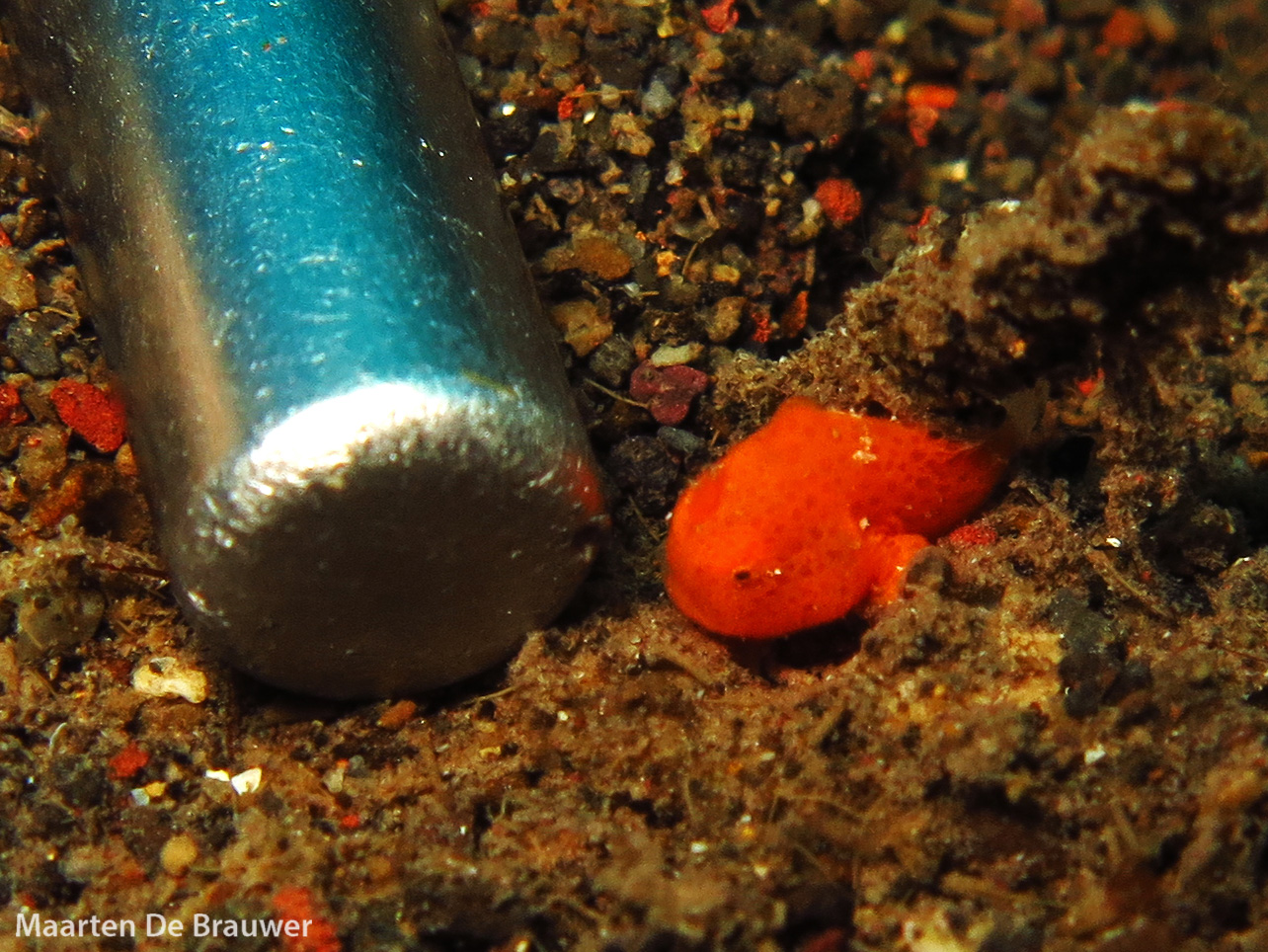
Baby froggie

Baby froggie

Which was proven once again when we found this very cute little baby Frogfish after assessing the damage to our equipment. We don’t know which species it is, since it was still tiny (less than 5mm). It was bright red, which would lead one to falsely believe they are easy to see on black sand. Think again! Next time you dive (or snorkel, or walk) over volcanic black sand, take a close look at the sand and you’ll notice there is a surprising amount of red grains in there. An unexpectedly efficient form of camouflage…

So how do you find a Frogfish? Or other cryptic critters for that matter? They have been evolving for millions of years to be invisible and most of them are very small, so spotting them is something that takes a while to learn. Here are a few tips to make it easier:

  • Movement: Your average Scorpionfish or Frogfish does not move very much, but every now and then they do. Whether it’s a small shifting of the fins, an eyeball that rolls to follow potential prey, or a full swim, our eyes are fantastic at spotting movement. So if you see an unexpected twitch or you think you might have imagined seeing something shift in the corner of your eye, investigate it!
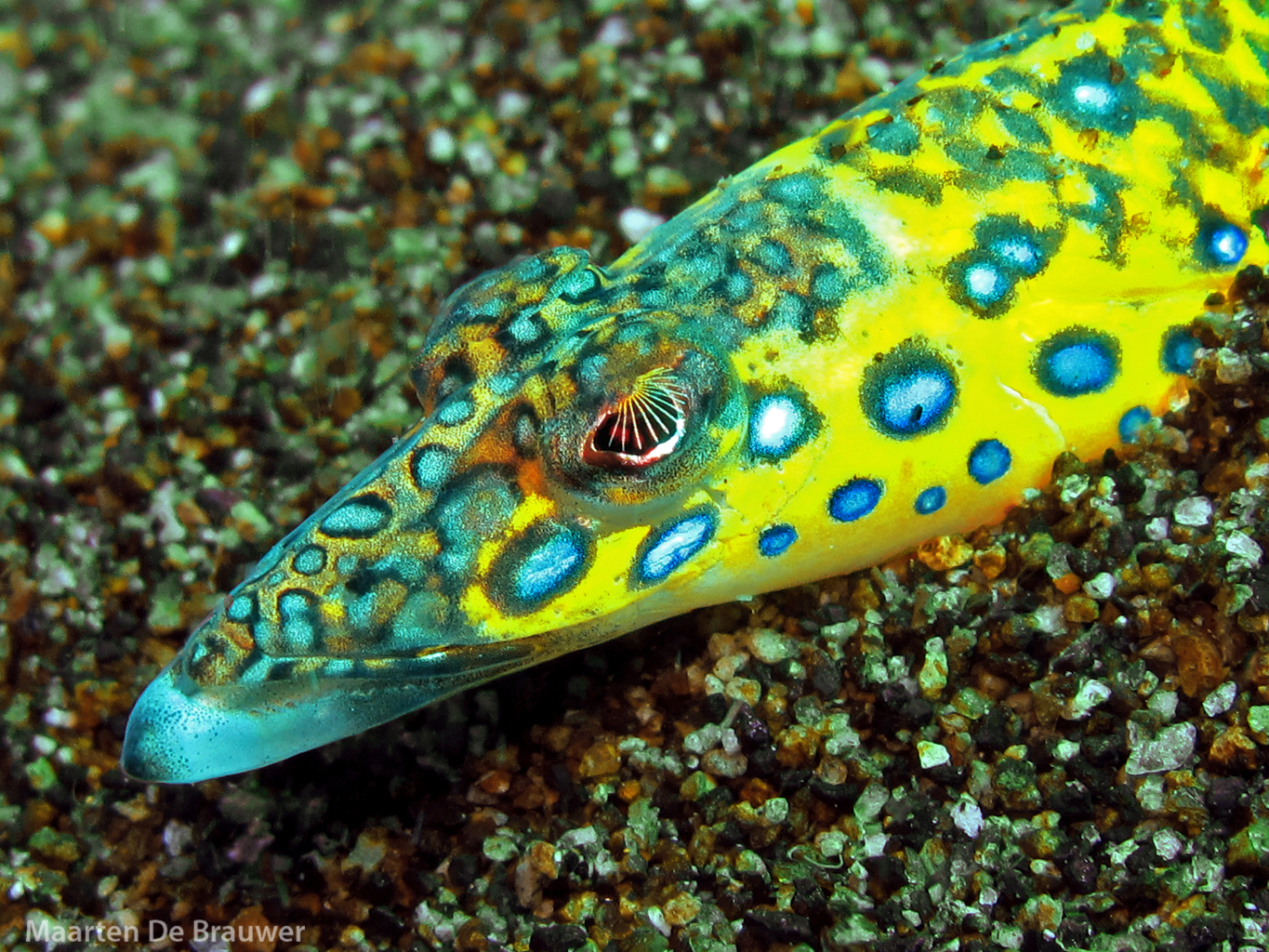
  • Habitat: The critters I am investigating here are usually found on sand, but there are A LOT of different types of sand. Not just the type of sand, but also what’s on it, whether it’s algae, sponges, featherstars, logs, mooring blocks or anything else that offers a minor difference in structure. Certain species of frogfish (eg. Giant Frogfish) are nearly exclusively found on sponges, while other (eg. juvenile Hairy Frogfish) like to hang out in areas with a lot of shell fragments. Sand Divers (Trichonotus sp.) love very loose sand, while Thorny Seahorses seem to prefer coarse sand with plant debris. In this post I explain where to find different species of scorpionfishes.
Sand Diver (Trichonotus elegans)

Sand Diver (Trichonotus elegans)

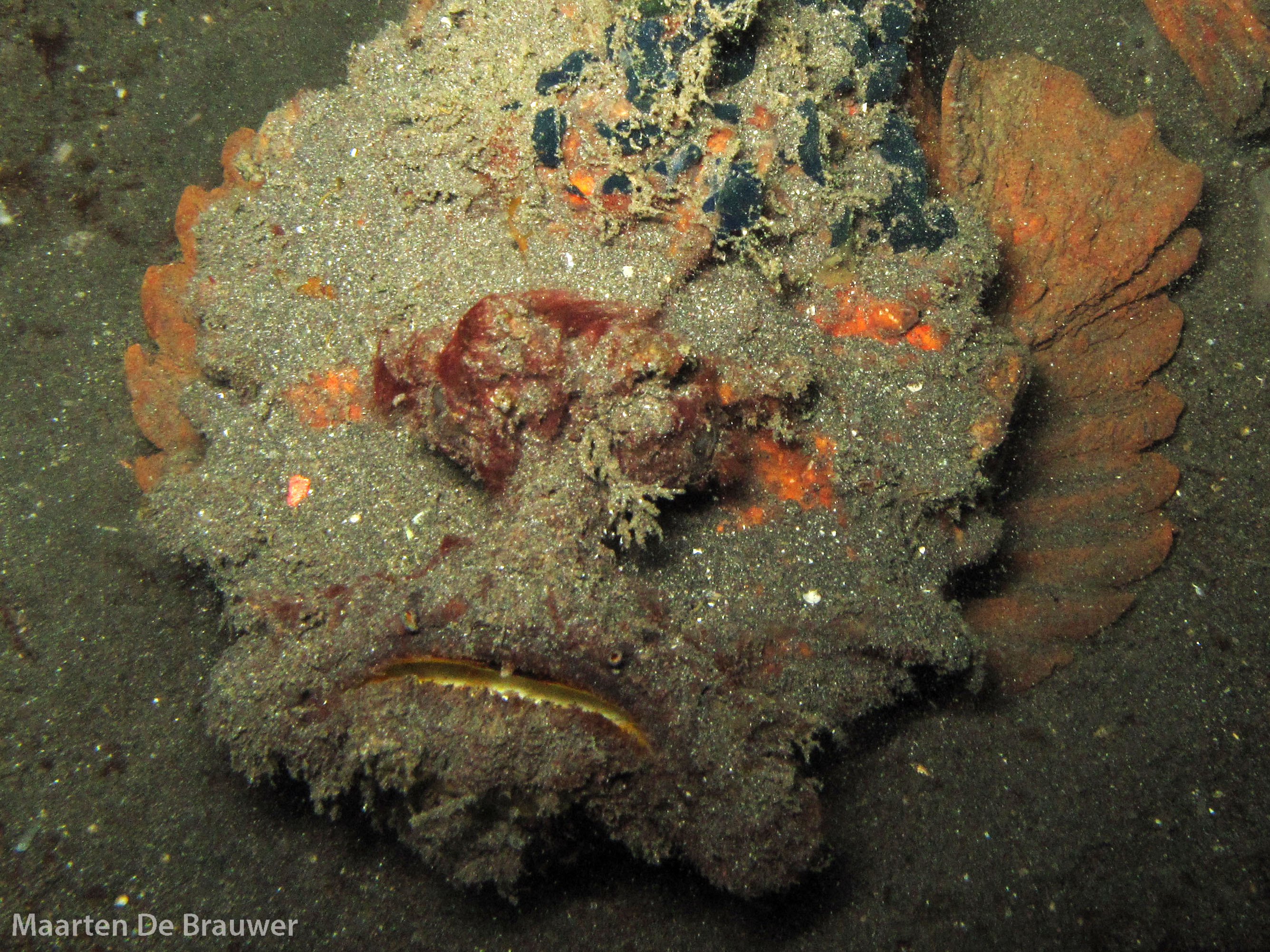
  • Shape: Even with their amazing camouflage, fish will be fish, which means they have (most of) the parts normal fish have. These shapes can help you find them. The distinctive thick pectoral fin of Stonefish are one of the best ways to recognize them. Pygmy seahorses are tiny and hide in big seafans, but they use their tails to hold on, which is one the things you can look for to try and find them.
Stonefish are easiest to find by looking at their pectoral fins (orange in this individual)

Stonefish (Synanceia horrida) can be found by looking for their pectoral fins (orange in this individual)

  • Position: your own position makes a massive difference when trying to spot cryptobenthic fauna. If you are high above the sand, everything blends in, these species evolved to hide from most top-down predators. Get close and get low, if there is a slope, look up the slope instead of down, silhouettes often stand out this way.
Robust ghostpipefish (Solenostomus cyanopterus) mimick decaying leaf litter. Getting close and low makes finding them easier

Robust ghostpipefish (Solenostomus cyanopterus) mimick decaying leaf litter. Getting close and low makes finding them easier

  • Luck: In the end, good portion of luck can play a big role in finding that elusive critter you’re looking for. If anyone knows how to get better at this particular method of finding critters, please tell me!