Keeping seahorses

The last two months I have been running an experiment that involves keeping more than 30 seahorses in aquaria. Not because I am trying to become a marine aquarium expert or because I like seeing fish in tanks. On a personal level I think there are too many environmental issues with aquarium trade to get into it myself. Overfishing of species like Banggai Cardinalfish and Mandarinfish are two examples that come to mind. But this post is not about the aquarium trade, so I will leave those particular issues for another time. While I prefer seeing seahorses in the ocean, for this experiment it was necessary to bring them to the “Curtin Aquatic Research Laboratories” (CARL). This blog explains some of the challenges that come with keeping seahorses healthy in an aquarium. If you are considering ever keeping seahorses yourself, please read this blog carefully.

14808071_10154728145537608_910910029_o

West Australian Seahorses (Hippocampus subelongatus) in their artificial seagrass home

DISCLAIMER: This blog describes scientific research, catching seahorses as a private person is NOT allowed in Australia. If you have any questions about keeping seahorses, feel free to contact me in the comments section.

First challenge: Permits. It takes a lots of paperwork to be allowed to do research on seahorses in captivity. Seahorses are on Appendix II of CITES (Convention for International Trade in Endangered Species), which means they cannot be traded internationally if they are smaller than 10cm. But it does not mean that seahorses cannot be fished. As a matter of fact, they are caught in their millions for traditional Chinese medicine! For this experiment it was crucial to use wild-caught West Australian seahorses (Hippocampus subelongatus), which meant applying for permits from the Department of Fisheries and seeking approval from the Department of Parks And Wildlife. Besides government paperwork, doing any kind of research with animals means writing up extensive application (close to 40 pages) for the universities’ ethics committee to ensure proper treatment of the animals while in my care.
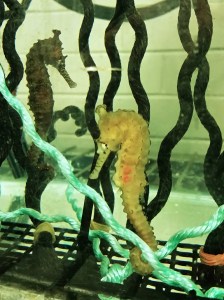
seahorse_tank

Seahorse tag with red elastomer so it can be identified later

Second challenge: Catching seahorses. As anyone who has ever looked for seahorses can attest to, they are hard to find. There are a few sites around Perth where there are plenty of seahorses to be found, but getting all seahorses from one location would have a huge impact on that particular site. To limit the impact of my collecting, I spread out my fish-catching over multiple sites. To further reduce impact, I did not take any pregnant males or any seahorses that were clearly couples ready to mate. Since I needed a variety of sizes and a similar amount of males and females, collecting enough seahorses took a lot of dives spread out over a few weeks. Once seahorses were caught, they also needed to be transported safely to our facility, which meant not going too far, and using specialised tools to  (sturdy catch bags, coolers, oxygen, etc.) to reduce stress for the animals during transport.

Third challenge: High quality aquaria. Seahorses  are notoriously difficult to keep in tanks. They are very sensitive to bad water quality, which can lead to all kinds of issues. Preparing the aquaria started 6 weeks ahead of catching the seahorses. This is  done to ensure that the biofilters that ensure good water quality get properly established. The tanks themselves need to be large and high enough to house seahorses, and they need hold-fasts that mimic seagrass so the seahorses have something to cling on to.

img_7536

First arrivals in the tanks

Seahorses live in salt water, so getting seawater is another issue. Our labs are not directly by the ocean, so we need to import seawater. This then gets sterilised (using UV filters) before we use it. Water quality needs to be monitored daily and adjustments made where needed. This means no weekends off since minor problems could mean dead seahorses. While we have the aquaria and equipment available at CARL, the costs of this would be considerable for a private person.

Fourth challenge: Food. This is probably the biggest challenge of them all. Wild-caught seahorses only eat live food and will not eat dry or frozen fish food. So we need small shrimp to feed them. In our case we are using artemia (= sea monkeys = brine shrimp). Artemia are tiny (less than 1mm) when they hatch, but our seahorses will only eat them when they are about 1cm in size, which means  they have to be grown out for a few weeks before feeding. So we prepared 3 different artemia cultures, each one set up 2 weeks apart to ensure a constant supply of right-sized food. The artemia also need to be fed, in their case with algae. This means 5 cultures of different species of algae to make sure our seahorse-food stayed healthy and fat. Both algae and artemia water quality also need to be monitored, since dead algae/artemia would ultimately mean starving seahorses. To top it off, artemia are not naturally nutritious enough to be the only food source for seahorses. So we added an artemia enrichment-tank (where we add a fatty mix of all nutrients needed for healthy seahorses), which needs to be set up, cleaned, and harvested every day.  The result is that for 3 tanks with seahorses, we have 9 tanks for their food preparation. I’m not sure if you have enough space for that at home?

Fifth challenge: Feeding. As if breeding the food was not hard enough already, feeding them makes it even more complicated. Seahorses have no real stomach to speak of, so they are lousy at digesting their food properly. Because of this they need to eat almost constantly, which is possible in the wild, but harder in an aquarium where too much food will lead to bad water quality. In our case it means feeding them three times per day, every day (bye bye weekends or late nights!). Since our guys have been caught so recently, we can’t just drop the food in the tank and leave it. What works best is hand feeding them with a pipette to make sure they see the food and eat it. Each feeding session takes about 30 minutes, with longer sessions (90 minutes) in the morning, since food has to be harvested first and then a new culture prepared for the next day.

14786903_10154728145307608_1893594246_o

Feeding the seahorses using a pippette

Sixth challenge: Keeping them healthy. Seahorses kept in aquaria are prone to infections, so besides good water quality  it is important to keep everything clean. This means sterilizing all the equipment we use, only handling seahorses with surgical gloves on, keeping workspaces clean, etc. Regardless of this, infections can still happen. So far I have had to treat one infection with freshwater baths. Earlier this week two males had bubbles in their pouch (common in tank-kept seahorses), which needed to be removed using syringes and gentle pouch-massaging. You read that correctly, my PhD involves giving belly-rubs to seahorses.

All of this is needed just to keep our seahorses alive. I won’t go into what it means to actually run the experiments as well. But if you managed to read this entire post, it should be clear that keeping seahorses means a LOT of work. I am only able to do this because I can use the great facilities at Curtin University and because I have the support of experienced lab technicians, dedicated volunteers, and supervisors with experience in aquaculture. After 2 months of caring for my seahorses, I feel even more strongly than before that seahorses should be in the ocean and not in a small aquarium. If you do want to keep them yourself, think it through before you begin. Make sure you have the right setup BEFORE buying seahorses, only buy captive bred animals and be prepared to sacrifice a lot of your free time for your seahorses.

To finish, here is a short video of one of our seahorses eating artemia:


Training Marine Biologists: Coral Bay fieldtrip

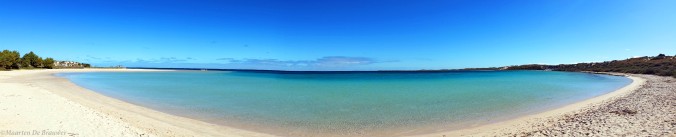
Last week I’ve had the pleasure of exploring a new, beautiful area of Western Australia: Coral Bay in the Ningaloo Marine Park. I wasn’t visiting just for fun, but went over to tutor during a marine field project for the third year marine science students of Curtin University.  The goal of the course is to get marine science students hands-on experience with working in the field. To achieve this, the students worked in groups of 4 on a research project of their choice, with a bit of help from their lecturers (and tutors). As I have written earlier, there are a few very good and a few very bad reasons to want to become a marine biologist. This link is another great write-up for people considering to become a marine biologist. So besides being very keen to help with training a new generation of marine scientists, I was also rather curious to find out more about these people keen to trade civilised comfort for sunburns, sandy beds and soaking in salt water for hours on end.

Panorama

Coral Bay

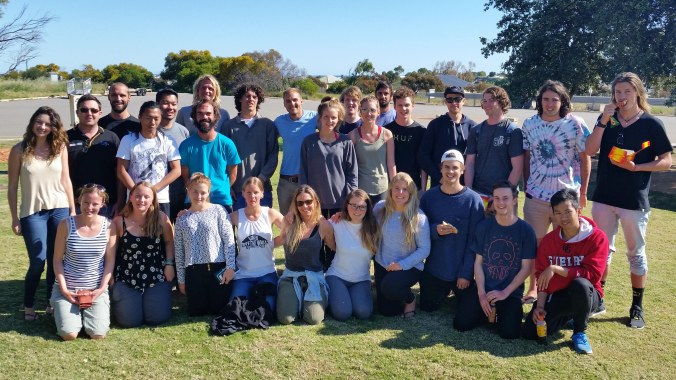
The 23 students taking the course were a diverse bunch, but they all share a passion for the ocean. To my great relief, most of them actually seemed interested in science and real marine ecosystems, and not just in hugging dolphins (=the WORST reason for anyone to consider becoming a marine biologist). Or maybe they just didn’t dare to admit it in front of me? Regardless of what motivated them, before I even got on the bus with them for the long drive (15 hours) to Coral Bay, they had already spent a few weeks preparing their research projects. The projects were diverse, with groups looking at topics like coral cover, parrotfish abundance, sediments, fish diversity, etc. None of the groups was looking at my kind of critters, but that only meant I would get to learn a few new things myself as well.

DUV

Student ready to survey fish

After arriving late at night in Coral Bay, the daily schedule was for students to go out to do fieldwork by day, and to come back to the research station in the afternoon to enter their data and analyse videos where possible. The tutors (Ash and me) were mostly expected to chill out on the beach to make sure nobody drowned, join students in the water to help where possible and answer any practical questions the students might have. As is usually the case with fieldwork, especially when you are new to it, getting started isn’t always easy. Regardless of what you are surveying in the ocean, you will need a fair bit of equipment, ranging from slates, to GPS’s, measuring tapes, plastic bags, cameras, quadrats, etc. Understandably, one of the main issues in the first days was forgetting to bring crucial pieces of equipment to the site, or loosing equally  crucial equipment in the water (sometimes never to be found again). Identifying fish and corals is also more challenging once you are in the water than what you’d imagine it to be while preparing your project. But as the week went on, the groups started to find their rhythm, got more confident and grew enthusiastic about getting results. That feeling of collecting real data is always a great one. The next step for the students now they’re back in Perth is to analyse their data and write their results up into a research paper. Which makes this project a great practice for other, more serious research projects they might do in the future.

Nikki_coral

Nikki staining corals

While the students were working away on their projects, I was also helping out my colleague tutor and PhD-candidate Ash. Her work looks at the effects of climate change, and as part of her research she will be collecting environmental data from all around Western Australia. This week she was testing her brand new, high-tech in-situ CO2 sensor. I imagined it would be as easy as chucking out an anchor in the ocean, but turns out it involves a fair bit more thinking and crafty tinkering to deploy the unit successfully. I also gave Nikki (the unit coordinator) a hand staining corals, a technique that is used to measure growth rates of coral. I had hardly done any work with corals before, so it was great to learn something new and see how coral scientists spend their days in the field.

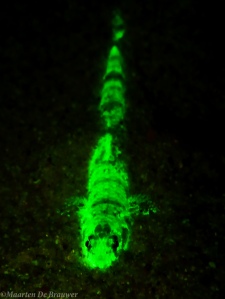
Fluo Lizardfish

Biofluorescing Lizardfish

I even had time to go for a cheeky night-snorkel for myself to check out biofluorescence in the bay. Turns out there is quite a lot going on! Mostly coral showing green fluorescence, which seemed brighter than many locations I’d checked fluorescence previously. In the shallow, sandy areas there were loads of lizardfish and goatfish, and even a few bright green nudibranchs. It was interesting that during the snorkel I didn’t see any other fluo colours than green, compared to the mix of green, yellow, orange and red I got used to seeing in Southeast Asia. The question of why this is the case remains a mystery to me…

Looking back at this week, I am very happy I got the chance to join the field trip. From a personal point of view I got some great experience teaching and guiding students,  I learned a few new research methods in the water, all of that while staying in a gorgeous location. Most of all though, I enjoyed helping out with the education of new marine scientists. It is great to see motivated students find their way in the field and grow confident and enthusiastic about the work they are doing, and I am honoured to be able to help out with it. I don’t know which direction they will go after graduating, but it would be good to see at least a few of them as colleagues in the future. I wish them all the best, and hope they enjoyed the trip as much as I did.

Group

New publication: Fluo frogfish lures

After a weekend looking for vagrant fish in the cold waters of Shark Bay (more about that later this week), I came home to find a pleasant email in my inbox. A new publication has been published online last week. This one is in the journal “Coral Reefs” and is about biofluorescence in the Striated Frogfish (Antennarius striatus), more commonly known as the Hairy Frogfish. The article can be found here, but is restricted access. For those of you who cannot access it, here is what it is about.

IMG_0766

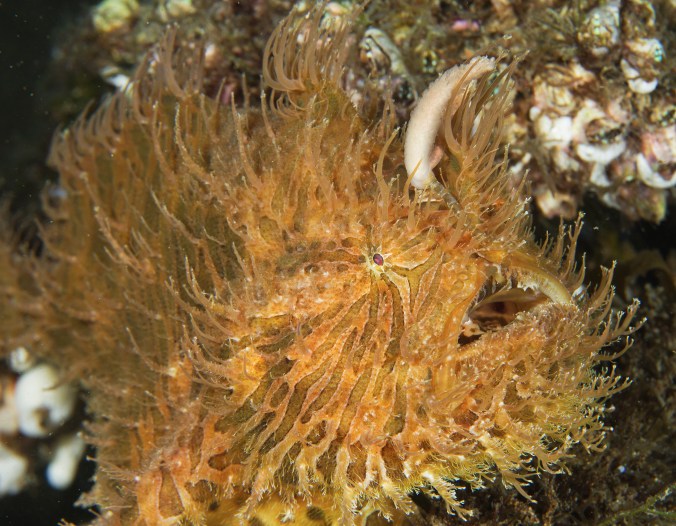
Hairy Frogfish by day. Photo: Luke Gordon


As I have written previously, I have been doing a fair bit of work looking at biofluorescence in fishes. During these surveys i had noticed something strange going on with the Hairy Frogfish: their bodies are not fluorescent, but their lure is (very strongly). As you might know, frogfish use their lure as a fishing rod, attracting small fish closer, which are then eaten whole. The fact that the Hairy Frogfish’s lure alone is fluorescent but their bodies are not, hints at the possibility that this fluorescence could be used in what is called “aggressive mimicry”. Aggressive mimicry is the term used for animals who pretend to be something harmless (the “model”) and use that to get close enough to eat their prey.

FluoLure_MDB_small

Hairy Frogfish (Antennarius striatus) with fluorescent orange lure

But the question was, what would it be trying to mimic? Are there animals out there that resemble this fluorescent lure? Cue my last Philippines trip. During a nightdive with the unparalleled science hobbit, we found three more Hairy Frogfish (with fluo orange lures). More importantly, we also found a lot of freeswimming worms near them. Most of them a similar size as the lure of the frogfish, AND the same colour fluorescence as those lures. The resemblance between the lures and the worms went further than just size, shape and movement, but also the fluorescence is imitated. We found our model species!

Lure_and_Worm

Fluorescent worm (top orange squiggle) and fluorescent lure (bottom orange squiggle)

This is very exciting, as it is the first time anyone found strong indications that biofluorescence might be used to help fish catch prey. To prove whether it is really used to hunt, lab experiments or extensive observations would need to be done to check if this fluorescence really makes a difference. So while this is a very exciting glimpse into an unexplored part of hunting strategies in the ocean, much more work needs to be done to understand all the details.

If you can’t access the article but want to read it, or you just want to know more, send me an email or ask in comments and I can send the publication to you.

Critters Research on Instagram!

It’s been a busy few weeks for me the last few week, which is why it has been quiet for a while on this blog. That will hopefully change in the near future, more critter posts coming up and a trip to Sydney to look for seadragons as well!

Weedy seadragon2

Coming up: looking for more of these guys! (Phyllopteryx taeniolatus)

InstagramLogoIf you are stuck for critter updates in the mean time, here’s the solution for you. Critters Research is now also active on Instagram. Mostly focused on nice pictures and short updates of what is happening at the moment. Check it out at “crittersresearch”  Instagram