Video Interview: The science behind the critters

A few months ago the Department of Environment and Agriculture at Curtin University asked me if I wanted to do an interview to explain what my PhD is all about. Since I am part of that department and I love to share how amazing my weird critters are, I obviously said yes.

The underwater footage was taken by myself, Luke and one of my supervisors during fieldwork in Indonesia and Philippines last year. You can watch the video on the Environment and Agriculture website, or right here:

A different look at Bali

This year I have spent a good 3 months doing research in the waters around Bali. I worked and lived in Bali 6 years ago and it has been great to be back, even if a lot has changed since I left.

Depending on who you’d ask, Bali brings very different images to mind. For many Europeans it’s a far away tropical dream destination. For Australians it’s a surf or party destination and for many other people it is the ideal island to do yoga and revitalise (whatever that might mean). Travel agents and tour companies love to cash in on this image of an unspoiled paradise with the loveliest people you can find.

Sunrise_Amed_small

Sunrise in Amed (north-east Bali)

Lately Bali has also being getting an increasingly negative connotation. To some people it is just a place where Australians or backpackers go to get drunk and make absolute fools of themselves. It’s a place where tourism is tipping the scales from a paradise island to a congested, resort filled, money driven place for people who don’t care about the local culture. In this version of Bali, there is no more romantic notion of an idyllic paradise, quite the opposite.

As always, there is some truth to both sides of the story. Tourism has increased massively, it’s estimated that nearly 4 million people will visit Bali in 2015 (compared to just over 2 million in 2009). Traffic has increased, new roads have been built, countless new resort sprung up and big buses now drive around hordes of tourists to uninspired commercialised tours. It used to be normal cars or motorbikes taking out a fraction of the people to admire Bali’s unique culture. I am not claiming there was no tourism here 6 years ago, but the intensity with which it has increased is staggering.

I must admit that I struggle with this increase in tourism, I loved living here years ago, loved the people, the diving, the culture, the food, the diving,… Some of that has changed or is gone, which is unfortunate. It is especially difficult as I do believe tourism can be a sustainable alternative to more exploitative use of the environment. The question is how to find the right balance. It is easy for us as visitors to regret the loss of small island charm and the increase of pollution that comes with mass tourism. But who could deny the right of local communities to hop on the tourism bandwagon and make a better living for themselves and their families?

Ricepaddie_small

Rice fields in the centre of Bali

What I can say, is that there is still a lot of beauty out there. Head away from the busy south and explore the interior or head to the less explored northern coast. The northeast is stunningly beautiful, even if there might be more tourists around than there used to be. I still feel extremely lucky for being able to do research here and very frequently still just stop for a while to take in the beauty of it all, whether it’s on land or under water.

Explore

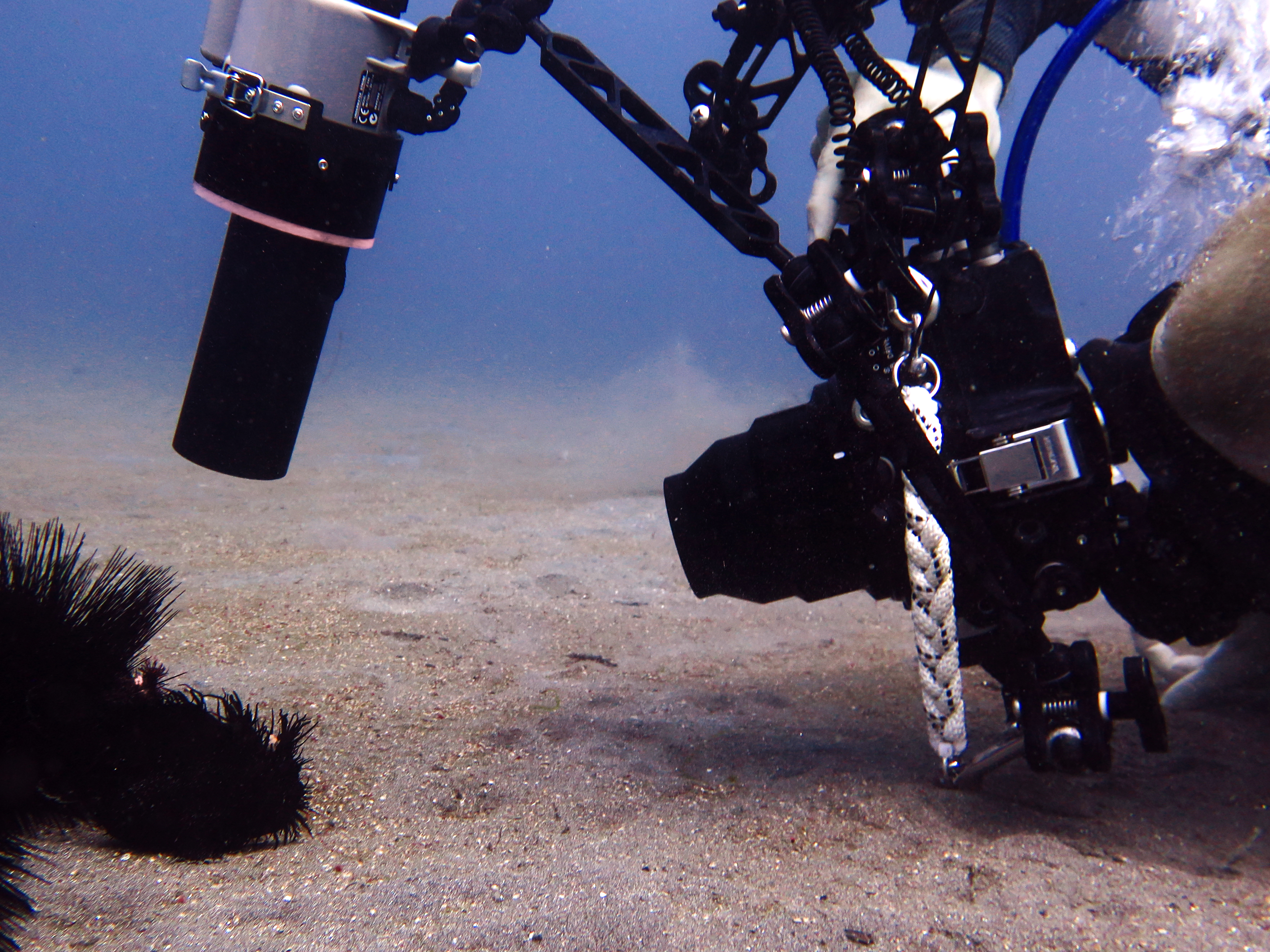
Getting ready to explore a new site

While dive tourism in Bali has also increased a lot, there are still many untouched places left to explore. Sure, it’s great to dive with manta rays or marvel at Mola molas, and the USAT Liberty still is a great wreck dive, but there is so much more. I might be biased as my research looks at small critters in the sand, but I just can’t contain my excitement when I survey a new site and find it has lots amazing critters like seahorses, ghostpipefish and a range of cephalopods. Next time you dive Bali, try to find a way to explore those sites that are dived less and enjoy the feeling of being away from the crowds and the excitement of finding new critters. Oh, and be kind enough to let me know if you find an amazing new muck site!


The story of a science hobbit

Luke, science hobbit

Luke, science hobbit

The research project I am working on might be one I designed and that will (hopefully) result in me getting a PhD degree, but I could never succeed in this without the help of many other people. I have got three supervisors in Australia, local counterparts here in Indonesia, connections in the dive world, friends and family who provide moral support,… And then there’s my trusty science hobbit, Luke. As much as everyone else has supported me and helped out so far, I could not have achieved a fraction of what I have in Indonesia without Luke’s help. So I am using this blog to thank him and to tell his story (and to shamelessly promote his awesome photography work while I’m at it).

Luke and I met in 2011 where we were both working for Coral Cay Conservation in Napantao, Philippines. He was one of the two science officers, while I was responsible for making sure everyone was diving safely. Luke and Jen (the other science officer) were amicable kown as science hobbits, a title that I have kept on using ever since. We shared a room for months, so we got to know each other very well. Besides sharing a passion for nudibranchs and by extension any other ocean critter, it turned out we also make great dive buddies.

Luke and me in Philippines, 2011

Luke and me in Philippines, 2011

As most divers will know, diving with some buddies just works better than with others. It’s more than just safety and doesn’t necessarily have anything to do with how well you get along on land. I have dived with partners and friends who were great divers, but which just didn’t work as a buddy. Vice versa I’ve dived with people that I hardly knew on land, but with whom diving just went super smooth. Anyone who has ever had the chance (or bad luck) to dive with Luke and me will contest to the fact that we work well underwater. We not only know each other’s dive style, air consumption and intentions, we actually manage to have proper conversations while we’re diving. I have vivid (and hilarious) memories of us discussing which species of nudibranch we found on a dive in Komodo, ignoring the ripping currents because we needed to settle that particular point right then and there 😀

Photographing manta rays in Ecuador

Luke photographing manta rays in Ecuador

So who is this science hobbit really? I can tell you that he is not only a great diver, he is also one of the most knowledgeable field marine biologists I have ever met. You need coral identified? Ask Luke. Not sure what fish it is? Ask Luke. Need to know more about coral nurseries? Ask Luke. Want to build a coral reef aquarium, do fish surveys, know more about conservation, diving in Fiji, Madagascar or Philippines? Luke’s your man! I even have to admit that he might be better at spotting baby frogfish than I am. On top of all that, he is also genuinely a nice guy who is great fun to work with. All of this is probably why he has been asked to work with so many NGOs and researchers in places like Fiji, Philippines, Maldives, Madagascar, Ecuador, Indonesia,… It is definitely the reason why I asked him to come and help me in Indonesia for the past 3 months.

To add to those skills, he is also not half bad as a photographer. When I say not half bad, I mean pretty bloody amazing! Most of the pictures on this blog are his work, so go back, read through some of the posts and have a look at the pictures. Even better, check out his website or facebook page. You can even order prints of his pictures as well, so check it out! On the site you can order prints of some of his best shots. At the moment Luke is giving 50% off prints for the first 20 prints ordered, just use the code FROGFISH when ordering your prints. If anyone is still looking for Christmas or birthday present ideas for ocean lovers, it’s your chance to get a good deal.
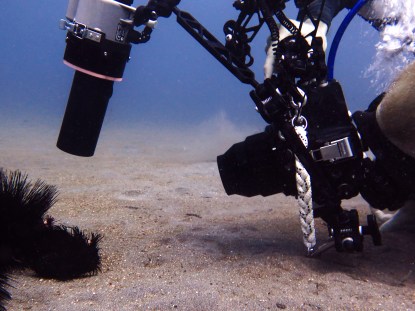
Luke in action, find the black frogfish

Luke in action, find the black frogfish

Unfortunately I had to say goodbye to one of my best friends and greatest colleagues ever. He has been whisked away to Australia by his girlfriend to go and explore that part of the world. In all fairness to Katie, she did let me use him for a good 3 months, significantly postponing their Australia plans. Besides that, she is just as amazing a person as Luke is, so I am wishing both of them all the best on their new adventures. I sincerely hope they have the best of times together and that they get all the good luck they both deserve.

Once again a massive thank you Mr. Luke, hoping our next dive together will be sooner rather than later!

Bad luck and How to find a frogfish

A few days ago, I prepared a blog post about a very interesting experiment we had started. It had everything to be cool (at least in my mind): interesting, sciency and a nerdy acronym to go with it! Luke and I were deploying SMURFs (Standard Monitoring Unit for Recruitment of Fish) to look at the habitat preference of baby fishes. The reason it did not get published, is the ocean. The night after successfully deploying the first 15 units, the waves picked up and destroyed all of our work… Marine biology fieldwork can be pretty amazing and it can be rather challenging as well. But that’s the beauty of the ocean: it’s unpredictable. Which can be frustrating at times, but can mean fantastic surprises as well.

Cartoon life_eggs

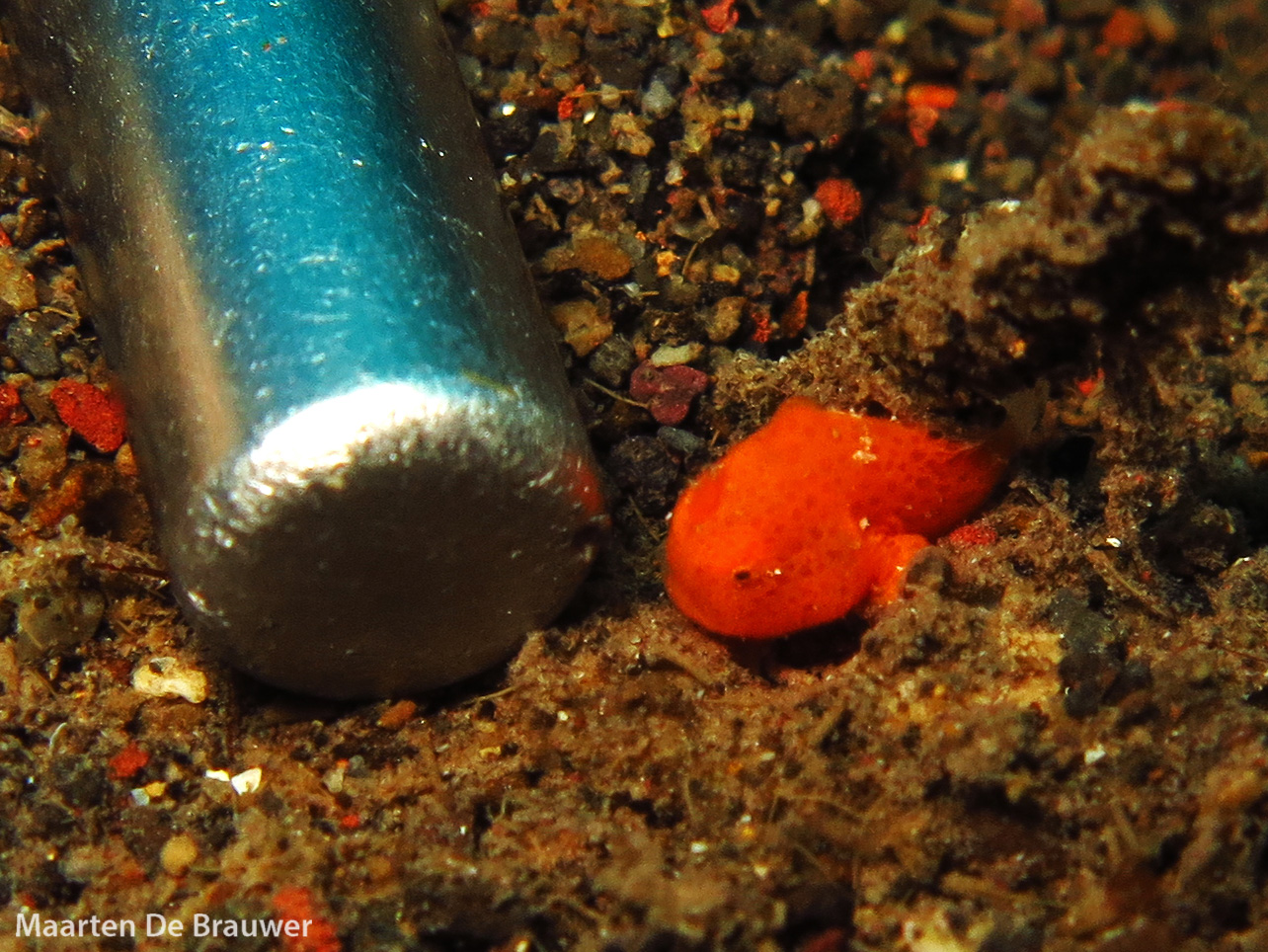
Baby froggie

Baby froggie

Which was proven once again when we found this very cute little baby Frogfish after assessing the damage to our equipment. We don’t know which species it is, since it was still tiny (less than 5mm). It was bright red, which would lead one to falsely believe they are easy to see on black sand. Think again! Next time you dive (or snorkel, or walk) over volcanic black sand, take a close look at the sand and you’ll notice there is a surprising amount of red grains in there. An unexpectedly efficient form of camouflage…

So how do you find a Frogfish? Or other cryptic critters for that matter? They have been evolving for millions of years to be invisible and most of them are very small, so spotting them is something that takes a while to learn. Here are a few tips to make it easier:

  • Movement: Your average Scorpionfish or Frogfish does not move very much, but every now and then they do. Whether it’s a small shifting of the fins, an eyeball that rolls to follow potential prey, or a full swim, our eyes are fantastic at spotting movement. So if you see an unexpected twitch or you think you might have imagined seeing something shift in the corner of your eye, investigate it!
  • Habitat: The critters I am investigating here are usually found on sand, but there are A LOT of different types of sand. Not just the type of sand, but also what’s on it, whether it’s algae, sponges, featherstars, logs, mooring blocks or anything else that offers a minor difference in structure. Certain species of frogfish (eg. Giant Frogfish) are nearly exclusively found on sponges, while other (eg. juvenile Hairy Frogfish) like to hang out in areas with a lot of shell fragments. Sand Divers (Trichonotus sp.) love very loose sand, while Thorny Seahorses seem to prefer coarse sand with plant debris. In this post I explain where to find different species of scorpionfishes.
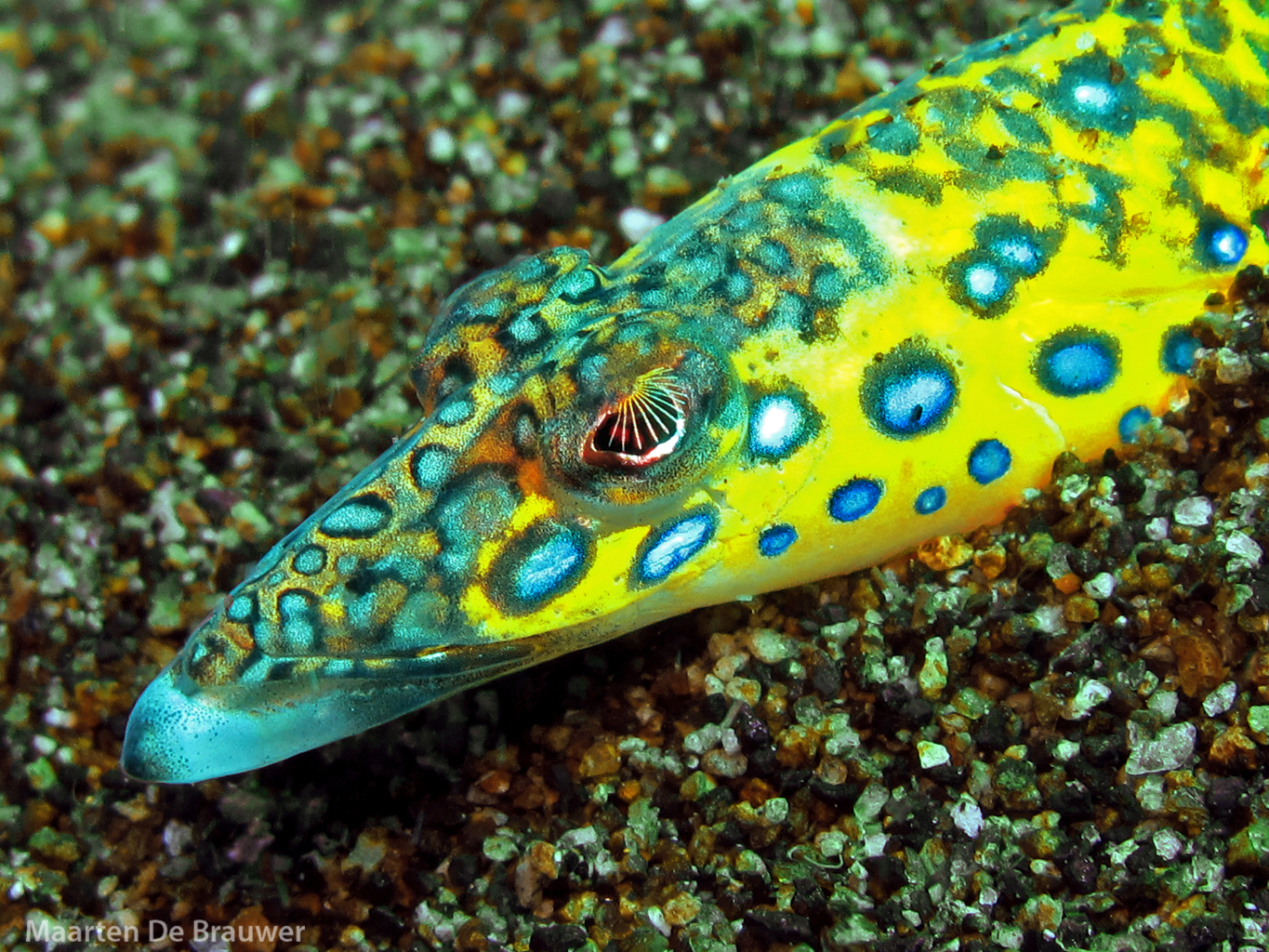
Sand Diver (Trichonotus elegans)

Sand Diver (Trichonotus elegans)

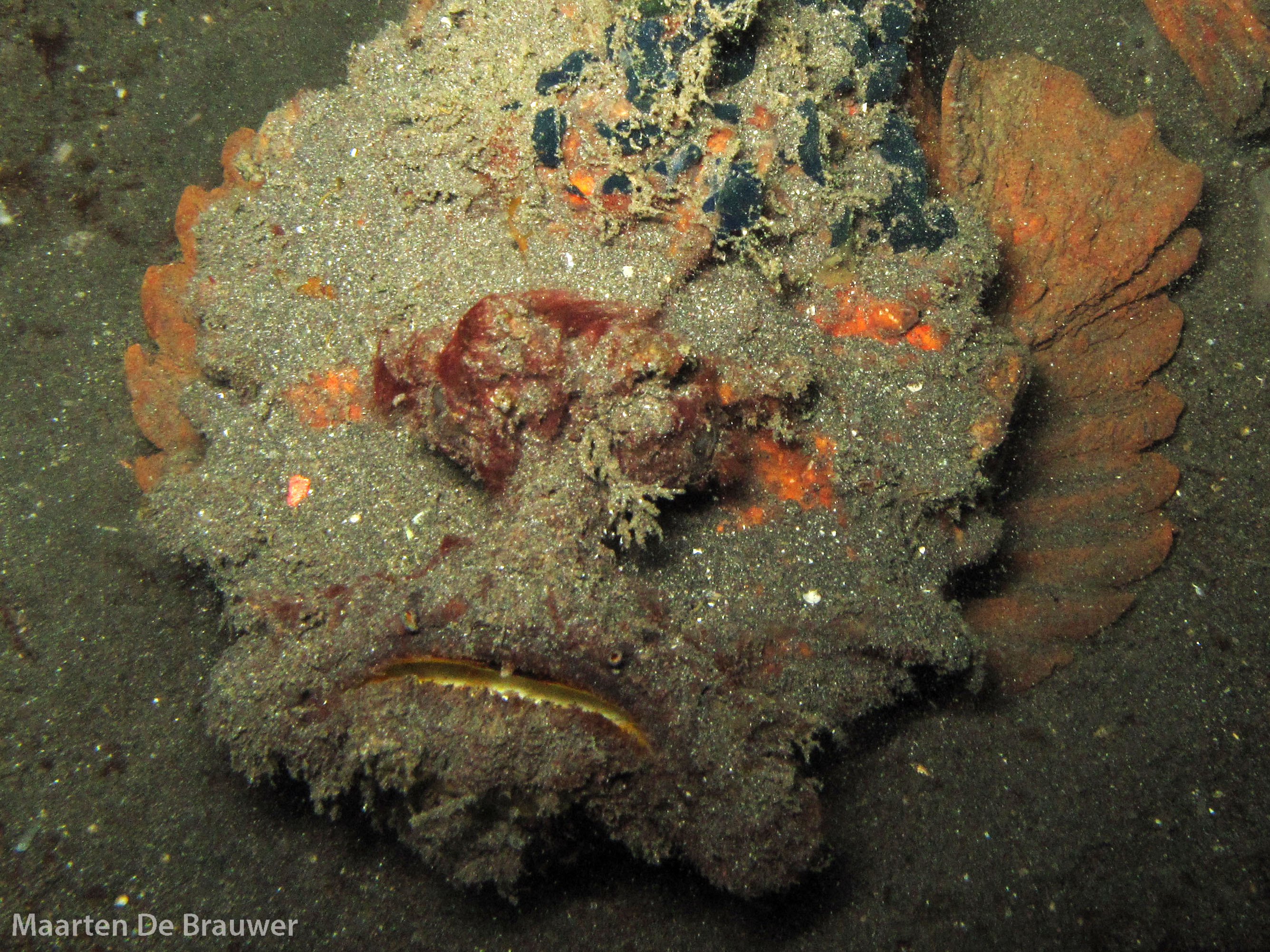
  • Shape: Even with their amazing camouflage, fish will be fish, which means they have (most of) the parts normal fish have. These shapes can help you find them. The distinctive thick pectoral fin of Stonefish are one of the best ways to recognize them. Pygmy seahorses are tiny and hide in big seafans, but they use their tails to hold on, which is one the things you can look for to try and find them.
Stonefish are easiest to find by looking at their pectoral fins (orange in this individual)

Stonefish (Synanceia horrida) can be found by looking for their pectoral fins (orange in this individual)

  • Position: your own position makes a massive difference when trying to spot cryptobenthic fauna. If you are high above the sand, everything blends in, these species evolved to hide from most top-down predators. Get close and get low, if there is a slope, look up the slope instead of down, silhouettes often stand out this way.
Robust ghostpipefish (Solenostomus cyanopterus) mimick decaying leaf litter. Getting close and low makes finding them easier

Robust ghostpipefish (Solenostomus cyanopterus) mimick decaying leaf litter. Getting close and low makes finding them easier

  • Luck: In the end, good portion of luck can play a big role in finding that elusive critter you’re looking for. If anyone knows how to get better at this particular method of finding critters, please tell me!