Ornate Ghostpipefish

So far most of the critters I’ve written about were true benthic ones; Frogfishes, Scorpionfishes, Pipefishes, they all spend the vast majority of their time laying on the bottom. The next little guys are a bit different, they are (only slightly) less lazy and spend their time hovering close the bottom. May I present to you the Ornate Ghostpipefish!

Ornate Ghostpipefish (Solenostomus paradoxus)

Ornate Ghostpipefish (Solenostomus paradoxus)

The Ornate Ghostpipefish (Solenostomus paradoxus) is another one of those truly bizarre creatures you can find when you have a good look around you while diving. They look very flamboyant and ornate, but they are remarkably hard to spot. The fact that they don’t get bigger than 12cm might have something to do with that. So if you’ve never seen them before, it might take the help of a friendly diveguide to have the pleasure of seeing them.

Ghostpipefishes belong to the order (=one level up from family) of “Syngnathiformes”, which is the same order in which you’ll find seahorses and pipefishes, but also razorfishes and even trumpetfishes and cornetfishes! So all these weirdly shaped critters are related in one way or another.

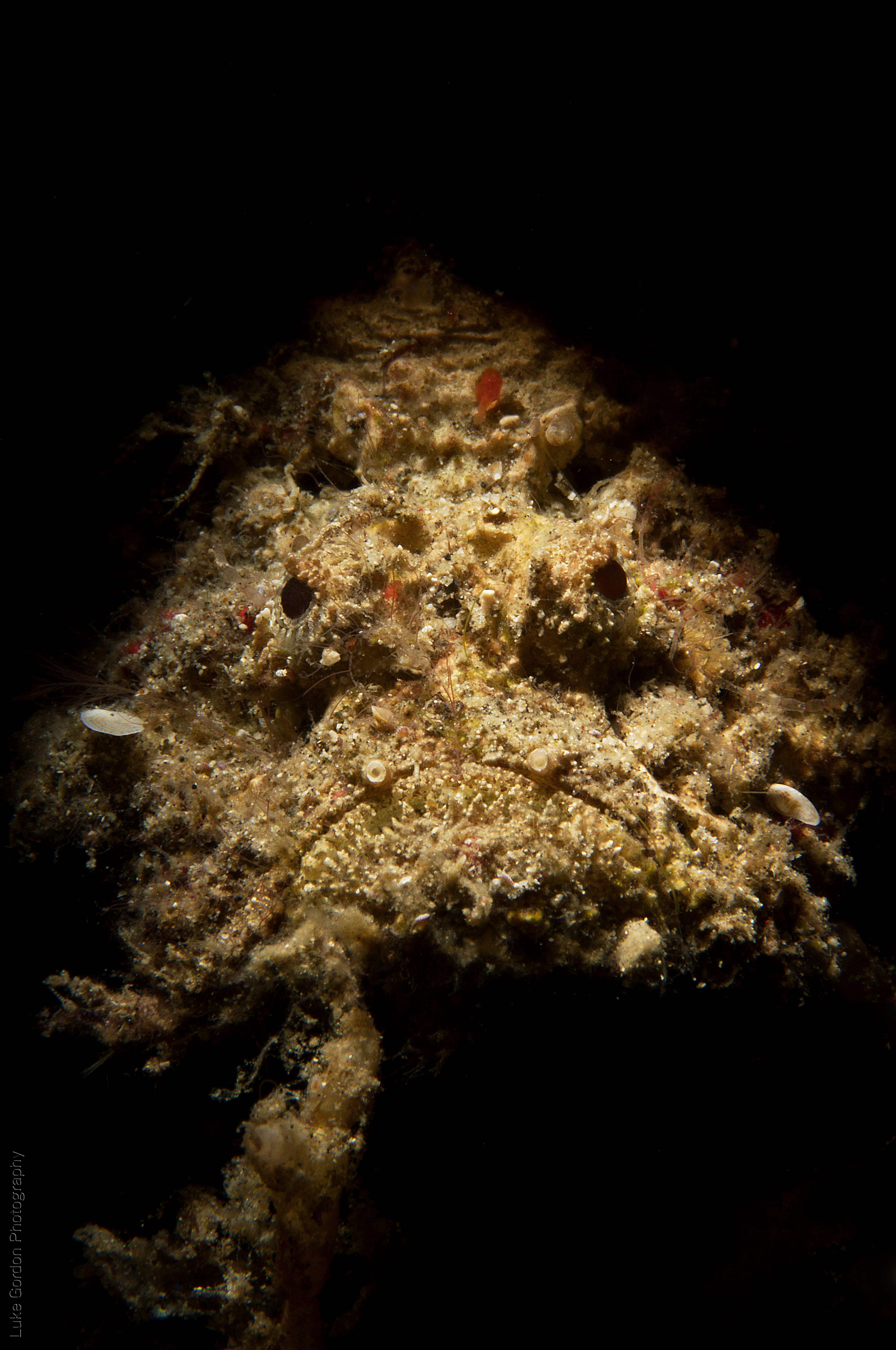
Male Ornate Ghostpipefish

Male Ornate Ghostpipefish

Male Ornate Ghostpipefish (Picture by Luke Gordon)

Male Ornate Ghostpipefish (Picture by Luke Gordon)

There still is a lot of confusion about how many species of Ghostpipefish actually exist, but there seem to be at least four. For this post, I’m sticking to the best known and most flashy one. Describing an Ornate Ghostpipefish to someone who’s never seen one is interesting. Usually it goes a bit like this:  “It’s a fish that swims upside down, with the head of a seahorse, a wide fan-like tail, a pouch like a kangaroo and it has got little filaments growing all over its body….Oh, and it also changes colour, any colour you’d like. Really, it’s a thing that actually exists!!!” Luckily there are plenty of photos to prove it.

While Ghostpipefishes are closely related to seahorses, there are a few major differences. As you may or may not know, in seahorses it’s the male that gets pregnant and gives birth. Ghostpipefishes are a bit more old-fashioned and don’t want anything to do with that modern male kind of stuff. With them, it’s the female that has a brooding pouch, gets pregnant and gives birth. Although there might be a little twist…Very little is known about them, but it is believed (not proven) that all Ghostpipefishes start out as males and later change sex to become female.
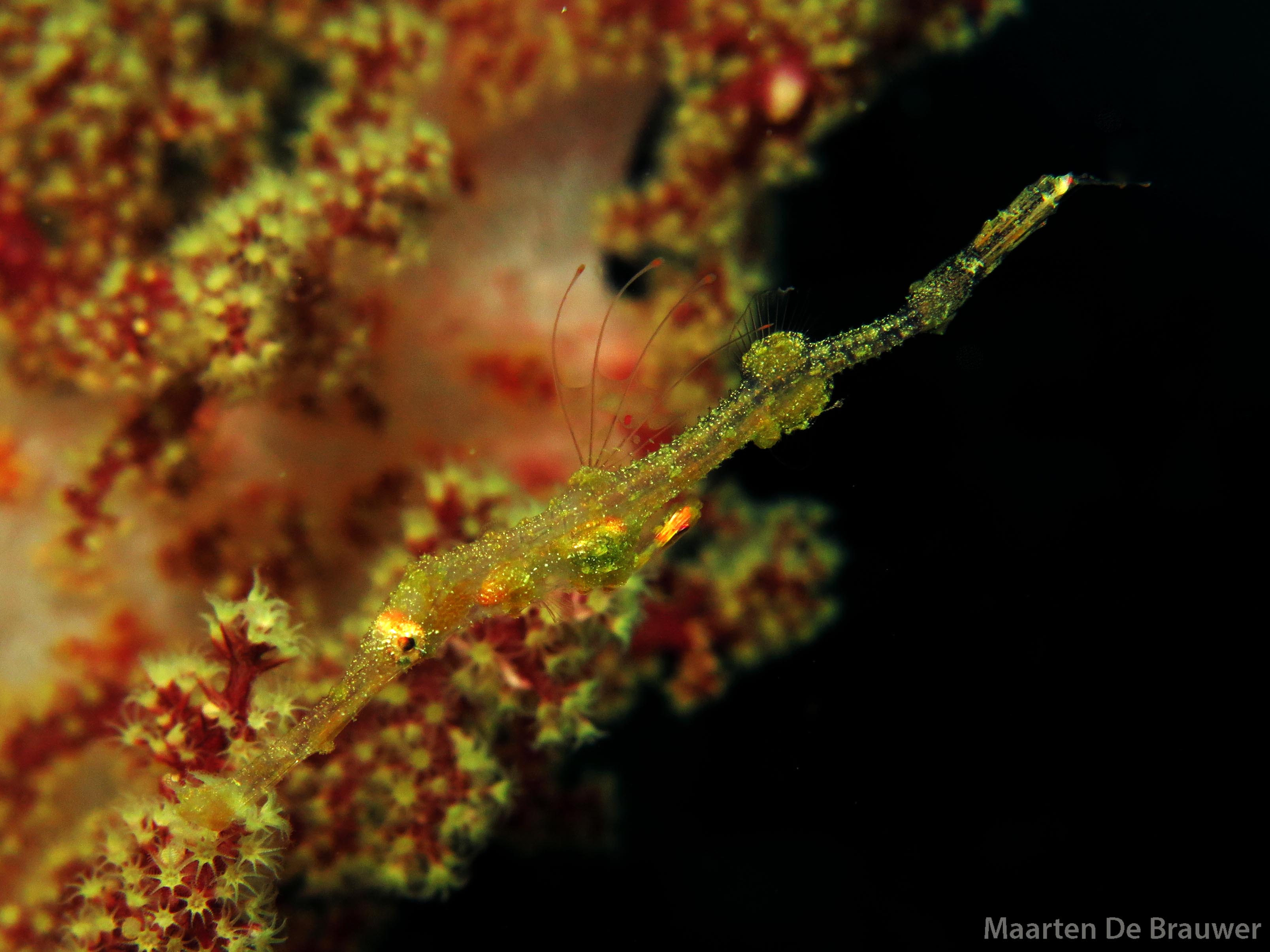
Juvenile Ornate Ghostpipefish - Still partially transparant

Juvenile Ornate Ghostpipefish – Still partially transparant

There is a LOT more we don’t know about Ghostpipefishes. For example, we don’t have a clue how long they live and it’s unknown how long they float in the open ocean as larvae. It looks like these animals spent most of their lives as larvae, floating around and then only “settle” to mate, after which they supposedly die. None of this has been properly tested, as Ghostpipefishes are notoriously difficult to keep alive in aquaria, let alone breed them in captivity, making close observations or experiments to test these hypotheses very difficult.
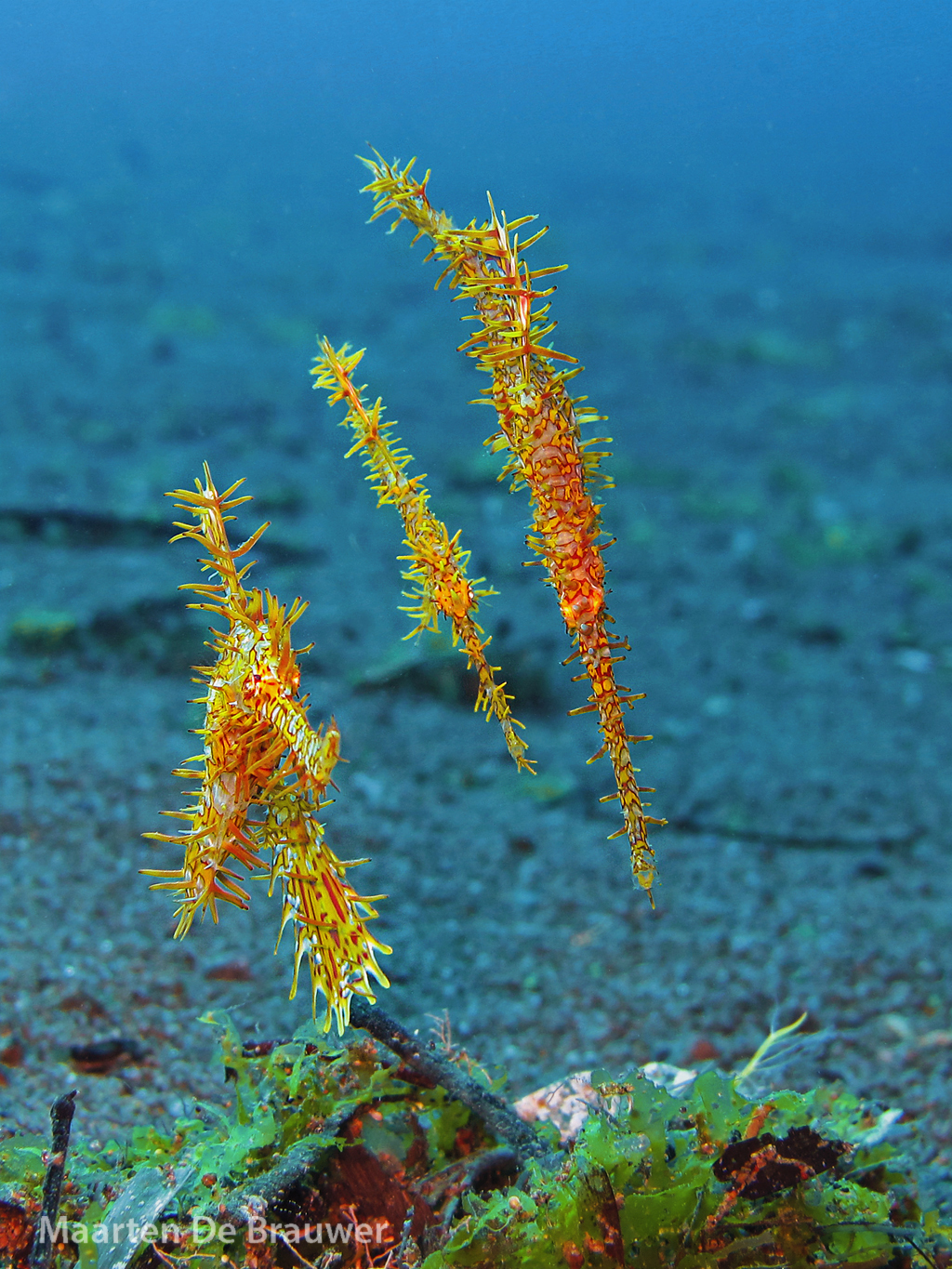
Social group of Ornate Ghostpipefish

Social group of Ornate Ghostpipefish

If you do want to see them for yourself, or maybe you are even ambitious enough to solve these riddles in the name of science, here is where you’ll find them. They are mostly tropical species which can be found from the east coast of Africa all the way to Fiji, but they are spotted most frequently in Indonesia and Philippines. During the last months of surveying, we found the highest numbers in Dauin with Lembeh Strait a close second. They are usually found in areas with some current and always hide in larger objects such as featherstars. You can also look for them in seafans, black corals or even rubbish. Ghostpipefishes often hang out in small social groups, so if you find one have a close look around to maybe find some more.

Pair of Ornate Ghostpipefish - If you look closely, you can see the eggs in the pouch (Picture by Luke Gordon)

Pair of Ornate Ghostpipefish – If you look closely, you can see the eggs in the pouch (Picture by Luke Gordon)

Once you’ve found them, try to see if there is a female, she’ll be the one with the brooding pouch. The pouch is formed by the pelvic fins and if you are lucky, you might be able to see eggs inside it. Unlike other brooding fish species, ghostpipefishes will have eggs in all stages of development, so at the same time there might be freshly laid eggs in there and eggs that are ready to hatch. As far as I am aware no photos or videos exists of the little ones hatching (let me know if you do!). But what really interests me is what happens to the little guys after they hatch and start drifting in the water column….

Hairy Frogfish

It is clear that there is no shortage on weird critters in the ocean. Most of these happily bumble along the sea floor without attracting undue diver attention besides maybe the occasional researcher. But then there are those critters that stand out and are absolute favourites with divers and photographers. These superstars are on the wish-list of any diver who’s ever seen pictures of them. One of these absolute superstar critters, is the Hairy Frogfish.

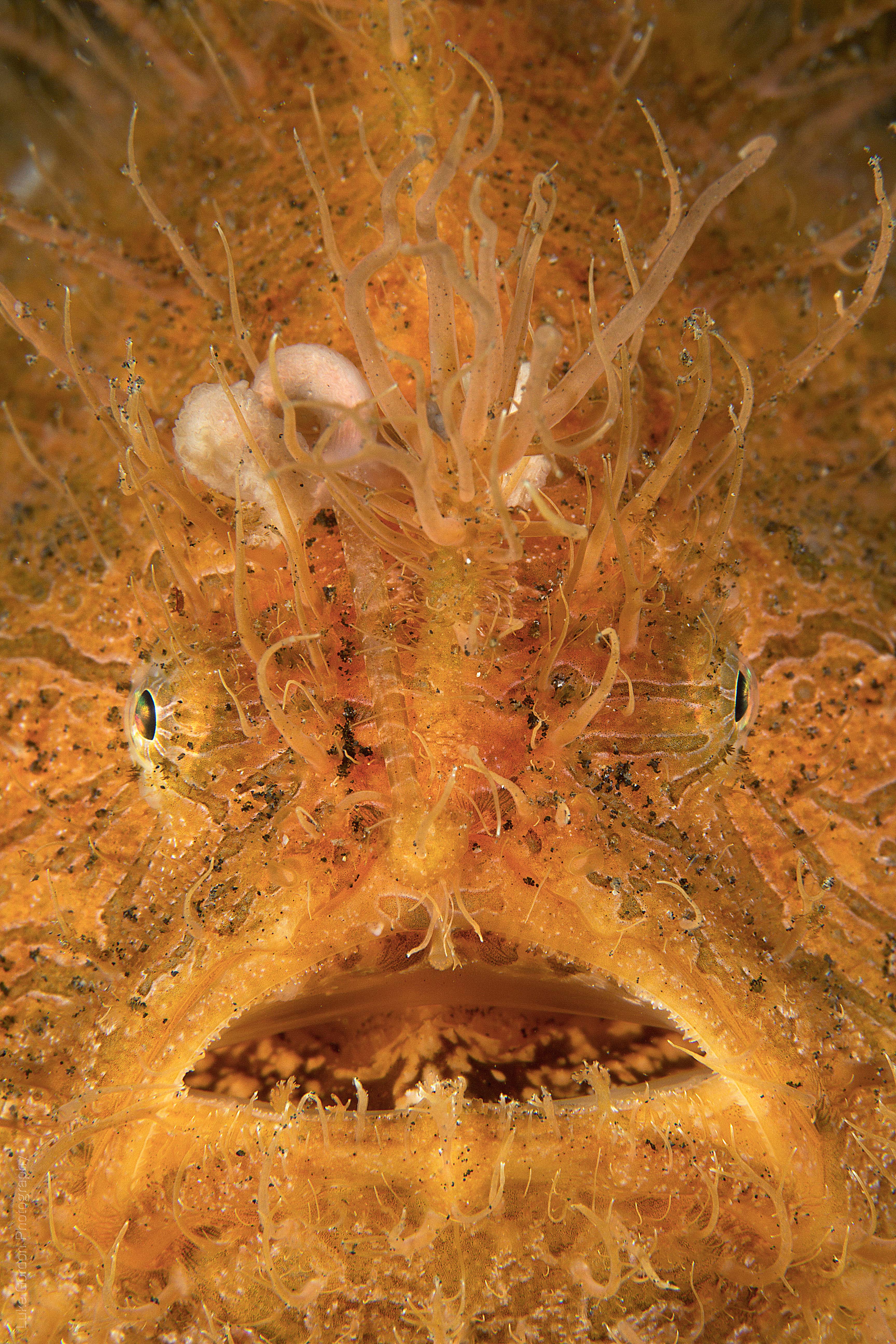
Hairy Frogfish (Antennarius striatus) are one of those fish that make you stare and think “Why?”, “How?” or alternatively just “Huh?”. Besides being a Frogfish (which is reason enough to be interesting), they often are – as the name suggests – HAIRY. Yup, you’ve read that correct: a fish with hair on it. Or at least something resembling hair. To prove my point, here is a shot of a prime specimen:

Hairy Frogfish (Antenarius striatus)

Hairy Frogfish (Antenarius striatus)

In case you would be asking why, here’s is what we know: As many of the other critters I’ve written about, the main goal seems to be camouflage. This species seems to become hairy in areas with high filamentous algae growth, the hair mimics the algae and breaks up their body outline. However, Hairy Frogfish are not always hairy, they are relatively frequently seen without hair, but in that case they don’t always get recognised as “Hairy Frogfish”. As a matter of fact, their scientific name (Antennarius striatus) relates to the fact that they have stripes on their sides.

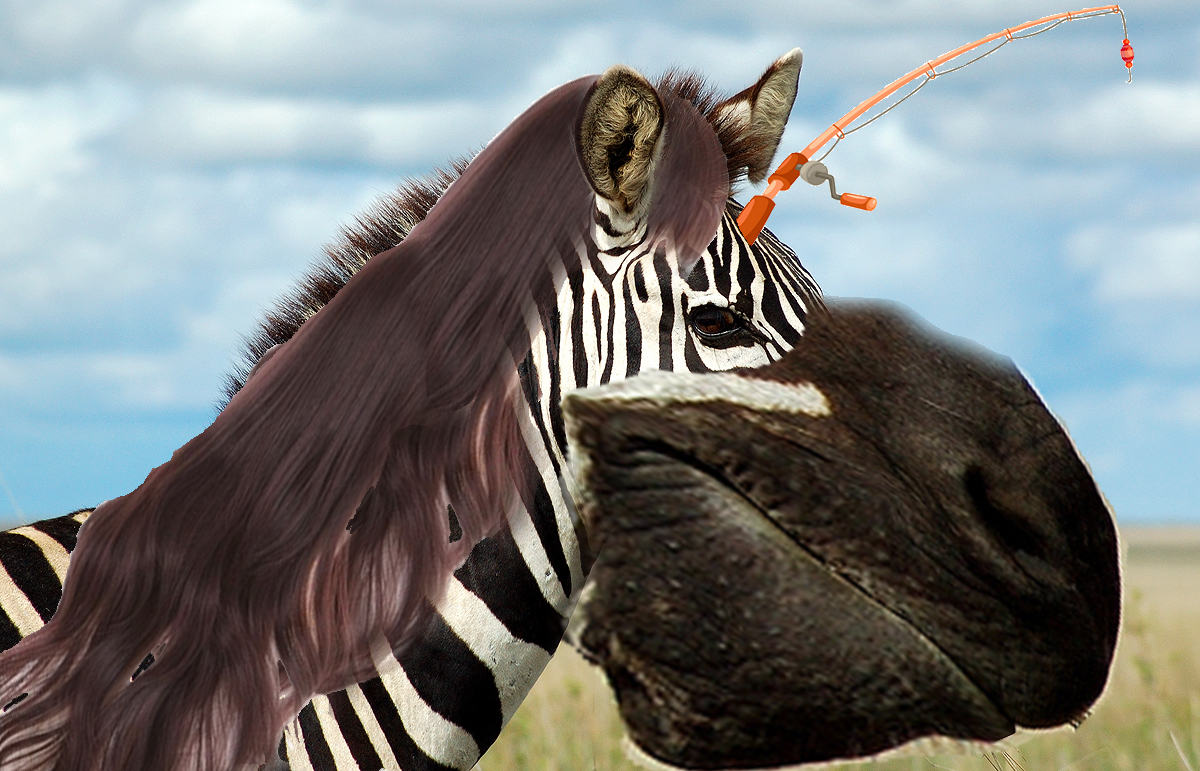
So seeing a hairy Antennarius striatus is as if you’d suddenly see a zebra covered in very long hairs….with a fishing rod growing out of its head….and a mouth so big you could fit an antelope in it…Let me just share this mental image to show you how VERY weird a hairy frogfish really is:

A terrestrial interpretation of a Hairy Frogfish..

Terrestrial interpretation of a Hairy Frogfish..

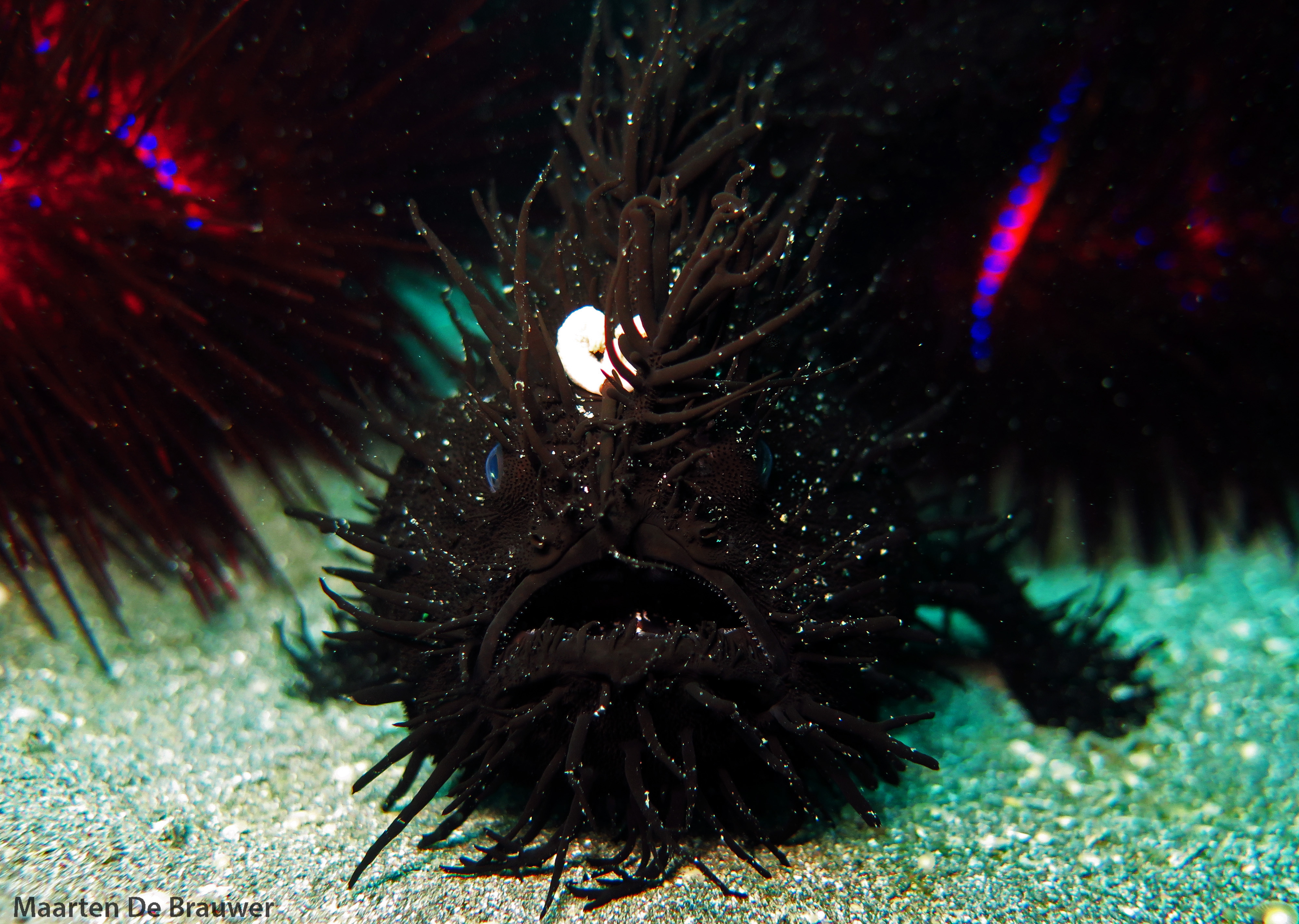
On top of it, that nightmarish zebra would also be able to change colour. Not just to a kind of grey or brown, but nearly every colour in the rainbow! I have seen hairy frogfish being yellow, red, orange, black and white. The goal again is to blend in, so the white versions are often juveniles found in areas with many dead sea urchin-shells (which are white). This white version is usually not hairy to resemble the shell fragments even more closely. My favourite colour morph is the black version, which seem to get this colour when associated with living (black) sea urchins.

Black Hairy Frogfish

Black Hairy Frogfish

Hairy close-up

Hairy close-up

The other obvious question (How???) is harder to answer. There are a lot of theories around, but I could not find a single paper describing how the process happens. So we don’t really know, but the “hairs” seem to be filaments growing from the skin. To confuse things a bit, frogfish often also have real algae growing on them. This hairy appearance is not restricted to frogfish, but can also be seen in certain species of Scorpionfishes and Ghostpipefishes. The growth of it seems to be triggered by absence / presence of certain algae, but the exact details remain a mystery.

In the minds of many divers, the hairy frogfish is exclusively associated with world-class muck sites such as Lembeh Strait or Anilao. In reality, they are one of the most widespread species of frogfish. They can be found all the way to Perth and Sydney in Australia, but have also been seen in Brazil and Blue Heron Bridge in Florida. Genetic analysis do hint at the fact that these widespread Hairy Frogfishes might actually represent multiple species, plenty of room for some more research there….

The beauty of Scorpionfishes

Time to ramp up the critter section after the Winged Pipefish and juvenile Batfish. Both of the previous critters are generally considered to look pretty or at least kind of cute, which is often not the case for members of the Scorpionfish family.

Flasher Scorpionfish (Scorpaenopsis macrochir)

Flasher Scorpionfish (Scorpaenopsis macrochir)

Ever since I’ve started diving I’ve been intrigued by Scorpionfishes and I never get bored looking at them. They are well camouflaged predatory fishes that lay on the bottom (true “benthic” critters!), waiting for unsuspecting prey to pass by. Or maybe they just use that as an excuse to chill out most of the time. The benefit of this lazy behaviour is that they are easy to photograph, provided you can find them of course.

What I’d like to do with this post is prove to you how beautiful Scorpionfishes can be. They often get a bad reputation because of their venomous spines and (supposedly) ugly looks, which is demonstrated by some of their common names: Devilfish, Dragonhead-fish (in German: “Drachenkopf”), Stingfish, Waspfish, … While it is undeniably true that you’d best avoid planting your feet or hands on species of the Scorpaenid-family, they are not aggressive at all. So if you keep a safe distance, you can take all the time you want to watch and/or photograph them.

Algal growth anyone?

Flasher Scorpionfish

Once you start really observing them, you will find out that they are absolutely amazing. There are many species (>300 worldwide), but you’ll commonly encounter about 10 of them while diving in the Coral Triangle. Lionfishes are also a part of this family, but they already get loads of attention, so I won’t talk about them here. Scorpionfishes are well camouflaged, but that does not mean they look boring or always have drab colours. I’ve seen them in all shades ranging from white, to red, green, yellow, pink and black. Most species rely on their colour (which they can change) to blend in with their environment. Others grow filaments resembling algae or get covered in actual algae and/or hydroids to blend in even better.

All of this would already be enough to classify them as pretty cool critters, but there is more. The main reason I like them so much is that they look as if they have very strong and (at least so I imagine) cantankerous personalities. Their big heads and grumpy, down-turned mouths just give them that extra charisma that most fish lack. Combined with their armoured heads that have spines all over them, it makes them look like rather bad-ass bottom crawlers.

Very tired looking baby Scorpionfish

Very tired looking baby Scorpionfish

Here are some of the more commonly fond species and how to tell them apart. There is quite a lot of text, so if you don’t have time, just watch the pretty pictures:

  • Tasseled Scorpion Fish (Scorpaenopsis oxycephala): A large fish (up to 35cm), pronounced skin tassels on the chin and a long, “humped” snout. Usually found close to corals, or even laying on top of them.
Tasseled Scorpionfish (Scorpaenopsis oxycephala)

Tasseled Scorpionfish (Scorpaenopsis oxycephala)

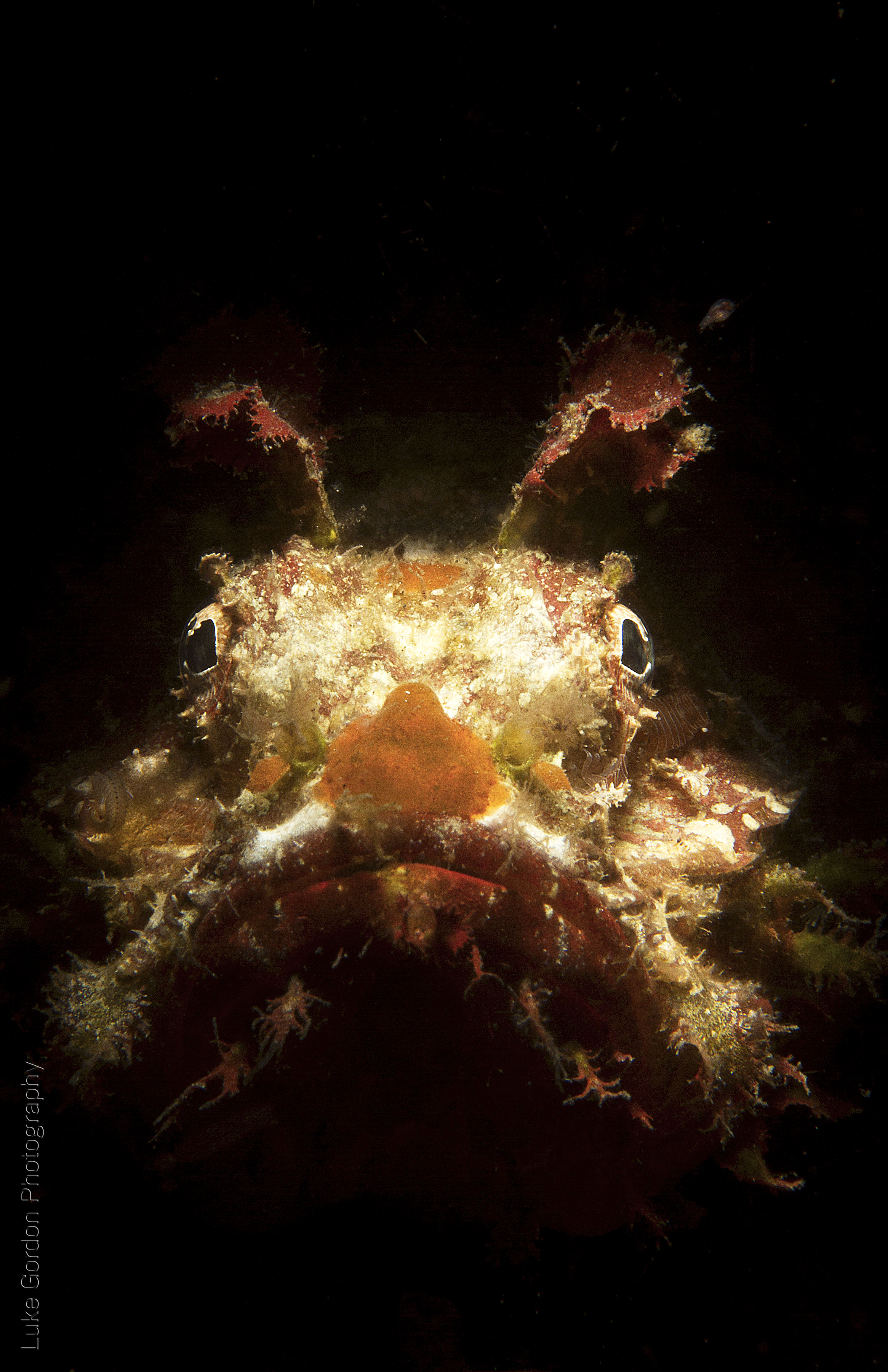
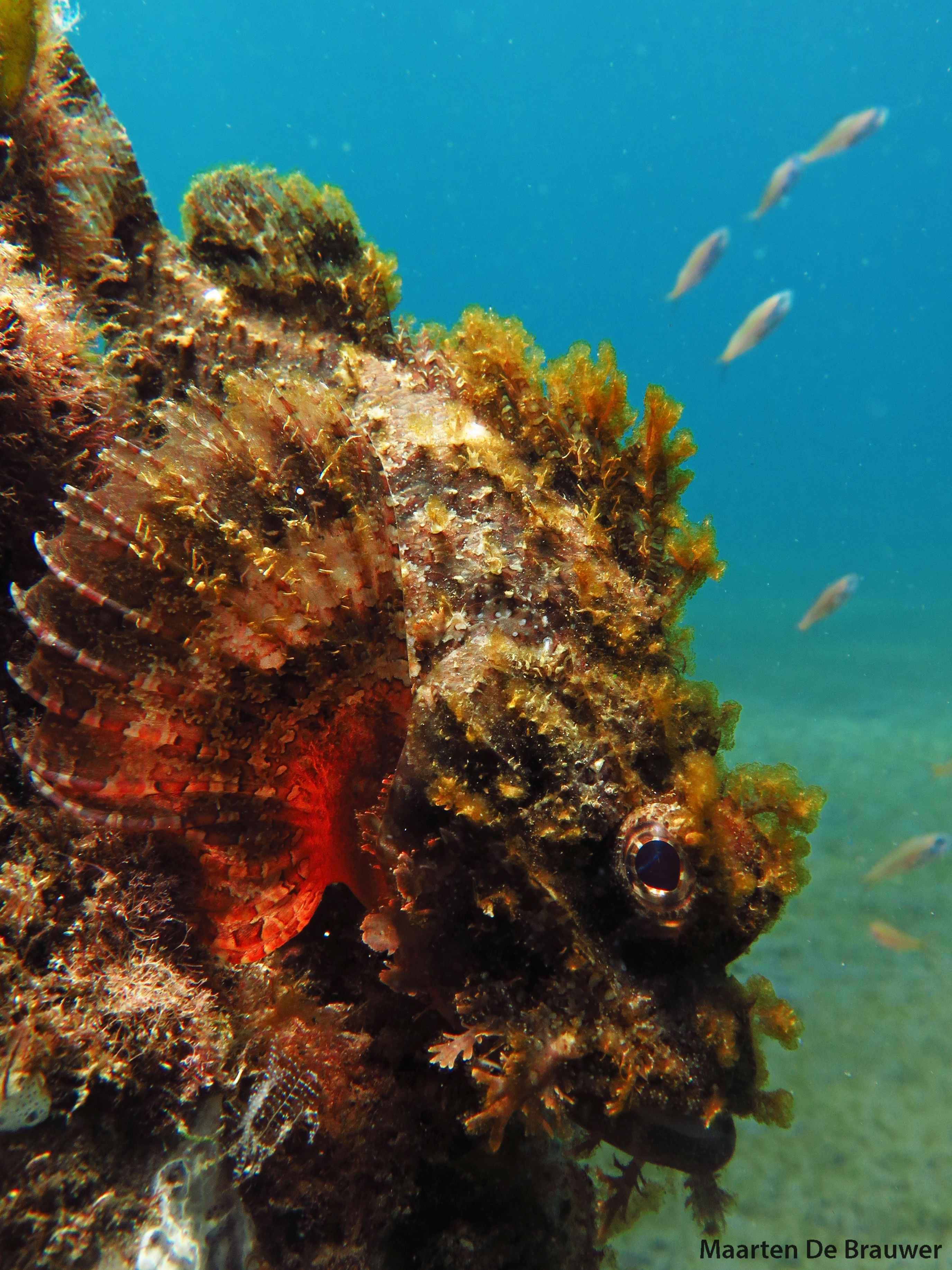
  • Raggy Scorpionfish (Scorpaenopsis venosa): Similar to the Bearded Scorpionfish, but smaller (up to 20cm). The Raggy Scoropinfish has a lot more filaments growing over its body, and usually has big cirri (skin filaments) above the eyes. Furthermore, their snouts are not as long as those of their bearded cousins. They are often found near or on algae covered objects such as mooring blocks, ropes or wrecks.
Raggy Scorpionfish (Scorpaenopsis venosa)

Raggy Scorpionfish (Scorpaenopsis venosa)

  • Flasher Scorpionfish (Scorpaenopsis macrochir): Flashers are smaller still (up to 15cm) and have a pronounced hump on their back. Devil Scorpionfish share this feature, but are larger and have an even bigger hump. The inner surface of the pectoral fins of Flashers are bright yellow to orange with a dark, black band on the edge (which also sets them apart from the Devil Scorpionfish). You’ll find Flasher Scorpionfishes on sandy and rubbly areas.
Flasher Scorpiofish (Scorpaenopsis macrochir)

Flasher Scorpiofish (Scorpaenopsis macrochir)

  • Whiteface Waspfish (Richardsonichthys leucogaster): A small scorpaenid (max 10 cm), which is often red to brown, with a white face. Their dorsal fins have deep incisions, setting them apart from other Waspfishes. They are usually found on sand or mud bottoms.
Whiteface Waspfish (Richardsonichthys leacogaster)

Whiteface Waspfish (Richardsonichthys leacogaster)

  • Ambon Scorpionfish (Pteroidichthys amboinensis): These guys take camouflage to the next level, with even more algal growth and hairlike filaments growing on them than the Raggy Scorpionfish. They have very long, arching cirri above the eyes, and big pectoral fins, which are often transparent. Ambons are small (up to 12cm) and are only found on sandy and muddy substrates, often in areas with a lot of algal growth.
Ambon Scorpionfish

Ambon Scorpionfish (Pteroidichthys amboinensis)

  • Indian Ocean Walkman / Spiny Devilfish (Inimicus didactylus): This is one of my favourites, it is a medium sized (max 18cm) fish mostly made up of spines and other sharp bits, with a big, upturned mouth and eyes that are elevated. The front of their pectoral fins has evolved into 3 “fingers” which they use to walk over the bottom. Like the Flasher Scorpionfish, the inside of their pectoral fins is brightly coloured and used as a warning signal to potential predators. They spend a lot of time buried in sand or rubble near reefs, with only the eyes, mouth and spines sticking out.
Indian Ocean Walkman (Inimicus didactylus)

Indian Ocean Walkman (Inimicus didactylus)

  • Stonefish (Synanceia verrucosa): Stonefishes often get confused with Scorpionfishes, but there are some key differences. To start with, they are WAY better camouflaged than any Scorpionfish around. Chances are, if you found it yourself (as opposed to your diveguide), it was mostly likely NOT a Stonefish. They get a larger than most scorpionfishes here (up to 35cm). The best ways to ID them are: a completely upturned mouth on the TOP of its head, a shape that does not even closely resemble a normal fish (a crumpled up cardboard box or a big blob are better comparisons), and very large, thick pectoral fins. To make finding them even harder, they often bury themselves in the sand, just like the Spiny Devilfish. Stonefishes are found on sand and rubble close to coral reefs.
Stonefish (Synanceia verrucosa)

Stonefish (Synanceia verrucosa)

Enjoy the selection of photos (most of them by Luke Gordon) and next time you go diving, take your time to really look at any scorpionfish you might find.

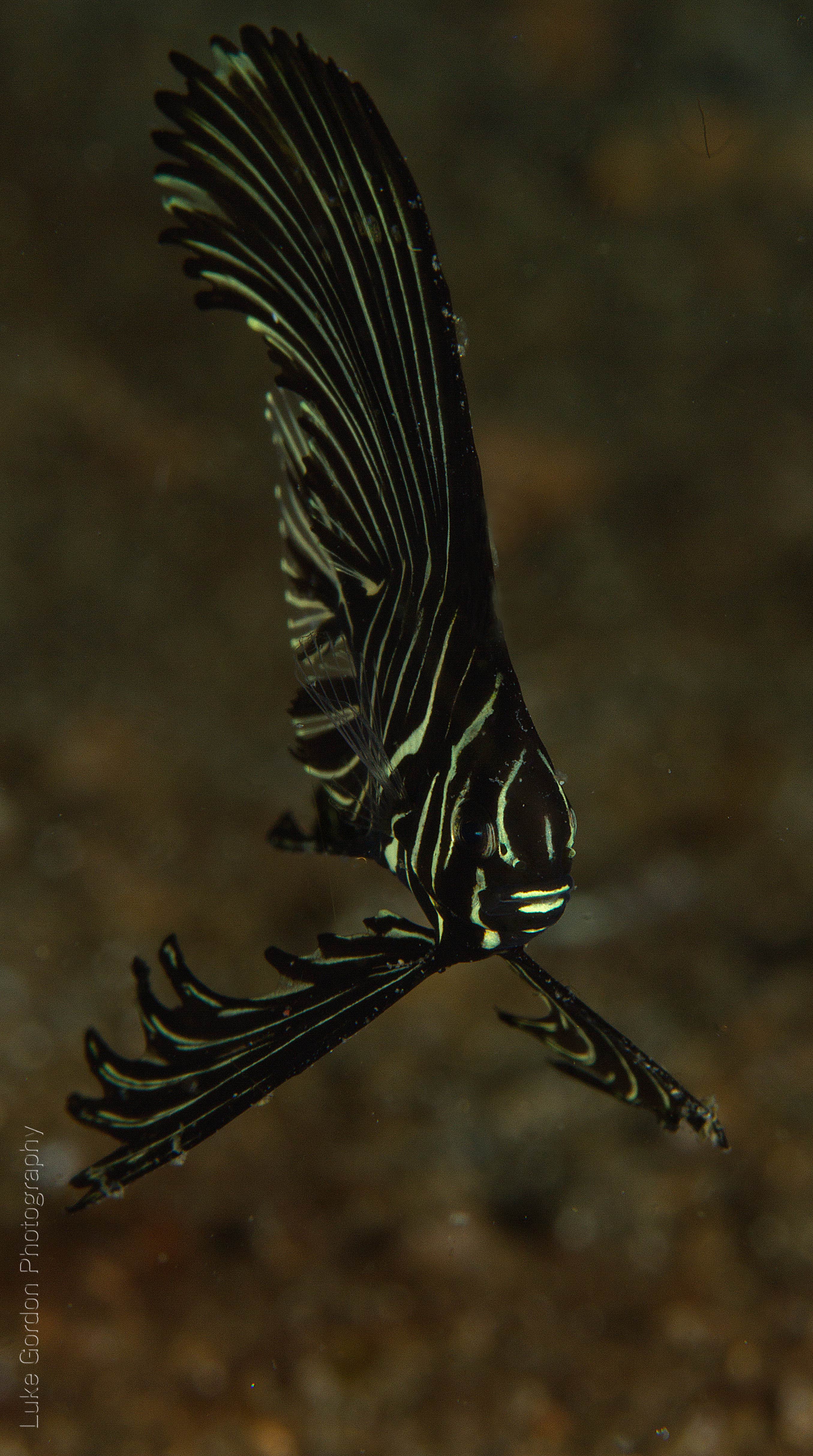
Baby Zebra Batfish

The next species which I think deserves more attention than it currently gets, is the (baby) Zebra batfish (Platax batavianus). It is also known as the Batavia batfish, Humphead spadefish and probably a dozen or so other names. The reason I’ve taken a liking to this little guy is not just because it is an awesome little critter, but also because I finally got to see it after having it on my wish list for about 7 years.

Batavia batfish adults are not very different than most other batfishes, if possible they might actually be a bit uglier, in any case, they don’t really stand out. They do stand out however in the juvenile phase, and they do so rather magnificently! Check out this great picture Luke took a few days ago:

Zebra batfish (Platax batavianus)

Zebra batfish (Platax batavianus)

In the batfish genus, it is quite a common occurrence for the juveniles to differ greatly from the adults. As not to distract you in this post dedicated to the Batavia batfish, here are links to the juvenile Orbicular batfish and Pinnate batfish. They are almost as amazing as the Zebra batfish, so I do encourage to have a look at them after reading this post!

Zebra batfish are named for their juvenile pattern, which helps distort their outline, again providing camouflage to the rather slow moving fish. Very little is known about the ecology of this species (surprise surprise!) but these are a few things I managed to find from the literature:

Zebra batfish, large juvenile (12 cm)

Zebra batfish, large juvenile (12 cm)

  • Baby batfishes tend to settle on the reef (change from open water swimming, transparant larvae to coloured fish living on reefs) when they are between 1.5 cm and 3 cm. Before they settle on the reef, batfish larvae mostly swim close to the surface of the water.
  • Baby batfishes seem to be mostly attracted to the base of the reef (where the reef meets the sand) or to mangroves.
  • Baby Zebra batfish are usually found on the sand, hiding close to feather stars, sponges or soft corals.
  • Batfishes are mostly herbivores, feeding on algae by day. Some species also feed on zooplankton (small animals floating in the water) at night.
  • Juvenile batfishes (all species) are popular in the marine aquarium trade, but they are very hard to keep alive, so most die within a few days/weeks. If they do survive to adulthood, the often get to big for their tank (over 50 cm) and are subsequently “discarded”. Which is why some batfish species are now an invasive species off the coast of Florida
Baby Zebra Batfish (Platax batavianus)

Baby Zebra Batfish (6 cm)

Conclusion for this little critter? It is better to be patient and go to the right places to see it in the wild instead of getting it in your aquarium. Not only will you be doing reefs a favour, seeing these gorgeous fish in the wild makes for a much more rewarding experience than just buying one.

Oh, and if you were wondering where it got its scientific name, Batavia is the old name for Jakarta (the capital of Indonesia). When Cuvier described the species (1831), this was how Jakarta was known, so I am guessing the original specimen he used to describe this species was either caught or shipped from anywhere near Jakarta.