New publication: Big bucks for small critters

One of the most important chapters of my research has recently been published in the journal Marine Policy. The paper explains that scuba dive tourism focused on small critters (“muck diving”) has a very high value and how muck diving can be a sustainable alternative to more destructive uses of the environment. This is the link to the paper, but since it is behind a paywall, is rather detailed and perhaps a bit to dry for those of you who are not economists, below is a summary that is easier to digest.
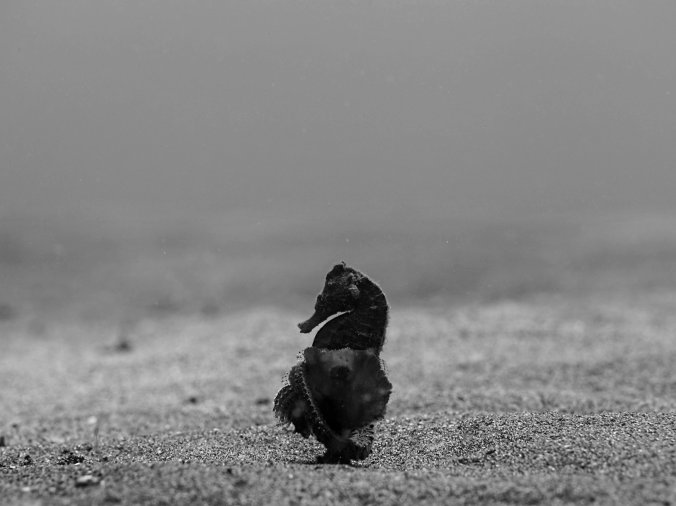
Seahorse_muck

A typical muck diving scene: a sandy bottom with few defining features. In the foreground an Estuary seahorse (Hippocampus kuda) holding on to algae (Photo by Dragos Dumitrescu).

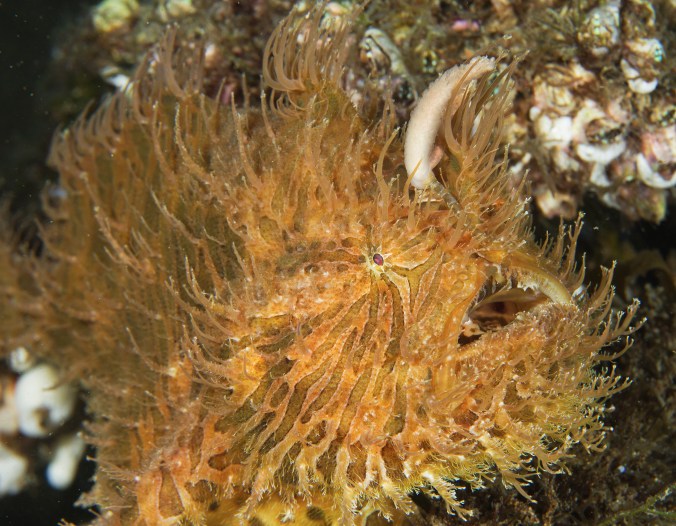
If you don’t know what muck diving is, I invite you to have a look through this site to get a feel for it. But in short: muck diving is scuba diving in sandy areas, usually without coral or other landscape features. The goal is to find weird critters (like flamboyant cuttlefish or hairy frogfish)  that you’d rarely see on normal dive sites. It is very popular in places like Lembeh Strait and Dauin in Southeast Asia, but it is done by divers and photographers all over the world.

Typical for muck diving is that the people doing it are very experienced, with an average of 580 logged dives. Most of them (73.5%) use underwater cameras, often the expensive dSLR cameras, to photograph all the weirdness down there. Many of the divers are well-educated and have a high yearly incomes. Importantly, most divers would be willing to pay for marine conservation if it benefits the species they come to see.

So what does it matter if some fanatic divers like to spend their holidays rooting through the sand instead of cruising by pretty coral reefs? Well, for starters, those fanatic divers spend a combined whopping $152 million per year in Indonesia and Philippines alone. The real value is probably much higher, as this estimate is only for dive centres that specialise in muck diving, and does not include liveaboards or more general dive centres that visit muck dive sites. The real value could be over $200 million per year! Also bear in mind that this number is for Indonesia and Philippines only, it does not include muck dive tourism in Malaysia, Papua New Guinea, or the rest of the world. With more than 100,000 divers visiting Indonesia and the Philippines to go muck diving, you would expect to get the attention of people managing tourism or ocean resources. Especially since many of the divers said they would not have visited the region, or even the country, if they could not muck dive.
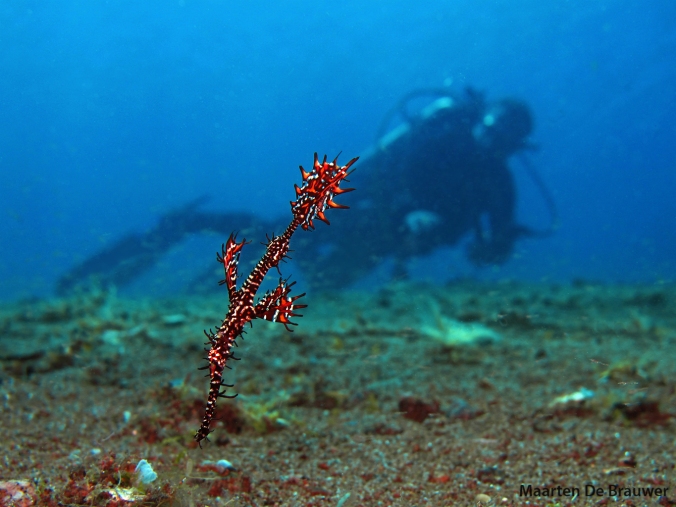
OrnateGhostPipe_RedBlack_Diver

Diver and Ornate ghostpipefish (Solenostomus paradoxus) in Dauin, Philippines

While these numbers might not change anything in your life, they make a huge difference for the thousands of local people that work in this branch of the dive industry. Muck diving is often done in remote locations with limited other forms of income besides fishing. Working as a dive guide and looking at fish is not only more sustainable than catching fish, it also pays a lot better. Roughly $51 million is paid in wages to the local staff working in muck dive tourism annually, and dive guides can earn nearly 3 times more than the minimum wages in the area….

Just stop and think about that for a minute. Imagine the minimum wage in your own country, now triple it. Got the number? OK, now imagine this choice: you can either make that amount by showing cool animals to divers, or you can work your ass off in a factory or risk your life fishing for a third of that amount. Small wonder that many people prefer the first choice, which is great news for marine life in the area, because it means less people fishing and more people trying to protect this valuable source of income.
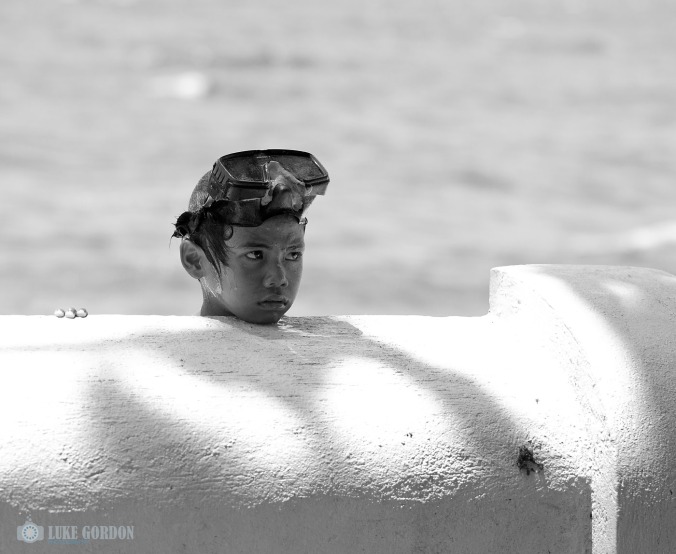
photo-05

The future generation of muck dive guides? Not without a healthy ocean (Photo: Luke Gordon)

That is what it comes down to in the end, protecting these extremely interesting and valuable ecosystems. Make no mistake, muck sites can be threatened as well. Coral reefs might bleach because of climate change, mangroves might be cut to make space for shrimp ponds and seagrass might be dredged to mine for sand, but sandy habitats could face other risks with equally bad consequences. All the habitats above receive far more research and conservation attention than the “barren” sandy sites in the tropics. If this paper proves anything, it is that soft sediment habitats have a very high value, and that it should get more attention to avoid loosing amazing biodiversity and the subsequent loss of income for the thousands of people that depend on it.

And that does not even consider loosing that feeling of pure joy when you finally find a critter you’ve dreamed of seeing for years 😉
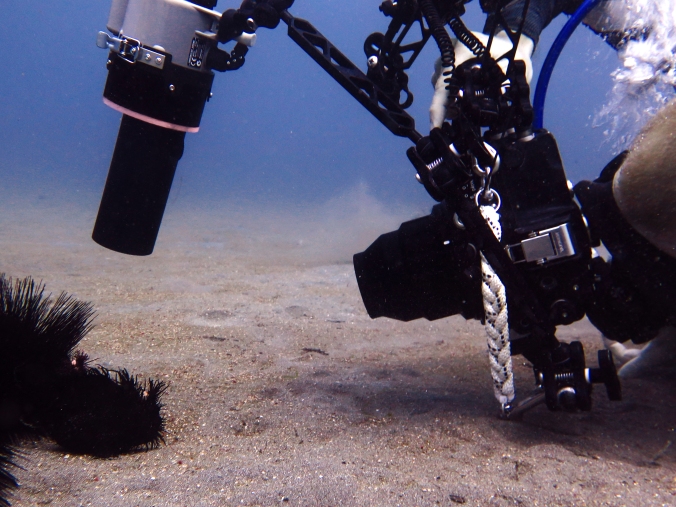
Luke_Snoot_Black Hairy

Muck diving scene: a diver (the science hobbit) taking a picture of a frogfish (black Hairy frogfish – Antennarius striatus)
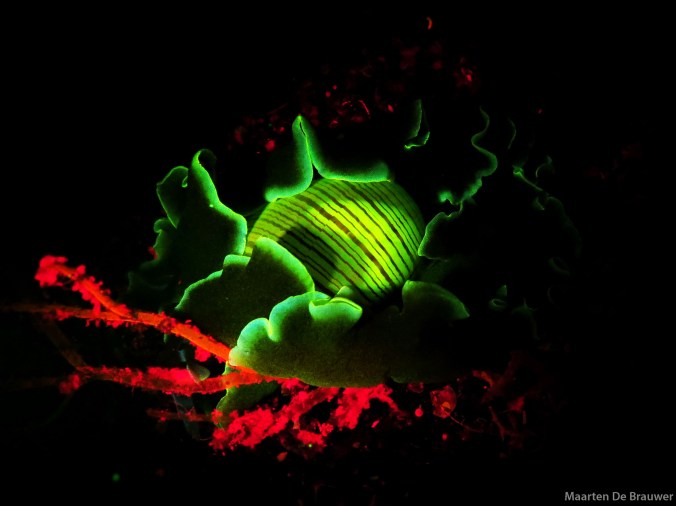
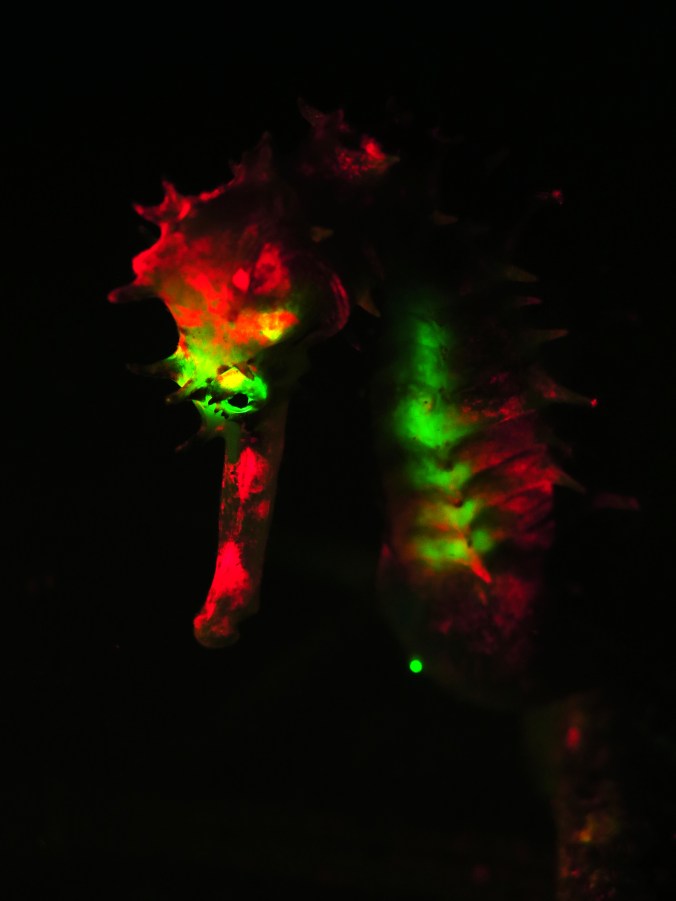
Fluo time

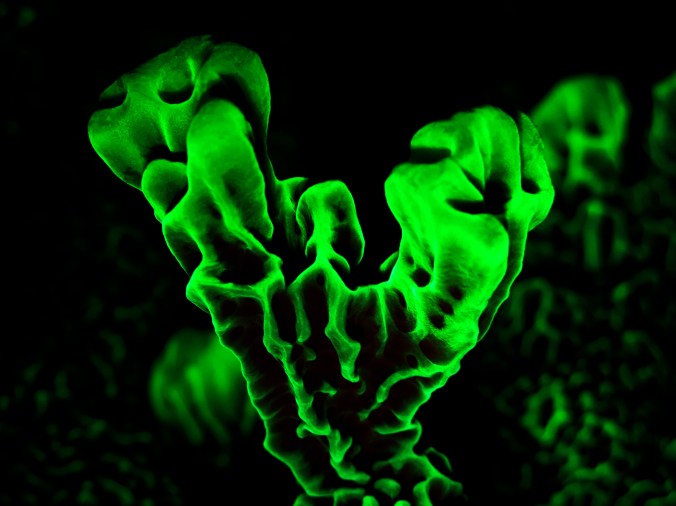
If this isn’t the first time you’ve read this blog, you probably know I am interested in the phenomenon of biofluorescence. I’ve previously talked written about what it is and what it might be used for. In the near future I’ll be tell you all about the details what I was actually doing. But I realized I haven’t shared any pictures recently that show just how beautiful and otherworldly it can be. So here is a random selection of fluo shots I took over the last two years. Enjoy!

bubbleshell

A bubble snail (Hydatina physis) photographed in Lembeh Strait, Indonesia


hippocampus-histrix_fluo_4

Thorny seahorse (Hippocampus histrix) in Bima Bay, Indonesia


seahorse_fluo_mdb

West Australian Seahorse (Hippocampus subelongatus) in Perth, Australia


coral_fluo

Amazing coral in Raja Ampat, Indonesia


snake-eel

Reptilian Snake Eel (Brachysomophis henshawi) in Amed, Indonesia


lizardfish

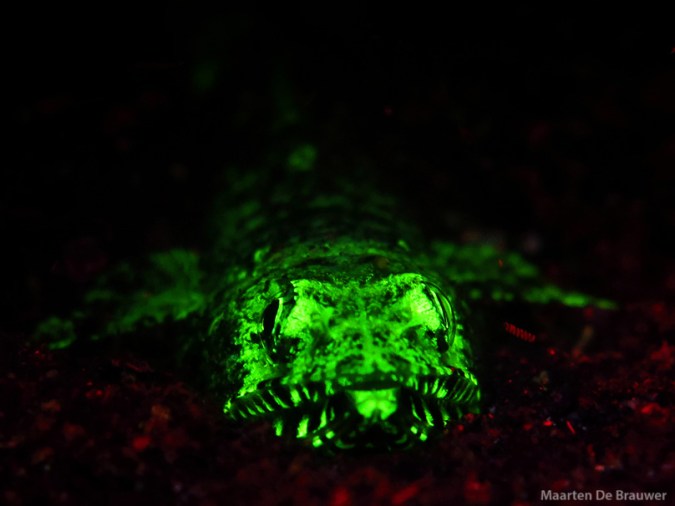
Lizardfish (Synodus sp.) in Lembeh Strait, Indonesia


ablabys

Cockatoo Waspfish (Ablabys sp.) in Lembeh Strait, Indonesia


picnogonid

Sea spider (Pycnogonid sp.) in Tulamben, Indonesia


a-pictus_fluo_small

Painted frogfish (Antennarius pictus) in Lembeh Strait, Indonesia


a-pictus-fluo

Juvenile Painted frogfish (Antennarius pictus) in Dauin, Philippines)


echidna-polyzona

Barred moray (Echidna polyzona) in Nusa Kode, Indonesia


New publication: Fluo frogfish lures

After a weekend looking for vagrant fish in the cold waters of Shark Bay (more about that later this week), I came home to find a pleasant email in my inbox. A new publication has been published online last week. This one is in the journal “Coral Reefs” and is about biofluorescence in the Striated Frogfish (Antennarius striatus), more commonly known as the Hairy Frogfish. The article can be found here, but is restricted access. For those of you who cannot access it, here is what it is about.

IMG_0766

Hairy Frogfish by day. Photo: Luke Gordon


As I have written previously, I have been doing a fair bit of work looking at biofluorescence in fishes. During these surveys i had noticed something strange going on with the Hairy Frogfish: their bodies are not fluorescent, but their lure is (very strongly). As you might know, frogfish use their lure as a fishing rod, attracting small fish closer, which are then eaten whole. The fact that the Hairy Frogfish’s lure alone is fluorescent but their bodies are not, hints at the possibility that this fluorescence could be used in what is called “aggressive mimicry”. Aggressive mimicry is the term used for animals who pretend to be something harmless (the “model”) and use that to get close enough to eat their prey.

FluoLure_MDB_small

Hairy Frogfish (Antennarius striatus) with fluorescent orange lure

But the question was, what would it be trying to mimic? Are there animals out there that resemble this fluorescent lure? Cue my last Philippines trip. During a nightdive with the unparalleled science hobbit, we found three more Hairy Frogfish (with fluo orange lures). More importantly, we also found a lot of freeswimming worms near them. Most of them a similar size as the lure of the frogfish, AND the same colour fluorescence as those lures. The resemblance between the lures and the worms went further than just size, shape and movement, but also the fluorescence is imitated. We found our model species!

Lure_and_Worm

Fluorescent worm (top orange squiggle) and fluorescent lure (bottom orange squiggle)

This is very exciting, as it is the first time anyone found strong indications that biofluorescence might be used to help fish catch prey. To prove whether it is really used to hunt, lab experiments or extensive observations would need to be done to check if this fluorescence really makes a difference. So while this is a very exciting glimpse into an unexplored part of hunting strategies in the ocean, much more work needs to be done to understand all the details.

If you can’t access the article but want to read it, or you just want to know more, send me an email or ask in comments and I can send the publication to you.

Black sand: Origins

The species I study are found in a very specific habitat. Unlike many (dare I say most) marine biologists who work in the tropics, I hardly spend any time at all on coral reefs, mangroves or seagrass beds. I estimate that since starting my PhD, roughly 80% of my dives were done over sand. No coral, no rocks, hardly any distinctive feature at all, just wide expanses of sand. Mind you, not just any kind of sand, the critters I look for seem to be found most often on black sand.

blacksandbeach

A black sand beach in Lembeh Strait, Indonesia

For those who have never had the pleasure of diving over black sand or those used to diving in places like Egypt, Maldives or the Great Barrier Reef, the idea of a black sand beach or dive site might seem strange or hard to imagine. When reading the words “tropical beach”, most of us imagine powdery white sand, turquoise water, and a bunch of palm trees added for good measure. But I am happiest starting my dive from a beach as black as my (soul) wetsuit and dive boots. The first time you see a true black sand beach is mesmerising and even a bit alienating, it somehow doesn’t seem right. The water looks grey instead of blue, darker, and less inviting than those beautiful blue lagoons from travel brochures. Until you put your head under water and start looking around…

But why are some beaches black? What is the difference between the powdery white sand of Maldives and the pitch black sands of Lembeh or Hawaii? After the ICRS conference in Honolulu last week I decided to go have a closer look at the origins of my preferred study systems: active volcanoes! There are few places on this world better suited to do this than on Hawaii’s big island. Accompanied by Jamie, a marine scientist specialising in underwater soundscapes, I set off to find out how close to a volcano one needs to get before the hairs on your legs get scorched off 😉

Lava_jungle.jpg

Lava flow making its way through the forest

Turns out the answer is: not very close at all. In what was the highlight of our trip we flew in an open-doors helicopter over a lake of magma and a lava stream running down a mountain. Even hovering 50m above the lava you can feel the incredible heat emanating from the stream! The Kilauea volcano is one of the most active volcanoes in the world, and has been erupting since 1983. The result is an amazing landscape of solidified lava, covering vast expanses of the island.  During our 3 day stay in the Volcano National Park, we visited lava tubes, hiked over solidified lava lakes, were awestruck by the raw spectacle of watching a volcanic crater at night, and got sunburned ambling across a frozen lava wasteland that was a village until only few year ago. While we were in Hawaii, there were no lava streams entering the ocean, but there were plenty of places where it recently did.

Lava_ocean

Fresh lava flow in the ocean

Liquid lava flowing in the ocean is one of the two ways black sand beaches can be formed. The lava is so hot that when it runs into the cold water, it causes explosions that shatter tiny fragments of volcanic sand/glass around. This process can happen so fast that a black sand beach can be formed overnight! The size of these fragments can be from small boulders to actual fine sand, dependent on the temperature of the lava and the water. The dark colour of the sand is caused by the mixture of minerals inside the lava, the minerals giving the darker colours are mostly iron oxides such as magnetite.

The other way black sand beaches are formed, is through erosion of black volcanic rocks by rivers, which then carry the black grains of sand down to the ocean. Depending on which other types of rock the rivers flow over other minerals will be added to the mix, resulting in sand colours that can range from pitch black to dark brown or even beige or green. For any geology-inclined readers, this site has got all the details you could possibly want to know about black sand.

blacksand

Black sand + dive boots

So to summarise: black sand ecosystems are formed by some of the most epic geological processes in the world, magma from the centre of the earth erupting and shaping the world as we know it. The powdery white sand beaches of Maldives on the other hand, are mostly formed by the build-up of whole lot of parrotfish poop***. An interesting process for sure, but give me an epic black sand beach over a pile of fish poop any day 😉


***Technically speaking parrotfish poop, eroded corals, shells and bits of other stuff, but I’m taking some freedom here 😉