Ambon and Halmahera fieldwork: Mini-blog 1 – Departure

It’s that time again! I am on my way to do fieldwork and I will try to post regular, small updates so everyone can follow along with what we’re up to. In the coming month I’m hoping to post at least 4 – 5 mini-blogs (depending on internet speed), so keep an eye out for updates.

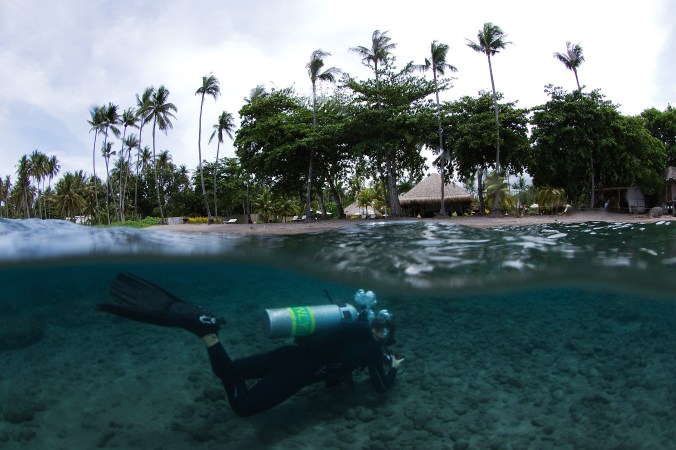
Over_Under_with_Maarten

It’s fieldwork time! Photo: Luke Gordon

I am writing this first blog from an airport hotel in Makassar. It took me a train ride and 3 flights (Manchester – Doha – Jakarta – Makassar) to get this far, but I’m not quite where I should be yet. A ridiculously early flight (4:00am) tomorrow will get me to Ambon, where the fieldwork will start. Doing research in remote areas is fun, but it also means 3-day trips to get where you want to be.

The reason our team (more on them later) wants to be in Ambon, is to do research on the biodiversity of Indonesian coral reefs. We are trying to investigate how coral reefs function (or stop to function) when they are affected by human actions like overfishing or pollution.

To do this, we will be working from a boat for most of October, hopefully visiting more than 30 different sites in Ambon and Halmahera. We’ve got a team that is specialised in different topics, people will be counting fish, identifying corals, collecting environmental DNA, mapping reefs, etc. Exciting stuff with hopefully some useful results!

Survey sites Ambon

Survey sites for the upcoming fieldwork

Getting everybody at the right place at the right time can be challenging enough. I flew in from Leeds (UK), but other people are flying in from Germany, Jakarta, and Makassar. Our aim is to leave Ambon harbour on the 1st of October, with most of the team arriving the day before. But sometimes nature can get in the way of even the best planning…

Today two earthquakes have rocked Ambon, causing quite a lot of structural damage. The boat (as far as I am aware) is fine, but unfortunately the damage to the city is quite large. Luckily human casualties seem low at the moment. In any case it is likely that organising the food and other practical matters in the next few days will be more complicated than expected.

In the next post I will go into a bit more detail about the science behind this trip, and ideally I will also have some updates about the situation Ambon.

20190924_192148

Marine science fieldwork and packing lightly don’t go well together

New publication: Critter diversity on the sand

It turns out that moving halfway across the world and diving into a new job is more time consuming than I expected, so I haven’t been keeping up with the blog recently. I’m slowly starting to get more organised and in the coming weeks I will try to catch up with summaries of papers that I’ve published recently.

The paper “High diversity, but low abundance of cryptobenthic fishes on soft sediment habitats in Southeast Asia” was published almost a year ago in the journal Estuarine, Coastal and Shelf Science. It was one of the key papers of my PhD and describes the diversity of critters on sandy habitats in Indonesia and the Philippines.


If you have ever been muck diving it won’t come as a surprise to you that there is some very exciting marine life to be found on sandy bottoms. When you mention places like Lembeh Strait, Anilao, or Dauin to keen divers – especially photographers – they either get lyrical about the amazing pictures they took there, or will tell you about their plans for visiting any of the above places to go see some crazy marine life.

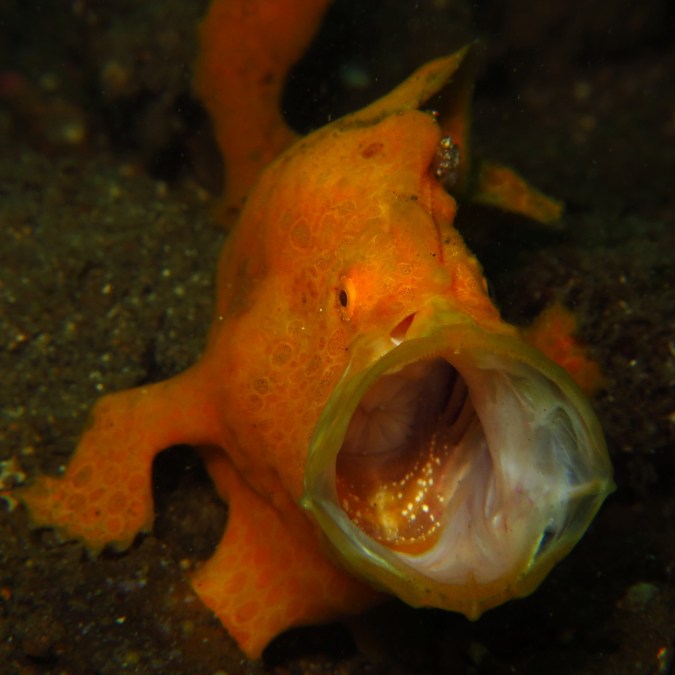
Froggie yawning

Species like this painted frogfish (Antennarius pictus) are popular with muck divers

In fact, the popularity of these sandy critters is so great, that the divers visiting Southeast Asia for muck diving bring in more than $150 million of revenue each year, supporting thousands of sustainable jobs! With so much money and jobs involved, it would be normal to expect researchers and conservationists to be interested in knowing which animals live on tropical sandy slopes. Unfortunately, that assumption would be wrong, surprisingly little is known about soft sediment (=sandy) habitats in the tropics. Even basic knowledge such as which animals live where is often unknown.

Luckily things are changing! Scientific interest in “cryptobenthic species” – the small, camouflaged critters this site is all about – is definitely increasing, with excellent work being doing on coral reefs by colleagues from across the world. We are starting to understand just how important they are for coral reefs and how very diverse cryptobenthic species can be.

What I am interested in though, is what is going on with the critters that live away from reefs. Are the critters living on the sand as diverse as those one coral reefs? Which species are most common? What causes species to live in one area, but not another? To answer these questions I set of with my good friend Luke for a 3 month dive survey trip that took us to Lembeh Strait, the north coast of Bali, and the sandy slopes of Dauin.

Maarten Smile

Surveying soft sediment critters in Dauin. Photo: Luke Gordon

During our survey dives, we not only counted and identified the fish we saw, we also measured a bunch of other factors that could have an effect on the presence of critters. We wanted to know whether depth, benthic cover (growth of algae, coral, sponges etc), or the characteristics of the sediment played a role in which species we found.

So what did we find?

One of the most interesting results is that the diversity (number of species) of cryptobenthic species was very high, higher in fact than the cryptobenthic fish diversity on many coral reefs! In contrast, the abundance (number of individuals) was much, much lower than what is found on coral reefs. To put it in perspective, if a normal coral reef would be an aquarium with 300 cryptobenthic fish of 15 different species crammed inside, soft sediment habitats would be the same aquarium with 30 fish of 16 species.

When looking at environmental factors, one of the most important factors that influenced where species lived, was the characteristics of the sediment. For small critters it makes a big difference whether the sand is powdery fine, or coarse like gravel. There seems to be a middle ground where the size of the sediment seems ideal for many critters. The tricky part is that the characteristics of sediment are in a large part determined by other processes such as currents or wave action. For now it is too early to conclude whether critters are found in these places because of the type of sediment or because of other factors that shape the sediment!

The amount of growth on the bottom played a role as well, particularly when algae or sponges were present, which makes sense as it offers variation in the habitat and potential hiding places for some species. Depth differences played a minor role in some regions (Daiun, Bali), but did not make a real difference in Lembeh. The limited effect of depth could partially be due to the fact that we did not survey deeper than 16m (university diving regulations are quite restrictive). It would be a great follow-up study to compare with deeper depths, as I am sure they will give very different results.

What does it all mean?

This study was (as far as I know) the first one ever to investigate the cryptobenthic fish in soft sediment habitats. The unexpectedly high diversity and very low abundance means there is a lot more  species out there than what was assumed, but that we have to look much harder to find them. I mostly see our results as a starting point to guide further research. We have only uncovered a fraction of what is out there and are not even close to really understanding how tropical soft sediment systems function. While this provides an exciting opportunity for scientists like me to new research, it also means that we do not yet know how environmental threats such climate change or overfishing will impact  species living on soft sediment. We do not know yet if the species that muck dive tourism depends on need protection, or how to best protect them if they do.

Whiteface whaspfish

We might not know yet what the future holds for sand-specialists like this whiteface waspfish (Richardsonichthys leaucogaster), but I am hoping to find out!

New research project: diversity in Wallacea

A few weeks ago I wrote about starting an exciting new project at the University of Leeds. At the time I didn’t go into details, but now that I’m a few months in and I am starting to understand what is going, so it’s time to enlighten you as well.

Leaf scorpionfish

Coral reef critter research coming up!

For the next two years I’m part of a team that will study marine biodiversity on coral reefs in central Indonesia. The overarching goal of of the project is to improve the management and conservation of coral reefs by discovering how impacts such as pollution or overfishing change the way coral reefs function. After all, the best way to start solving a problem is by properly understanding it.

Obviously, there’s a lot more to it than the lofty big goal as the title of the project indicates: “Gradients of marine biodiversity and linkages with eDNA across the Wallacea Region”. There are two components to the project: traditional visual surveys and environmental DNA (“eDNA”) surveys. We will use both methods to create ecological networks and see how they differ when they are threatened by different impacts.

At this point you might be asking a few (logical) questions:

  • Where is the Wallacea region and why do you go there?
  • What is eDNA?
  • What is an ecological network?
  • Why should I care? I came to this site to read about critters!

The Wallacea region is the central part of Indonesia, from Lombok eastward almost all the way to Papua, and up all the way to Halmahera (check out the map below). It was named after Alfred Russel Wallace, the scientist who, together with Darwin, developed the theory of evolution. The region represents an interesting boundary area where fauna and flora from the Asian and Australian continents meet. So it is home to some amazing wildlife, but also to a large human population that depends on natural resources to survive. The marine diversity in the region has not been studied very well (except for a few local exceptions), so finding out how healthy the marine ecosystems are is quite important.

Central Indo

The Wallacea Region

Environmental DNA (eDNA for short), is a relatively new method to detect species. I have written about it extensively here if you want a long explanation and background. The method detects tiny fragments of DNA in the water column that are shed through poop, mucus, etc. By filtering and analysing a scoop of water, we can tell what animals (and plants, microbes, etc) live in the water nearby. It’s pretty powerful and very exciting, but still needs a lot of additional testing to know just how precise it is compared to other survey methods.

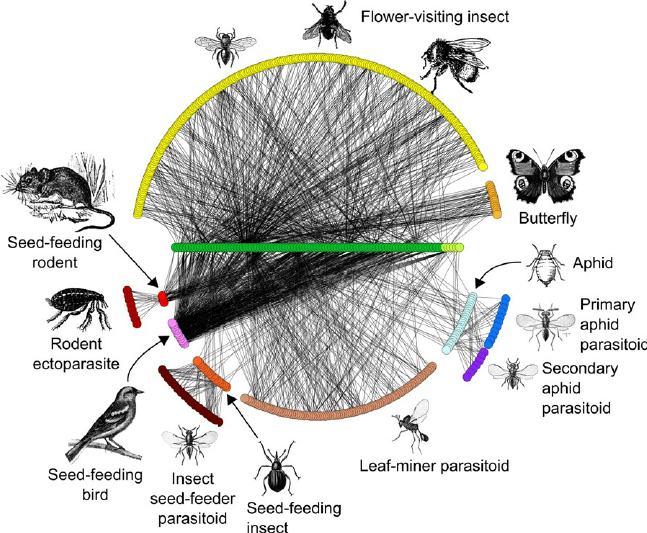
I will then build ecological network models with all the data we collect. The easiest way to imagine what those are, is to see them as a different kind of food web. Where food webs focus on who eats who, we are more interested in who lives close to who, and who interacts with who. In the ideal situation I will include all the information on fish, corals, algae, invertebrates (crabs, sea stars, etc.) in one big model which will show how they rely on each other. More importantly, it will also show what happens with the networks if sites are overfished or polluted and how that differs from untouched sites.

Species-interaction-networks-at-Norwood-Farm-Somerset-UK-revised-from-Pocock-et-al

Example of an interaction network on land, figure by Bohal et al. 2013. Source here.

So yes, my job for the next few years is less critter-focused than before, but it doesn’t mean I will be ignoring them! Besides the obvious fact that there’s a lot of cool critters to be found on the coral reefs I’ll be visiting, I am still involved in a few very cool projects on the side. It’s too early to go into details, but more seahorse and seadragon work is coming up, and even some exciting pygmy seahorse news as well! I’ll regularly be posting updates on the Wallacea project, as well as more critter features, so stay tuned 🙂

New publication: Finding the species that make a muck diver tick

Now that my PhD thesis has been submitted, it is time to start blogging again! In the very near future I will write a new blog about this whole PhD-writing experience, but for now I will tell you about a new paper that has been published recently in the scientific journal Ocean and Coastal Management.

The paper, “Known unknowns: Conservation and research priorities for soft sediment fauna that supports a valuable scuba diving industry“, describes which species are most important to muck dive tourism, and how much research and conservation work has been done on them. I investigated this using a specific method that is pretty new and has not been used in conservation work until now.

Froggie pair_MDB

Who doesn’t like a frogfish (Antennarius pictus)?

Since these the method and the results will be of interest to different people, this blog is split in two parts:

  1. How did I do the research?
  2. What are the results?

If you are a scuba diver, a dive professional, a travel agent or otherwise mostly interested in the cute animals, it’s completely fine to head straight to number two (even though you will be missing out). If you are a resource manager, work for an NGO, are interested in marketing, or conduct research on flagship species, definitely read the first part of this blog as well!

First section: the Best – Worst Scaling method and why everyone should start using it

wwf-logoIt is important to first think about why anyone would care about which species are important to muck dive tourism, or any kind of tourism by extension. The obvious answer would be “marketing”, if you know which species attract the tourists, you can use them in your advertising and that way attract more tourists. If that is too capitalistic for you, remember that dive tourism provides (mostly) sustainable incomes to thousands of people around the world. But there is more, people might not visit a destination, but still care very deeply about certain species. This principle has been used (very successfully) by many conservation organisations to set up fundraising campaigns. The best known example is probably the World Wildlife Fund, which uses the panda bear as a logo, even if they are trying to protect many more species.
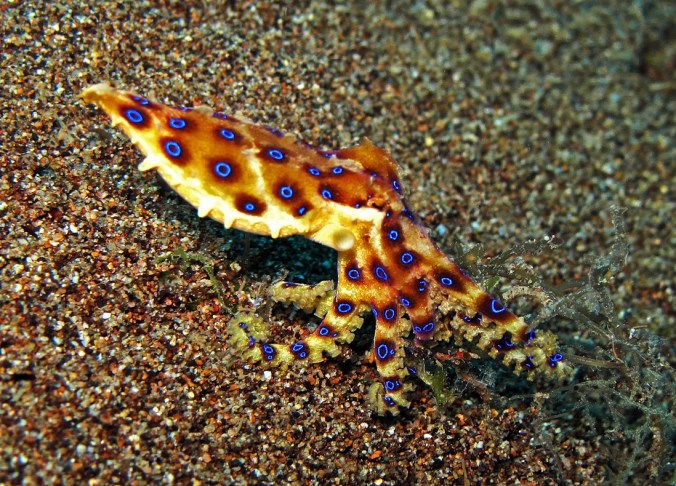
Best of Dauin_Blue ringed octopus_small

Blue ringed octopus (Hapalochlaena sp.) are popular with divers, maybe because of the cuteness combined with its deadly bite?

With that in mind, how do you find out which are the animals that people care about? You can obviously just ask people what they like, get them to make a list of top 5 animals, rank a number of animals in preferred order, give scores to certain animals, etc. But there are some serious problems with most of these methods such as:

  • They are not always reliable, since some people will be consistently more or less positive, or have cultural biases, throwing off your scaling
  • They can be very labour-intensive (=expensive) to properly design and collect data on
  • Statistical analyses of the results are usually very hard to get right
  • It is very difficult to say how the preferences vary between different groups of people (male-female, age, nationality, etc.)

To overcome these issues, we used the “Best-Worst scaling method” and compared it to a traditional survey. This method has been around for a few years, but is mostly used in food marketing (wine!) and patient care in medical research. The big benefit of Best-Worst scaling is that doing the stats is really easy, and without too much extra effort you can also easily interpret how different groups have different preferences.

flamboyant-cuttlefish2

Flamboyant cuttlefish (Metasepia pfefferi) might not be popular with researchers, but divers love them!

Without going into too much detail, the basic design of Best-Worst scaling is that you ask people what they would like MOST and LEAST from a fixed set of animals (or any other thing you are investigating). There are plenty of online platforms (we used Qualtrics) that allow you to design this kind of question, so it’s quick, easy and cheap. Getting results is as simple as subtracting the amount of times an animal was picked as most preferred and the number of times it was least preferred.
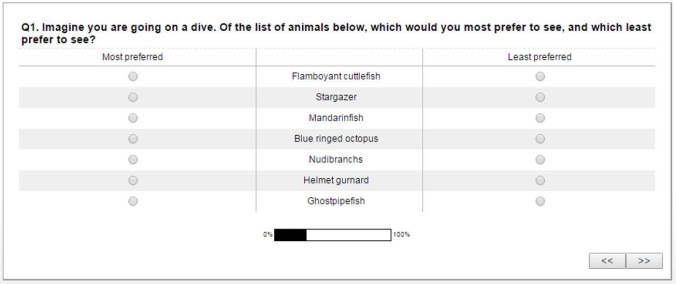
Figure 1

Example of a Best-Worst Scaling question

The reason I am describing this method here, is that it is just not known enough in the conservation, or even tourism world. It has the potential to allow all kinds of organisations with limited funding (NGOs, marine parks, or even dive centers) to investigate why people would visit / where they will go / what they care about. Which, eventually, might lead to more research and conservation on those species.

Second section: Which species drive muck dive tourism?
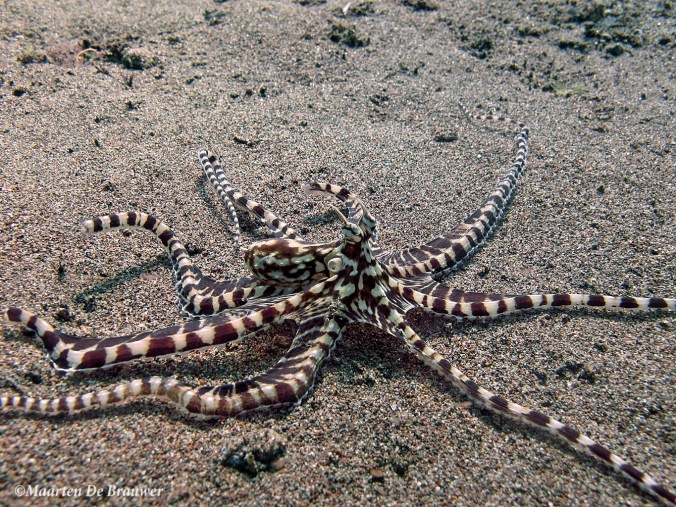
Mimic Octopus

The mimic octopus (Thaumoctopus mimicus), number 1 on many muck divers’ wish list

The results of the surveys won’t come as a shock for avid muck divers or people in dive tourism, but do seem to surprise from people unfamiliar with muck diving. Here is the top 10:

  1. Mimic octopus / wunderpus
  2. Blue ringed octopus
  3. Rhinopias
  4. Flamboyant cuttlefish
  5. Frogfish
  6. Pygmy seahorses
  7. Other octopus species (e.g. Mototi octopus)
  8. Rare crabs (e.g. Boxer crabs)
  9. Harlequin shrimp
  10. Nudibranchs

While other species such as seahorses or ghostpipefishes are also important to muck divers, a dive location that does not offer the potential to see at least a few of the top 10 species is unlikely to attract many divers.

3_MDeBrauwer_Nudie_name

Nudibranchs (Tambja sp.) are always popular with photographers

Some differences did occur between diver groups of divers. Older and experienced divers seemed more interested in rare shrimp than other groups. The preferences of starting divers was poorly defined, but their dislikes were most pronounced than experienced divers. Photographers in particular are interested in species like the mimic octopus, potentially because of their interesting behaviour, although that would have to be investigated in a follow-up study.

The final step of our study was to look at how much we know about the animals most important for muck dive tourism. The answer is simple: not much. For most species researchers have not yet investigated if they are threatened, or not enough is known about them to assess their risk of extinction. It does not look like this will chance soon either. The combined amount of research conducted on the top 10 species in the last 20 years is less than 15%  of the numbers of papers published on bottlenose dolphins (1 species) in the same time. Which are not threatened by extinction in case you were wondering. To give you another comparison, from 1997 until now, 2 papers have been published on the flamboyant cuttlefish, compared to more than 3000 on bottlenose dolphins.

Don’t get me wrong, I am not saying we should stop researching dolphins, but perhaps it is time that some of the research effort and conservation money is also invested in the critters that make muck divers tick?

Harlequin shrimp_MDB

Harlequin shrimp (Hymenocera elegans), popular with divers AND the aquarium trade