Guestblog: Frogfish history

IMG_0737This is the second guestblog by Daniel Geary, resident marine biologist  and frogfish-enthusiast at Atmosphere Resort in Dauin, Philippines. You can read his first blog here. In this new guestblog Daniel explores the history of frogfish research and provides an introduction to a few common and not-so-common frogfish species.


There are many places across the globe where divers can see frogfish, but the Philippines (especially the Dauin area) is one of the best frogfish destinations of them all. I have personally seen thirteen species in this country, including 11 species here in Dauin. Sometimes we will see over 30 individuals on a single dive! It is not uncommon for some of the frogfish to stay on the same site for over a year, especially Giant Frogfish. Another great destination for frogfish is Indonesia, especially Lembeh, Ambon, and also some places in Komodo. Generally, if there is good muck diving, there is good potential for frogfish action. Australia also has some unique frogfish species, as well as the Caribbean, where there are a few places with reliable frogfish sightings.

Although frogfish are relatively well known critters to divers in the Indo-Pacific, this has not always been the case. Stories of frogfish and their accompanying drawings and sketches have existed for hundreds of years, with encounters spanning the globe. The first ever documented frogfish comes from Brazil. At some point before 1630, a drawing was given to the director of the Dutch West India Company. A woodcut was made from this drawing, and that woodcut was published in 1633. The first color drawing appeared in 1719, published by Louis Renard, an agent to King George I of England. He published a collection of color drawings of Indo-Pacific fish and other organisms and some of these represent the earliest published figures of Indo-Pacific frogfish. One was called Sambia or Loop-visch which translates directly to “walking fish.”

photo 1 - louis renard

First colour drawing of a frogfish – Louis Renard 1719

Albertus Seba and Philibert Commerson were two important scientists in the 1700s when it comes to frogfish. Seba believed frogfish were amphibians and tried very hard -incorrectly of course – to prove that they were the link between tadpoles and frogs, although anyone who has seen a baby frogfish knows this to be false. Even though he incorrectly identified a few nudibranchs as juvenile frogfish, he was still able to identify two species, the Hairy Frogfish (Antennarius striatus) and the Sargassumfish (Histrio histrio) during his studies. Commerson was the first scientist to focus solely on frogfish. He was a botanist and naturalist employed by the King of France and he described three species from Mauritius (Painted Frogfish – Antennarius pictus, Giant frogfish – Antennarius commerson, Hairy Frogfish – Antennarius striatus).
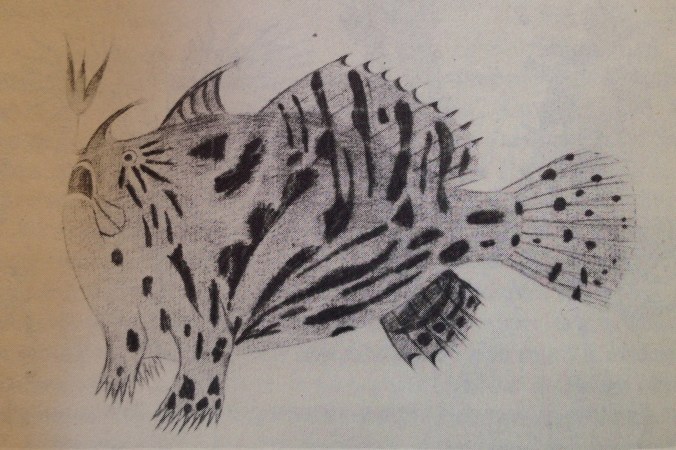
photo 2 - hairy frogfish

Commerson’s drawing of the hairy frogfish – Antennarius striatus

There have been plenty of identification problems when it comes to frogfish, even today.  Frogfish colorations and patterns are highly variable, so it is nice to know people have been struggling with frogfish identification for hundreds of years. Albert Gunther, a scientist who attempted describe the different species of frogfish, said in 1861 that “[their] variability is so great, that scarcely two specimens will be found which are exactly alike…although I have not the slightest doubt that more than one-half of [the species] will prove to be individual varieties”. He listed over 30 species, but only 9 of those species are still accepted today. Since 1758 there have been over 165 species described and over 350 combinations of names. Currently there are around 50 accepted species, roughly one third of the total species described.

FROGFISH SPECIES PROFILES

Painted Frogfish – Antennarius pictus

This is the most abundant frogfish species in the Indo-Pacific. They can be identified by having 3 distinctive spots on their tail. They prefer to live near sponges, rocks, ropes, mooring blocks, and car tires. They can grow to a maximum size of around 15 cm.

OLYMPUS DIGITAL CAMERA

Painted frogfish (Antennarius pictus) with its typical three tail spots

Sargassumfish – Histrio histrio

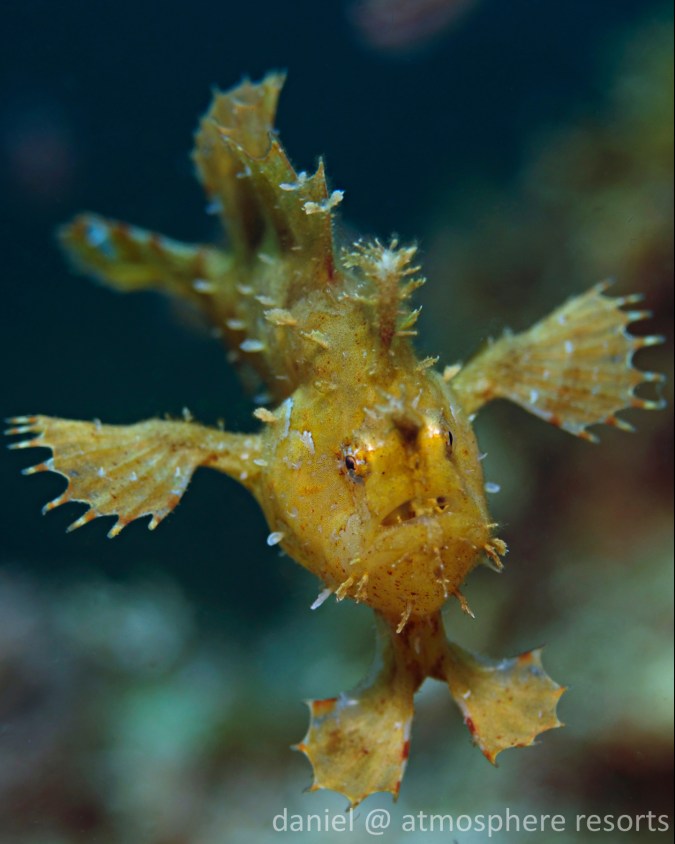
This is the species with the largest distribution. They can be found in floating seaweed or debris as well as anchored seaweed and other marine plants. They can reach a maximum size of around 15 cm and are often sold in the marine aquarium trade.
sargassumfish.jpg

Sargassumfish (Histrio histrio), a surprisingly good swimmer that lives on floating seaweed

Psychedelic Frogfish – Histiophryne psychedelica

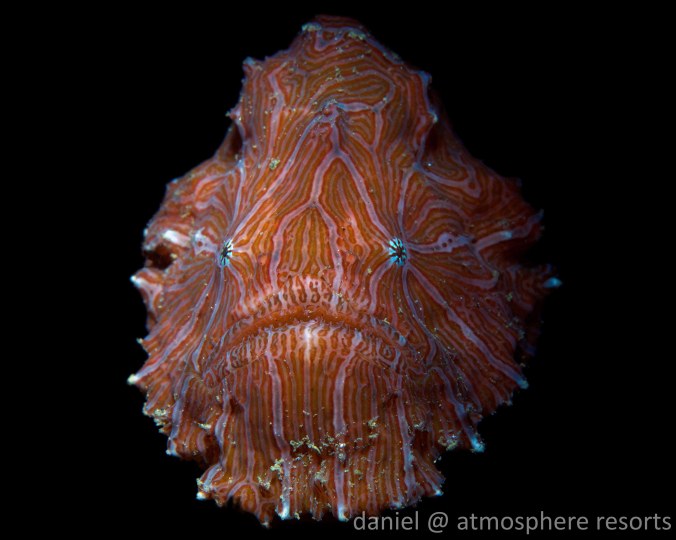
This is one of the rarest frogfish species. They are only found in Ambon, Indonesia at a handful of dive sites, usually at around 2-3m hidden in rock crevices or in coral rubble.
OLYMPUS DIGITAL CAMERA

“Snooted” picture of a psychedelic frogfish (Histiophryne psychedelica)

Giant Frogfish – Antennarius commerson

This is the biggest frogfish species, reaching lengths of more than 40 cm. They prefer to live on sponges and have two large spots on their tail, as well as lines coming from the eye and enlarged dorsal spines.
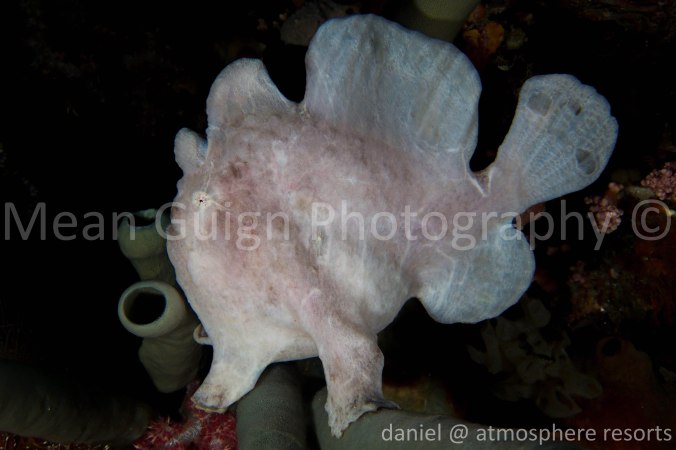
OLYMPUS DIGITAL CAMERA

Giant frogfish (Antennarius commerson) resting on a sponge. Note the two tail spots

Ocellated Frogfish – Nudiantennarius subteres

This frogfish species is the “newest” frogfish species. Originally thought to be a new species, it turns out this species is the previously described, relatively unknown “Deepwater Frogfish”, although the lure is incorrect in the original drawing. It was thought that the adults lived deep and only the juveniles were found in the shallows, but  adult mating pairs of this species have been seen at less than 10m depth. They grow to around 5 cm.
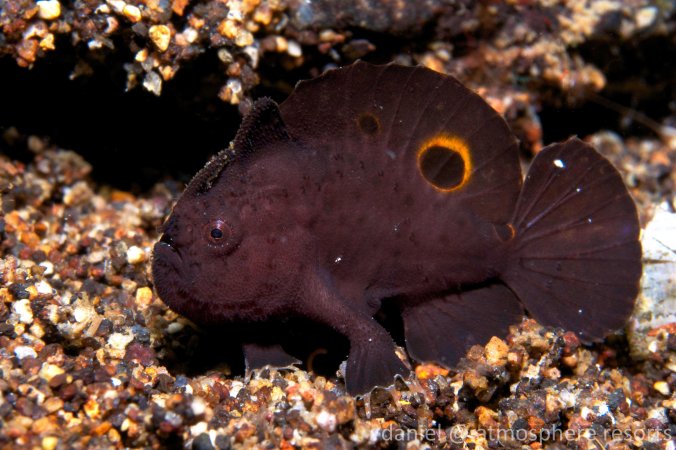
ocellated.jpg

Typical coloration of the Ocellated frogfish (Nudiantennarius subteres)
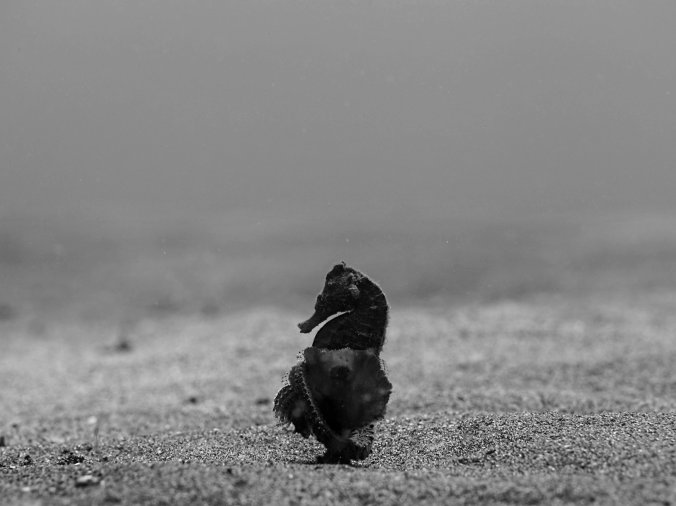
On the origin of muck diving

The last 3 years of my life have been dedicated to intensely studying critters and socio-economics related to “muck diving”. While this is a relatively common term in the scuba diving world, the vast majority of people haven’t got a clue what muck diving is. I can’t count the number of times people at conferences, meetings, drinks, etc. have gone: “You study what diving???”. Marine scientists seem to prefer hearing “Cryptobenthic fish assemblages on tropical sublittoral soft sediment habitats” than “Critters in the muck”. Each to its own I guess?

Seahorse_muck

Classic muck diving scene (Photo: Dragos Dumitrescu)

It’s not just scientists who are confused, a lot of divers have questions about muck, or at the very least are curious about how it started and where the name came from, so I decided to dig a bit deeper and find out some interesting facts about the origins of muck diving. If you have never heard of muck diving or just aren’t sure what it is, here is how I defined it in my last paper:

“Scuba diving in soft sediment habitats with limited landscape features, with
the explicit goal to observe or photograph rare, unusual, or cryptic species that are seldom seen on coral reefs.”

Or easier: Diving on sand/mud/rubble to find cool animals you don’t see on normal divesites. The word “muck” means either “Dirt, rubbish, or waste matter” or even worse “Farmyard manure, widely used as fertilizer”. In British English it is also used for “Something regarded as distasteful, unpleasant, or of poor quality”. I would guess that it’s the combination of the first and last meanings that inspired the people who started this type of diving.

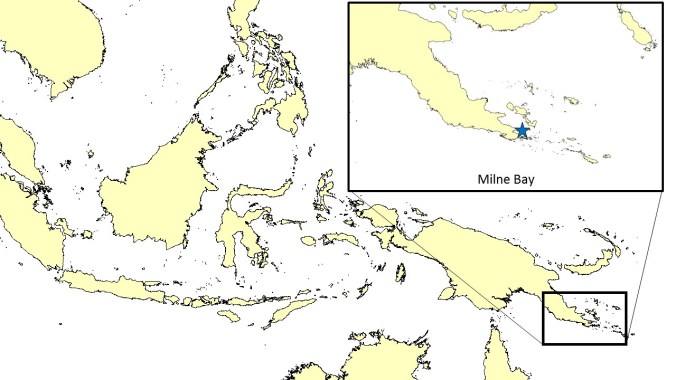
Muck diving in its current shape has its origins in Milne Bay, Papua New Guinea. On a site called Dinah’s beach,  where Bob Halstead decided to try to do a dive on the site where their boat (the MV Telita) was anchored. The divers were skeptical at first as the site was mostly sand and did not look very appealing, but after discovering tonnes of creatures they had never seen before they were sold and muck diving was born. From its origins in Papua New Guinea, muck diving caught on and became popular across the world, but no place is as well known for muck diving as Lembeh Strait in Indonesia.

Map Milne Bay

Milne Bay, Papua New Guinea, where it all started

It is clear why Lembeh is famous with muck divers, as it really is a great place to dive and find some of the world’s most amazing critters. But how did muck diving in Lembeh kick off? What many people don’t know, is that Lembeh’s origin-story as the world’s most famous muck dive destination is pretty grim. The first resort in Lembeh (Kungkungan Bay Resort) was built in 1994, but the owners did not build their resort with critters in mind….

Back in those days, Lembeh was one of the best sites in the region to watch the big stuff. The plankton-rich waters of Lembeh Strait attracted scores of manta rays, dolphins, sharks,… Until 1996, when mankind showed just how destructive it could be. In March of that year, foreign fishermen came in and (illegally) installed the “Curtains of death”. These were huge nets, placed across the migratory routes of the large fish near Lembeh Strait. The nets were deadly efficient, during the 11 months they were used they caught:

  • 1424 manta rays
  • 577 pilot whales
  • 18 whales
  • 257 dolphins
  • 326 sharks (including whale sharks)
  • 84 turtles
  • many other animals including turtles and marlins

The original article about the curtains of death can’t be found online, but if you are interested, send me an email and I can send a copy. If you want to know more about destructive fishing in Indonesia, this is an interesting source start with.

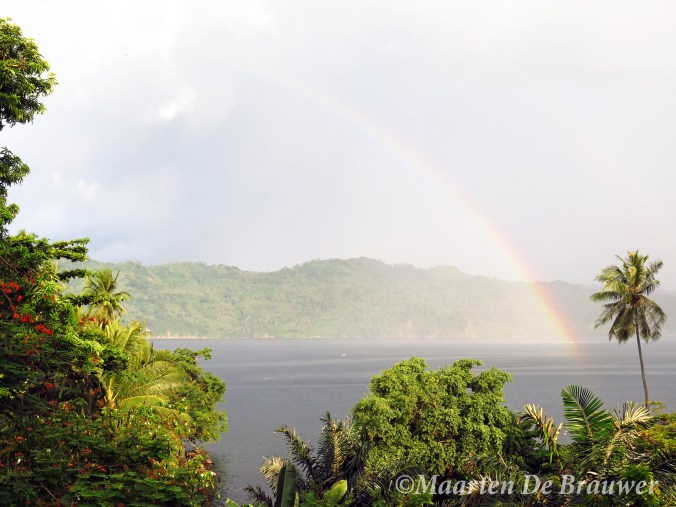
Rainbow2

Peaceful Lembeh Strait has a turbulent history

The numbers are staggering, and for the few tourism operators in the area it must have been quite a shock. Until they discovered that Lembeh had much more to offer than just the big stuff. While there are no records of it, the story goes that muck diving in the area only properly got started when people started looking down at the sand instead of up at the manta rays. It makes me wonder what the area would have looked liked otherwise, and if muck diving would exist in the way it does now…

As it is now, muck diving is big, it attracts divers from across the globe and new critter hot spots keep on being discovered far beyond from where it all started. It’s exciting to think about how much more we will discover in the future! For me, one of the changes I would like to see, is the actual term “muck diving”. The name coined by Bob Halstead stuck, but I think most people in the diving (and academic) world agree that it isn’t really the most inviting name. I’d like to hear your suggestions (below in comments) on more suitable names for this type of diving and the divers doing it. If I get enough suggestions, I’ll organise a poll later to see what is preferred by divers around the world!

2_MDeBrauwer_JuvenileFrogfish_MDB

It’s all about finding the small stuff – baby Painted frogfish (Antennarius pictus)

PS: Originally I wanted the full title of this blog to be “On the origin of muck diving by Means of Photographer Selection, or the Preservation of Favoured divesites in the search for Critters”. But the long title might have put off those readers who didn’t immediately get the very nerdy biology pun.

Answering questions

During the last three months, I have been lucky enough to be based in Lembeh Strait in Indonesia. While most of my time there was spent writing, I also managed to get a fair few dives in so I wouldn’t forget why I started this PhD-project in the first place. What motivated me to go back to university after 7 years of working across the world, was curiosity about the marine life I love so much.

Bobbit worm_MDB

What is a Bobbit worm’s (Eunice aphroditois) place in the food chain?

While working as a dive instructor, I would constantly wonder about what I saw. Why did certain animals only appear in some spots or at certain times of the year? How long do frogfish/pygmy seahorses/other-fish-of-choice live? Do camouflaged fish choose a place to live depending on their own colour, or do they change their colour depending on where they live? What eats nudibranchs? What do nudibranchs eat? …? A few guide books offered answers to some of my questions, but most remained unanswered. Over the years, it slowly became clear that the answers were not locked up in some dusty university-dungeon or inside an even dustier professor’s brain. The truth is, science didn’t know the answers to many of the questions I had.

Many divers would be astonished by how little we really know about the ocean. As anyone who has heard me talk about my research will tell you, I answer a lot of questions with “I don’t know”. Even many of the most basic questions still haven’t been answered. There is a lot of great research going on, but there is even more ocean out there to be studied. When it started to dawn on me that hardly anyone was trying to find the answers to my questions, I decided to try to find them myself.

Froggie yawn_name

Why do frogfish (Antennarius spp.) yawn?

Of course it wasn’t as quick and straightforward as I write it here. But in the end (mostly through stubbornness and dumb luck) I managed to get myself into a project where I could spend multiple years trying to find out some answers myself. Turns out finding answers isn’t as easy as you’d think! But it also turns out that it is an even better way to spend one’s time than traipsing across the world as a dive instructor. The result is that after 3 years I have answered a fraction of my initial questions, while simultaneously tripling (quadrupling? quintupling?) the number of questions I had in the start!

What I am planning to do with those new questions is a matter for another post, but this final field trip definitely motivated me to keep searching for answers…

Ghostpipefish_MDB
Do Ghostpipefish (Solenostomus spp.) change sex? These are 3 males together


New publication: Big bucks for small critters

One of the most important chapters of my research has recently been published in the journal Marine Policy. The paper explains that scuba dive tourism focused on small critters (“muck diving”) has a very high value and how muck diving can be a sustainable alternative to more destructive uses of the environment. This is the link to the paper, but since it is behind a paywall, is rather detailed and perhaps a bit to dry for those of you who are not economists, below is a summary that is easier to digest.

Seahorse_muck

A typical muck diving scene: a sandy bottom with few defining features. In the foreground an Estuary seahorse (Hippocampus kuda) holding on to algae (Photo by Dragos Dumitrescu).

If you don’t know what muck diving is, I invite you to have a look through this site to get a feel for it. But in short: muck diving is scuba diving in sandy areas, usually without coral or other landscape features. The goal is to find weird critters (like flamboyant cuttlefish or hairy frogfish)  that you’d rarely see on normal dive sites. It is very popular in places like Lembeh Strait and Dauin in Southeast Asia, but it is done by divers and photographers all over the world.

Typical for muck diving is that the people doing it are very experienced, with an average of 580 logged dives. Most of them (73.5%) use underwater cameras, often the expensive dSLR cameras, to photograph all the weirdness down there. Many of the divers are well-educated and have a high yearly incomes. Importantly, most divers would be willing to pay for marine conservation if it benefits the species they come to see.

So what does it matter if some fanatic divers like to spend their holidays rooting through the sand instead of cruising by pretty coral reefs? Well, for starters, those fanatic divers spend a combined whopping $152 million per year in Indonesia and Philippines alone. The real value is probably much higher, as this estimate is only for dive centres that specialise in muck diving, and does not include liveaboards or more general dive centres that visit muck dive sites. The real value could be over $200 million per year! Also bear in mind that this number is for Indonesia and Philippines only, it does not include muck dive tourism in Malaysia, Papua New Guinea, or the rest of the world. With more than 100,000 divers visiting Indonesia and the Philippines to go muck diving, you would expect to get the attention of people managing tourism or ocean resources. Especially since many of the divers said they would not have visited the region, or even the country, if they could not muck dive.

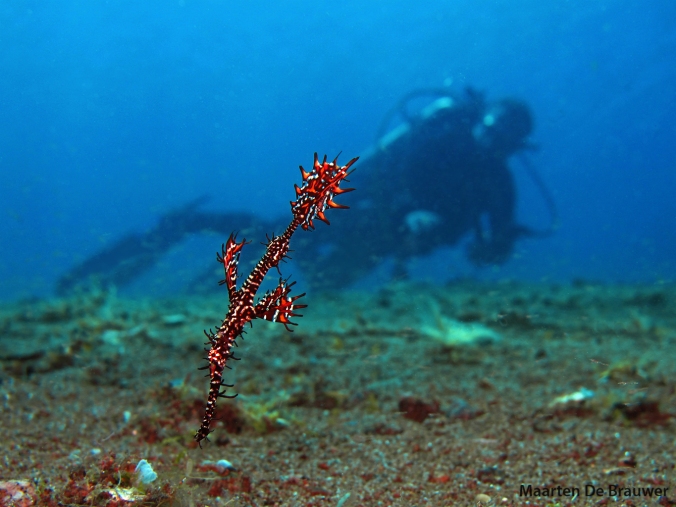
OrnateGhostPipe_RedBlack_Diver

Diver and Ornate ghostpipefish (Solenostomus paradoxus) in Dauin, Philippines

While these numbers might not change anything in your life, they make a huge difference for the thousands of local people that work in this branch of the dive industry. Muck diving is often done in remote locations with limited other forms of income besides fishing. Working as a dive guide and looking at fish is not only more sustainable than catching fish, it also pays a lot better. Roughly $51 million is paid in wages to the local staff working in muck dive tourism annually, and dive guides can earn nearly 3 times more than the minimum wages in the area….

Just stop and think about that for a minute. Imagine the minimum wage in your own country, now triple it. Got the number? OK, now imagine this choice: you can either make that amount by showing cool animals to divers, or you can work your ass off in a factory or risk your life fishing for a third of that amount. Small wonder that many people prefer the first choice, which is great news for marine life in the area, because it means less people fishing and more people trying to protect this valuable source of income.

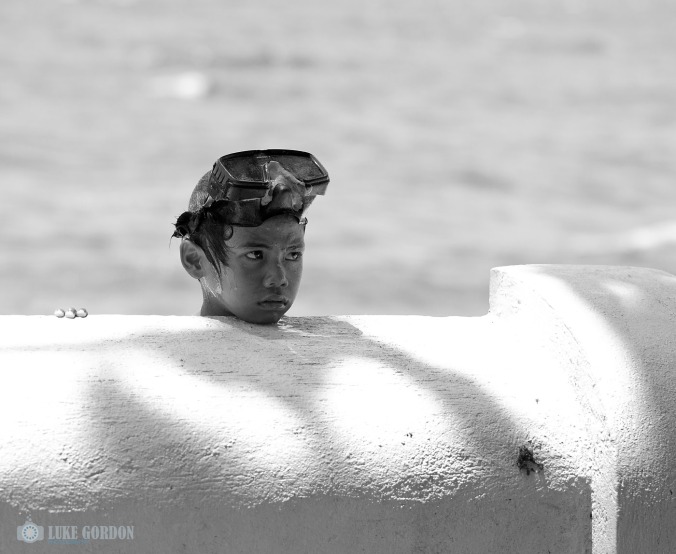
photo-05

The future generation of muck dive guides? Not without a healthy ocean (Photo: Luke Gordon)

That is what it comes down to in the end, protecting these extremely interesting and valuable ecosystems. Make no mistake, muck sites can be threatened as well. Coral reefs might bleach because of climate change, mangroves might be cut to make space for shrimp ponds and seagrass might be dredged to mine for sand, but sandy habitats could face other risks with equally bad consequences. All the habitats above receive far more research and conservation attention than the “barren” sandy sites in the tropics. If this paper proves anything, it is that soft sediment habitats have a very high value, and that it should get more attention to avoid loosing amazing biodiversity and the subsequent loss of income for the thousands of people that depend on it.

And that does not even consider loosing that feeling of pure joy when you finally find a critter you’ve dreamed of seeing for years 😉

Luke_Snoot_Black Hairy

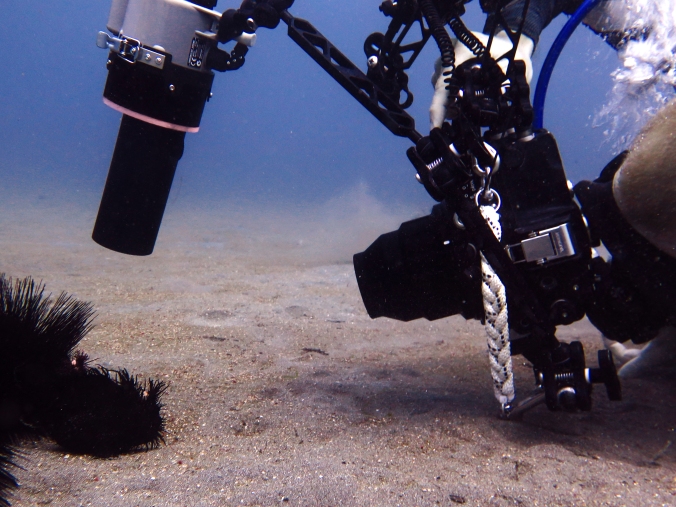
Muck diving scene: a diver (the science hobbit) taking a picture of a frogfish (black Hairy frogfish – Antennarius striatus)