I may not have been blogging much recently, but a lot has happened in the last few months. First and foremost, I completed and handed in my PhD-thesis. Since then I have been teaching, writing grant and job applications, and I’ve had a nice long holiday relaxing and traveling in Europe and diving in Indonesia.
In all honesty, handing in my PhD-thesis isn’t really news anymore since it’s been almost four months ago. That does not change anything about how happy and relieved I am that I managed to finish this epic project. Although this happiness might also have a slight tinge of regret as it means the end of more than 3 fantastic years of being absorbed by something that I love doing very much. By now I have also received the examiners’ comments back from my thesis, which were very positive, meaning that the whole process of finalising the PhD might be even quicker than I’d really like to.
Yours truly during my PhD-presentation, very happy days!
Why quicker than I’d like to? Mostly because it means I have to find a job now! I really, really like doing research, especially when it involves little critters or sandy ocean floors. So I will try my very best to keep on doing research on this, but post-PhD research jobs (so called “post-docs”) are hard to come by. Even harder when you study sand and animals that look like sand 😉 So I have been applying for positions all over the world, ranging from Australia, to Germany, the UK, Indonesia, etc.
This is all very exciting, since I might literally end up anywhere in the world. But as you can imagine, it also means a fair amount of insecurity of what life will look like in a few months time. The excitement about new projects and adventure always wins over the worries though 😀
But, just in case you’d happen to know someone who is looking for a researcher who knows his way around Southeast Asia, soft sediment, and cryptobenthic fauna, do give me a ring 😉
There are more exciting thing going on than just job-hunting! As a matter of fact, August will be a pretty busy, action-packed month. At the moment I am in Perth airport, almost ready to fly to South Africa. As you may or may not remember, a few months ago we (my friend Louw and me) received a grant from the Mohammed bin Zayed Species Conservation Fund to conduct research on the endangered Knysna Seahorse (Hippocampus capensis). We have been working behind the scenes and preparing since, but now it is finally time to do the fieldwork portion of the work!
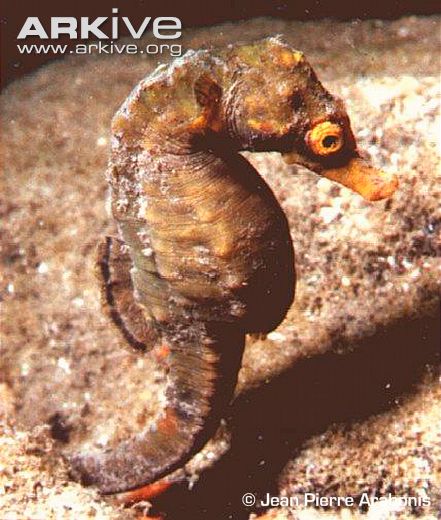
The species we’ll be studying: the Knysna seahorse (Hippocampus capensis)
To try and give everyone who is interested an idea of what marine science fieldwork is like, I am planning to blog frequently during the next 2 weeks. No promises about just of frequently, but I will do my very best to document trip and give you an insight of what it’s like (for me) to do the data collecting that is behind most of the stories I share here.
If you do not want to miss anything, you can always follow the blog (there’s a button on the site somewhere), you don’t need an account, you can just get the updates via email. Alternatively, I’ll try to post (almost) daily pictures on Instagram (crittersresearch) and Twitter (@DeBrauwerM) as well if you can’t be bothered reading and just want to see what it all looks like.
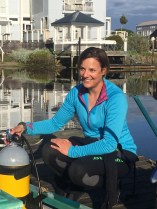
It’s time for a new guestblog, this one is by the amazing Louw Claassens. Louw is a South-African marine scientist at the Knysna Basin Project and a member of the IUCN Seahorse specialist group. She studies one of the world’s most endangered seahorses, part of her work involves studying their behaviour, which recently resulted in a very interesting publication (go check it out!). In this guestblog she gives you the most important findings of that paper and shares some fantastic video footage. Enjoy!
A big part of ecological research is based on observations – where do animals occur, what do they eat, what do they do. Some of these questions can be answered by using standard scientific methods e.g. a population survey can tell you where animals occur (although why is a whole other kettle of fish!). The tricky part sets in when you want to find out what an animal is doing. Conventionally, this entails going to the animal in question and watching it (sounds pretty simple, right?!). But it is here where observational effect (the act of observing has an effect on behaviour) and observational bias (researcher bias as to expected behaviour) creeps in.
I spy with my little…GoPro? (Photo: Louw Claassens)
One of the 21st century solutions to these observational problems, is using cameras to study animals, and we are now even able to use cameras to study animals under water (thank goodness for relatively cheap action cameras such as GoPro’s!). Most fish research uses cameras to look at fish diversity, abundance, and habitat use – with limited work on actual fish behaviour. One of the reasons for this is probably owing to the highly mobile nature of most fish species.
So, is there a place for action cameras in fish behavioural research?
We focused on seahorses to answer this question. The conventional way to study seahorse behaviour entails getting in the water and watching the seahorse go about its business. Or, getting some seahorses and conducting observational research in the lab. The first method is problematic owing to two reasons: 1) Observer effect (the seahorse might act differently when you are watching it), and 2) seahorses move quite slowly most of the time, so detecting a behavioral pattern is quite difficult. Not even to mention the costs and time involved in doing this. The latter method might make sense, but it is well known that animal behaviour in captivity is rarely authentic.
A very well camouflaged Knysna seahorse (Hippocampus capensis) (Photo: Louw Claassens)
Our aim was to test the efficacy of using video cameras to study the natural behaviour of a seahorse, and we had the perfect opportunity to do this! During a recent population survey of the endangered Knysna seahorse (Hippocampus capensis) in the Knysna estuary (South Africa) we found a stable population within a residential marina estate. The seahorses were found to use artificial Reno mattresses (wire cages filled with rocks). We had the seahorses, we had a relatively protected area to deploy cameras, and we had a sturdy structure to attach the cameras to.
In the first instance, we wanted to see if seahorse behaviour changed throughout the day e.g. between the morning, midday and afternoon. To add to this, we had an opportunity to see what happens to seahorse behaviour during the busy December holiday season. To do this, we used boat noise as a potential stressor (as occupancy of the residential marina estate increases from ~30 % to 100 % over the holiday period).
Video: Aggressive behaviour in the Knysna seahorse (Hippocampus capensis) – main action starts at 0:45.
But first we had to see if cameras successfully captured seahorse behaviour and if they could be used in behavioural assessments. We conducted a short trial period to test this, and found that 49 % of footage recorded contained seahorses. Using this data, we created an ethogram (a catalogue or table of all the different kinds of behaviour or activity observed in an animal) for H. capensis:
Feeding: the seahorse is actively searching for prey animals.
Irritation: identified by increased clicking and tail adjustments.
Moving from holdfast to holdfast: seahorse moves around without any feeding behaviour in-between.
Interaction: interaction behaviour can either be between a male and female as part of courting or between seahorses of the same sex and might entail aggression.
The next step was to deploy the cameras throughout the day (morning, midday and afternoon) and across the longer time periods (Pre-holiday, Holiday and Post-Holiday). To assess behaviour we used 10-min video sections as a sample and timed all observed behaviour for a single focal animal during the sample.
We recorded hours of footage, of which 57 hours contained suitable footage of seahorse behaviour. Seahorses spent 82 % of their time feeding and we noted courting behaviour exclusively in the morning. This courting behaviour entailed grasping of the female’s tail by the male in an attempt to position himself face to face with the female, followed by swaying movements. We also found that seahorses were more visible and fed more during the morning. There were no differences between the behaviour of males and females.
Graphic footage! Video of a cormorant catching a seahorse (H. capensis)
We observed quite a few cuttlefish, rays and cormorants, but only noted predation by the latter (check out the video above!). Seahorses were also observed happily living side by side with octopus, although octopus are known to eat seahorses in Australia. We also noted some other curious fish, like our temperate butterfly fish (Chaetodon marleyi) (video below) – can you spot the seahorse?
A cold water butterfly fish (Chaetodon marleyi) checking out Louw’s GoPro setup
When we looked at behavioural changes across the longer-term periods, we noted a decrease in visibility and feeding activity of the focal seahorse, with an increase in irritation behaviour, during the holiday period. No courting behaviour was noted during the holiday period – which is a bit concerning, seeing that this species breeding season is from September to March. Feeding activity and seahorse visibility increased again during the post-holiday period.
So, what does all this tell us? Action cameras are pretty useful in studying natural behaviour of seahorses. Recorded footage can be watched on fast-forward mode which enables a clear view of the behavioural pattern of the animal (something that is quite difficult to see whilst diving, as these guys move so slowly). For H. capensis, it was the first time that natural behaviour was studied, and we gained some valuable information with regards to feeding and interaction behaviour. In addition, it seems that boat noise has a negative effect on the natural behaviour of this species – an aspect which does need further research (preferably, a controlled experimental approach is needed here, to control the vast number of confounding factors that might have played a role!). The use of cameras in natural seagrass habitat also needs to be tested, as visibility might be problematic in dense vegetation.
In the past, the world of underwater research was exclusively meant for the eyes of the researcher/diver. Now, we are able to bring what we experience to the surface and to the lay person. And perhaps the real power of doing this is to create and instill that love and passion for the underwater world that all divers and water lovers have, in all people. I mean, who cannot fall in love with two seahorses doing their morning courting dance?
The secret sex lives of seahorses: mating dance of the Knysna seahorse
I’ve had a busy few weeks, so it has been a bit quiet on the blog. To make up for it, here is what I have been doing lately instead of writing blogs…
This might surprise you, but doing a PhD in marine biology is about more than just going to tropical beaches, diving and looking at cool ocean critters. By now I have collected all the data I need to write up my PhD, so what is left is mostly sitting at my desk, analysing data and writing that data into something that will eventually become a doctoral thesis. At the moment I’ve written about 40 thousand words (~90 pages), which might seem like a lot, but in reality I’ve still got a lot of work to do (just have a look at the figure below by Beck on R is my friend).
Median length of a PhD thesis per field. Link to original source.
Besides writing, there’s a lot of statistical analysis to do. I never expected to write this, but doing stats is actually quite fun (and excruciatingly painful at the same time). There is just something about having collected data, then getting to test your hypotheses and turning all of that into graphs and results. To me, the feeling of turning your ideas into new, real information is probably one of the most gratifying aspects of doing research. That, and sharing your fresh results with people and listening to other people share their new work.
That is where scientific conferences come into play. Over the last years I have attended a few big and not so big conferences, which were always good fun. Last May and July I presented different aspects of my research at two smaller, but very interesting conferences: SyngBio 2017 and the ACRS 2017 conference.
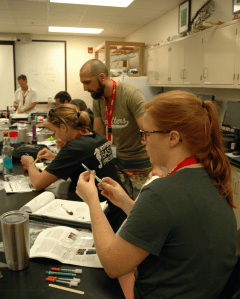
Participants of SyngBio 2017 (Tampa, Florida)
Tagging workshop at SyngBio 2017
Syngbio stands for Syngnathid Biology, but it really should be called seahorse camp. Syngbio is a global conference solely focused on Syngnathid fishes (=seahorses, pipefishes and their relatives). The conference was held at the University of Tampa in Florida (USA). For the duration of the conference we had accommodation in a dorm on campus, which contributed to the “summer camp”-feel and additionally made it a lot easier to socialize (read: “drink alcoholic beverages”) with other researchers at the end of the day. I must say that this conference was the most fun conference I’ve done so far, even if I leave out the social events. Hanging out with a group of people who are all passionate about the species you study is great, especially since I usually work with people who study very different species than I do. There was so much to learn from experts on all kind of topics ranging from conservation, to physiology, husbandry, ecology, evolution, etc. I was also lucky enough to attend a meeting of the IUCN Syngnathid Specialist Group, which are the people who decide on global conservation priorities for these animals. During the conference I presented my own research on the impacts of flash photography on seahorses. The writing on that chapter isn’t entirely finished yet, but I will make sure to share results here as soon as they are published.
The other conference I attended was organised by the Australian Coral Reef Society (ACRS), who kindly sponsored my flights to Townsville (Australia) to attend the conference. Townsville is the home city of James Cook University (JCU), one of the world’s leading marine biology universities. Over the years I have met a lot of JCU researchers in the field and on other conferences, so it was great to finally visit the place and catch up with everyone. The conference had a strong focus on the recent coral bleaching events on the Great Barrier Reef and how it eventually effects far more than just the corals. While certain (uniformed) people still claim otherwise, climate change was one of the main reason this happened, and will probably happen even more in the future. This isn’t the blog post to go into depressing details, but seeing the destructive effects for yourself and talking to the scientists who do the research really drives homes the message of how important it is to take action to slow down climate change.
A Tambja nudibranch (Tambja sp.), winner of “public’s choice”-award at ACRS 2017
I presented some of my biofluorescence research at the ACRS conference and was very happy to win an “Outstanding presentation award” for my talk! The work I presented is in review at the moment and will hopefully be published within the next 3 months. During the conference I also submitted a few of my photos for a conference photo competition. I am quite proud that one of the photos won the “Public’s choice” award! 🙂
So what are the plans in the near future? I will definitely try to write blogs more regularly, although I have a pretty busy schedule. I am tutoring a few classes (Functional Biology) to 1st year students, and I will be doing a lot more writing and analysing. I might get some short relief from the cold Perth winter to do another trip to Coral Bay with the 3rd year students as well, which would be good fun. Finally, I’ve got three papers which are in review, so hopefully I will be able to share more news about new publications soon!
I am currently in Florida at the University of Tampa, to attend Syngbio 2017. Syngbio is the global conference about Syngnathidae. “Syngnathidae” is the scientific name for the group of animals that consists of seahorses, pipefishes, etc. The conference is being attended by over 100 experts from across the world, who are discussing topics ranging from behaviour, to genetics, husbandry and conservation.
Once the conference is over, I will write a blog about the main conclusions of the conference. But since I am currently in a syngnathid mind-set, I figured it made sense to have a look at previous blog posts I wrote about seahorses and their relatives and combine them for anyone interested to learn more about these fascinating animals.
Little known seahorse facts: an overview of interesting facts about seahorses you might not have heard of before
Winged pipefish: one of my favourite pipefish species that I feel deserves more attention
Seadragons and other critters found in the cold waters around Sydney
Ruby seadragons, deep sea seahorses and other critters beyond the reach of divers
Keeping seahorses in tanks: a rant on how I struggled keeping West Australian seahorses in tanks. Read this blog if you are considering keeping seahorses in tanks yourself
Ornate ghostpipefish: ghostpipefishes are gorgeous animals, but very understudied. This blog is an overview of what we know about the ornate ghostpipefish.
Fluo seahorses: A photo compilation of some of the fluoresence work I’ve done, including fluo seahorse shots

 It’s time for a new guestblog, this one is by the amazing Louw Claassens. Louw is a South-African marine scientist at the



 I am currently in Florida at the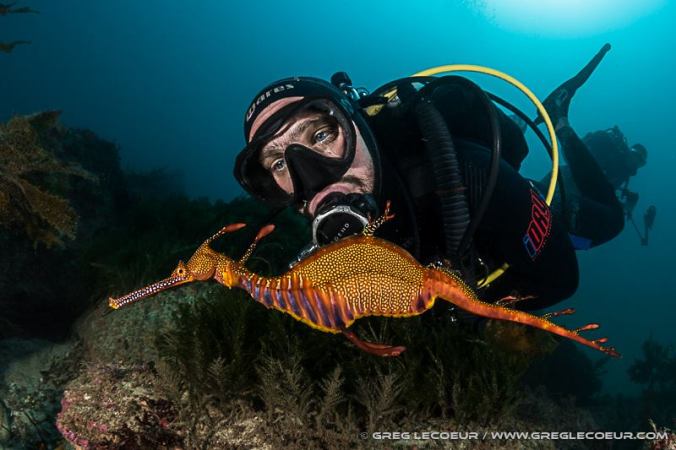
 Critter Research