Guestblog: Frogblogging – insights in the world of frogfishes

IMG_0737This month’s guestblog is written by Daniel Geary, the resident marine biologist at Atmosphere Resort in Dauin, Philippines. It’s safe to say that Daniel is very passionate AND knowledgeable about frogfishes. He’s been studying them for years in Dauin and even wrote (and teaches) a PADI speciality course on these awesome critters! In this blog he gives a taste of some of the many ways frogfish are fantastic and deserve a closer look.


photo 4 - longlure frogfish

Longlure frogfish (Antennarius multiocellatus) from Florida

Frogfish. You have probably heard of them, and if you’re a diver you might have seen one or two before. You have definitely swam right past a few of them without knowing they were there. Although most of them have a face only a mother could love, behind this outer layer exists a well-adapted, expert fisherman with amazing camouflage capabilities. They are more than just a lazy, camouflaged blob that sometimes doesn’t change location for a year.

Frogfish are anglerfish, although they are what I call a shallow, less ugly version of anglerfish. They have a rod and a lure that they actively fish with when necessary. Their fins look like limbs that somewhat resemble those of a frog. They must inhale water though their mouth to then push it out of their gills which aids in locomotion. Frogfish are experts at changing color and can change color multiple times, usually to blend in with their surroundings. Normally a full color change takes about 2 weeks, but frogfish have been witnessed to change color in under ten seconds when disturbed by divers’ bubbles and needing to switch to a different coral.

photo 2 - color change

The same giant frogfish (Antennarius commersoni) changing colour in two weeks

There are around 50 species of frogfish, with a new species or two being described every few years. Frogfish can be found worldwide in tropical and subtropical waters (but not in the Mediterranean). Some species are only found at a handful of dive sites, others are only found in one country or continent. A handful of species are found in the majority of the warm water areas, but only the Sargassumfish is found worldwide. There have been a few occasions where Sargassumfish were found all the way up in the cold waters of Norway and Rhode Island – way out of their preferred habitat, but they live their lives floating in seaweed and/or other debris and are at the mercy of the ocean currents.

OLYMPUS DIGITAL CAMERA

Sargassum frogfish (Histrio histrio) often wash up on the shore of the Atmosphere housereef, when they do, they get released back into deeper water

OLYMPUS DIGITAL CAMERA

Painted frogfish (Antennarius pictus) using its lure to attract prey

Frogfish are ambush predators which is why they seem to be so lazy. The less they move, the better predators they can become due to algae, coral polyps, and any other organisms that use the frogfish as habitat. I call this being lazily efficient, or efficiently lazy. Frogfish will make minimal adjustments to their body positioning before they begin to lure prey, although sometimes the frogfish are so camouflaged that they don’t need to actively attract prey. Frogfish swallow their prey whole by opening their mouth and creating an instant vacuum since the volume of the mouth increases up to twelve times the original amount. This means frogfish can swallow their prey whole in six milliseconds. They feed on a variety of organisms, depending on where the frogfish lives. Generally they like small fish like cardinalfish, shrimps and crabs, and sometimes other frogfish. They can comfortably swallow prey that is their own size, and with a bit of effort they can swallow prey up to twice their size, although this can result in the death of the frogfish if the prey item is too large and gets stuck in their throat. Frogfish do not have many predators, but they are sometimes preyed on by moray eels, triggerfish, and lizardfish. Flounder will sometimes suck up juveniles from the sand and fishermen in the Philippines have been known to capture and eat Giant Frogfish.
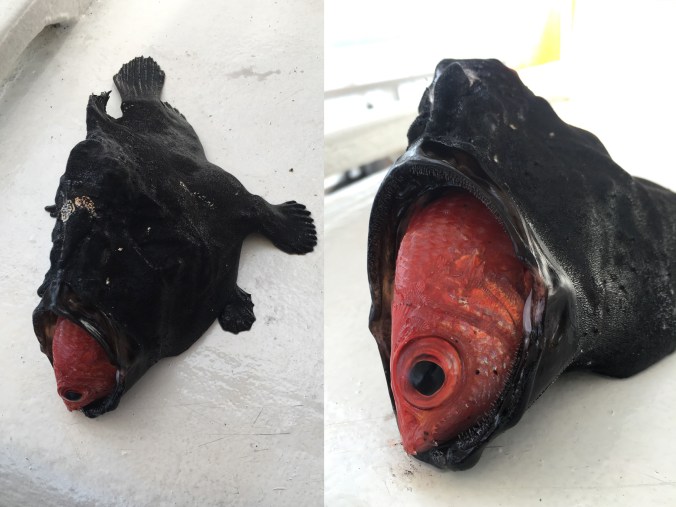
photo 6 - dead giant frogfish

This giant frogfish (Antennarius commersoni) bit of more than it could chew and did not live to tell the tale. Photo taken at Apo Island
 

OLYMPUS DIGITAL CAMERA

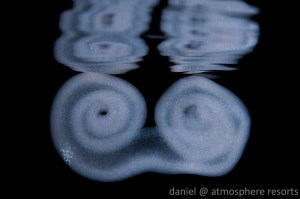
Frogfish egg raft

Frogfish have been known to eat each other if they get too close, especially after failed mating attempts. A male will approach a female when she is bloated with eggs. He will do his best to show off for her, which includes expanding his fins to their maximum sizes, rapidly opening and closing his mouth, as well as violently shaking his body. At this point, the female either accepts him or tries to eat him. If accepted, he gets to stand next to the female, which is the frogfish equivalent of holding hands. Once he is ready to mate, he will start again with his flashy moves, but this time bouncing around the female. Sometimes he has to physically swim her off the substrate to mate, other times she is able to swim on her own. Once they are a meter or two above the substrate, the female releases her egg raft, causing her to spin rapidly. The male then fertilizes this egg raft, also spinning rapidly. Both the frogfish then return to the bottom as the eggs float off into the distance. The eggs will hatch a few days later and become tiny planktonic frogfish babies, which will continue to float for a month or two until they are big enough to settle in the substrate, change color, and begin their lives as adorable frogfish.

OLYMPUS DIGITAL CAMERA

A male (red) painted frogfish (Antennarius pictus) trying to convince the female (yellow) to mate

Stay tuned for more frogfish insights coming in December, where I’ll write about the history of frogfish research and describe a handful of frogfish species, including a potentially “new” species. Until then, keep an eye for frogfish on all your dives, especially if you’re in warm water.

Poll: alternative muck diving terms

voteAfter the recent blog about the history of muck diving I received some interesting suggestions about alternative names to describe the activity. Because this is a democratic blog, it’s time for a poll! Tell me (and the rest of the world) which name you prefer and who knows, it might just catch on!

While less talked about than the term “muck diving”, a few people suggested the world needs a fitting name for muck dive enthusiasts (maniacs?).  In bird watching the most fanatic bird watchers are called “twitchers“. I reckon finding an appropriate term for those divers that love nothing more than finding new critters could be interesting.

I have been offered some suggestions, but feel free to add others. For the sake of inspiration, the name “twitcher” actually stems from the nervous behaviour of a well-known bird watcher in the 50s and 60s. So feel free to make fun of your photograph happy critter-enthousiast dive buddies 😉

Luke_Snoot_Black Hairy

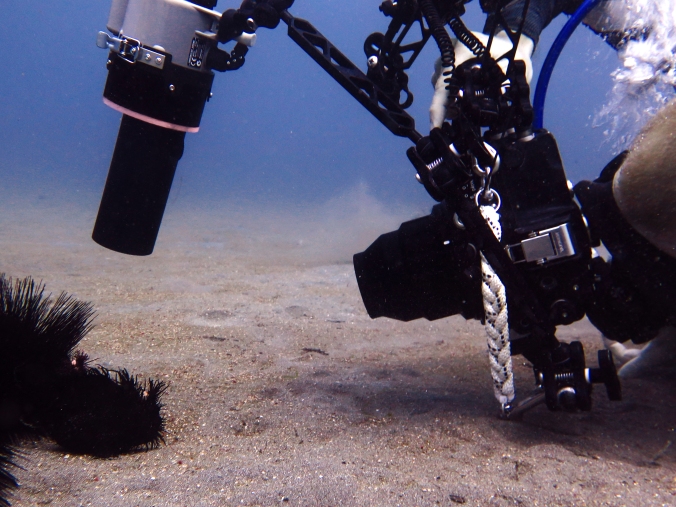
Muck-enthusiast in action (can you see the black hairy frogfish?

On the origin of muck diving

The last 3 years of my life have been dedicated to intensely studying critters and socio-economics related to “muck diving”. While this is a relatively common term in the scuba diving world, the vast majority of people haven’t got a clue what muck diving is. I can’t count the number of times people at conferences, meetings, drinks, etc. have gone: “You study what diving???”. Marine scientists seem to prefer hearing “Cryptobenthic fish assemblages on tropical sublittoral soft sediment habitats” than “Critters in the muck”. Each to its own I guess?

Seahorse_muck

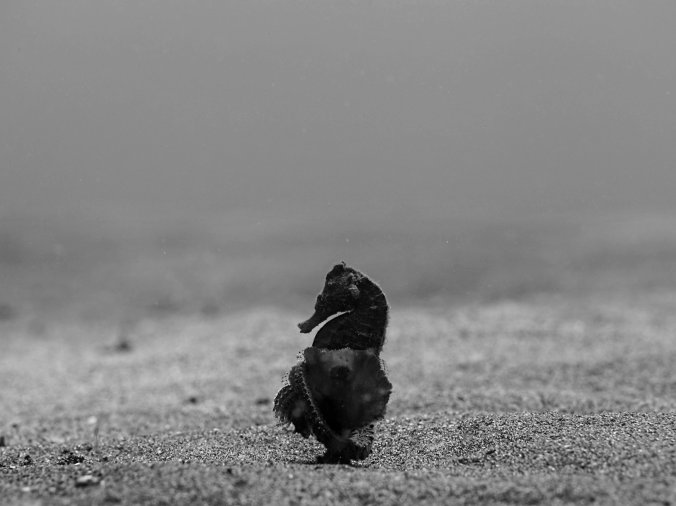
Classic muck diving scene (Photo: Dragos Dumitrescu)

It’s not just scientists who are confused, a lot of divers have questions about muck, or at the very least are curious about how it started and where the name came from, so I decided to dig a bit deeper and find out some interesting facts about the origins of muck diving. If you have never heard of muck diving or just aren’t sure what it is, here is how I defined it in my last paper:

“Scuba diving in soft sediment habitats with limited landscape features, with
the explicit goal to observe or photograph rare, unusual, or cryptic species that are seldom seen on coral reefs.”

Or easier: Diving on sand/mud/rubble to find cool animals you don’t see on normal divesites. The word “muck” means either “Dirt, rubbish, or waste matter” or even worse “Farmyard manure, widely used as fertilizer”. In British English it is also used for “Something regarded as distasteful, unpleasant, or of poor quality”. I would guess that it’s the combination of the first and last meanings that inspired the people who started this type of diving.

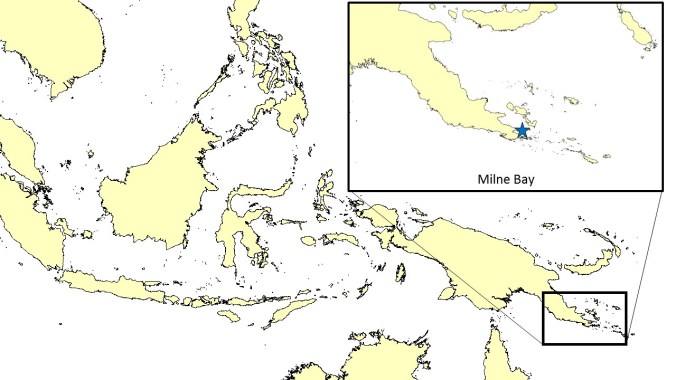
Muck diving in its current shape has its origins in Milne Bay, Papua New Guinea. On a site called Dinah’s beach,  where Bob Halstead decided to try to do a dive on the site where their boat (the MV Telita) was anchored. The divers were skeptical at first as the site was mostly sand and did not look very appealing, but after discovering tonnes of creatures they had never seen before they were sold and muck diving was born. From its origins in Papua New Guinea, muck diving caught on and became popular across the world, but no place is as well known for muck diving as Lembeh Strait in Indonesia.

Map Milne Bay

Milne Bay, Papua New Guinea, where it all started

It is clear why Lembeh is famous with muck divers, as it really is a great place to dive and find some of the world’s most amazing critters. But how did muck diving in Lembeh kick off? What many people don’t know, is that Lembeh’s origin-story as the world’s most famous muck dive destination is pretty grim. The first resort in Lembeh (Kungkungan Bay Resort) was built in 1994, but the owners did not build their resort with critters in mind….

Back in those days, Lembeh was one of the best sites in the region to watch the big stuff. The plankton-rich waters of Lembeh Strait attracted scores of manta rays, dolphins, sharks,… Until 1996, when mankind showed just how destructive it could be. In March of that year, foreign fishermen came in and (illegally) installed the “Curtains of death”. These were huge nets, placed across the migratory routes of the large fish near Lembeh Strait. The nets were deadly efficient, during the 11 months they were used they caught:

  • 1424 manta rays
  • 577 pilot whales
  • 18 whales
  • 257 dolphins
  • 326 sharks (including whale sharks)
  • 84 turtles
  • many other animals including turtles and marlins

The original article about the curtains of death can’t be found online, but if you are interested, send me an email and I can send a copy. If you want to know more about destructive fishing in Indonesia, this is an interesting source start with.

Rainbow2

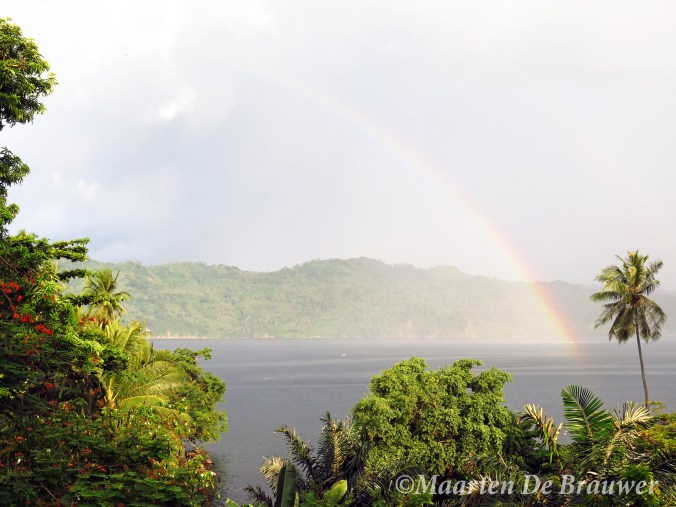
Peaceful Lembeh Strait has a turbulent history

The numbers are staggering, and for the few tourism operators in the area it must have been quite a shock. Until they discovered that Lembeh had much more to offer than just the big stuff. While there are no records of it, the story goes that muck diving in the area only properly got started when people started looking down at the sand instead of up at the manta rays. It makes me wonder what the area would have looked liked otherwise, and if muck diving would exist in the way it does now…

As it is now, muck diving is big, it attracts divers from across the globe and new critter hot spots keep on being discovered far beyond from where it all started. It’s exciting to think about how much more we will discover in the future! For me, one of the changes I would like to see, is the actual term “muck diving”. The name coined by Bob Halstead stuck, but I think most people in the diving (and academic) world agree that it isn’t really the most inviting name. I’d like to hear your suggestions (below in comments) on more suitable names for this type of diving and the divers doing it. If I get enough suggestions, I’ll organise a poll later to see what is preferred by divers around the world!

2_MDeBrauwer_JuvenileFrogfish_MDB

It’s all about finding the small stuff – baby Painted frogfish (Antennarius pictus)

PS: Originally I wanted the full title of this blog to be “On the origin of muck diving by Means of Photographer Selection, or the Preservation of Favoured divesites in the search for Critters”. But the long title might have put off those readers who didn’t immediately get the very nerdy biology pun.

Growing up

Growing up isn’t always easy, going from the playful life of a child to become a (seemingly) functional adult takes blood, sweat and tears. Anyone reading this blog who longingly remembers the awkward changes your body goes through puberty, please feel free to share in comments below whether it was the pimples, the voice changes, gangly limbs or any other similar affliction you’d like to get back in your life. I am fairly confident the comment section won’t be overly populated. If you think growing up was hard for you or any other human, take some time to consider how much more extreme becoming an adult is for fish.

As you or may not know, most fish start their life as transparent larvae, floating through the blue. Once they are large enough to become proper fish, they “settle” on the reef. This settling is the first big growing up fish have to do.  Forget about years to grow from a baby into a teenager. Typically within less than 2 days, the freshly arrived larvae change colour and massively grow in size. If you think changing colour and doubling in size within a month isn’t hard enough as a childhood, consider the following. Over 50% of baby fish arriving on the reef get eaten within the first two days of arriving on the reef! Talk about a bad first day at school…

Childhood might be the most dangerous time for fish, but that doesn’t mean puberty is any easier. While we humans complain about acne and high pitched voices, fish have got other things to cope with. Many fish change colour again as they become adults, which is a minor nuisance compared to the fact that some radically change shape. Good examples are batfishes, which start by looking like leaves or flatworms to then turn into a relatively boring plate-looking fish.

Shapeshifting is peanuts compared to a process many fish have go through during puberty: sex change. Many fishes are born as one sex, but will turn into the opposite sex as they grow up. The best known example are clownfishes, which are all born as a male, but turn into females later in life. Including this process would have made “Finding Nemo” a much more interesting film in my humble opinion. Other species, such as parrotfishes and wrasses are born as females, but then turn into males as they grow up. While surprising to most people, the whole sex change thing is actually very common in the ocean.

Part of growing up in humans is learning to appreciate different kinds of food: whether it’s vegetables, olives or alcohol, children like different things than adults. The same goes for many fish species. Frogfishes for example start by mostly eating small shrimp, and then evolve a more delicate palate including fish like seahorses, lionfish, or pretty much any other fish that fits in their mouth. Interestingly, for frogfish growing up can mean that you start of as prey for a fish, but turn into a predator for that same fish once you’re big enough. Conclusion: growing up can be difficult for any animal, but some have it worse than others.