Answering questions

During the last three months, I have been lucky enough to be based in Lembeh Strait in Indonesia. While most of my time there was spent writing, I also managed to get a fair few dives in so I wouldn’t forget why I started this PhD-project in the first place. What motivated me to go back to university after 7 years of working across the world, was curiosity about the marine life I love so much.

Bobbit worm_MDB

What is a Bobbit worm’s (Eunice aphroditois) place in the food chain?

While working as a dive instructor, I would constantly wonder about what I saw. Why did certain animals only appear in some spots or at certain times of the year? How long do frogfish/pygmy seahorses/other-fish-of-choice live? Do camouflaged fish choose a place to live depending on their own colour, or do they change their colour depending on where they live? What eats nudibranchs? What do nudibranchs eat? …? A few guide books offered answers to some of my questions, but most remained unanswered. Over the years, it slowly became clear that the answers were not locked up in some dusty university-dungeon or inside an even dustier professor’s brain. The truth is, science didn’t know the answers to many of the questions I had.

Many divers would be astonished by how little we really know about the ocean. As anyone who has heard me talk about my research will tell you, I answer a lot of questions with “I don’t know”. Even many of the most basic questions still haven’t been answered. There is a lot of great research going on, but there is even more ocean out there to be studied. When it started to dawn on me that hardly anyone was trying to find the answers to my questions, I decided to try to find them myself.

Froggie yawn_name

Why do frogfish (Antennarius spp.) yawn?

Of course it wasn’t as quick and straightforward as I write it here. But in the end (mostly through stubbornness and dumb luck) I managed to get myself into a project where I could spend multiple years trying to find out some answers myself. Turns out finding answers isn’t as easy as you’d think! But it also turns out that it is an even better way to spend one’s time than traipsing across the world as a dive instructor. The result is that after 3 years I have answered a fraction of my initial questions, while simultaneously tripling (quadrupling? quintupling?) the number of questions I had in the start!

What I am planning to do with those new questions is a matter for another post, but this final field trip definitely motivated me to keep searching for answers…

Ghostpipefish_MDB
Do Ghostpipefish (Solenostomus spp.) change sex? These are 3 males together


New publication: Big bucks for small critters

One of the most important chapters of my research has recently been published in the journal Marine Policy. The paper explains that scuba dive tourism focused on small critters (“muck diving”) has a very high value and how muck diving can be a sustainable alternative to more destructive uses of the environment. This is the link to the paper, but since it is behind a paywall, is rather detailed and perhaps a bit to dry for those of you who are not economists, below is a summary that is easier to digest.

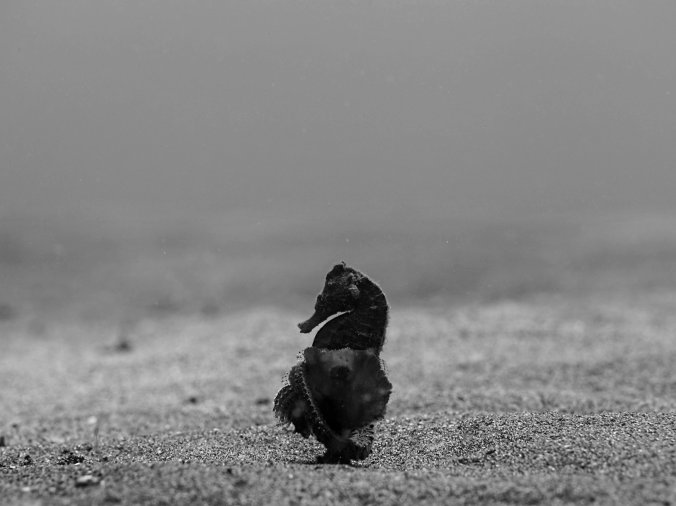
Seahorse_muck

A typical muck diving scene: a sandy bottom with few defining features. In the foreground an Estuary seahorse (Hippocampus kuda) holding on to algae (Photo by Dragos Dumitrescu).

If you don’t know what muck diving is, I invite you to have a look through this site to get a feel for it. But in short: muck diving is scuba diving in sandy areas, usually without coral or other landscape features. The goal is to find weird critters (like flamboyant cuttlefish or hairy frogfish)  that you’d rarely see on normal dive sites. It is very popular in places like Lembeh Strait and Dauin in Southeast Asia, but it is done by divers and photographers all over the world.

Typical for muck diving is that the people doing it are very experienced, with an average of 580 logged dives. Most of them (73.5%) use underwater cameras, often the expensive dSLR cameras, to photograph all the weirdness down there. Many of the divers are well-educated and have a high yearly incomes. Importantly, most divers would be willing to pay for marine conservation if it benefits the species they come to see.

So what does it matter if some fanatic divers like to spend their holidays rooting through the sand instead of cruising by pretty coral reefs? Well, for starters, those fanatic divers spend a combined whopping $152 million per year in Indonesia and Philippines alone. The real value is probably much higher, as this estimate is only for dive centres that specialise in muck diving, and does not include liveaboards or more general dive centres that visit muck dive sites. The real value could be over $200 million per year! Also bear in mind that this number is for Indonesia and Philippines only, it does not include muck dive tourism in Malaysia, Papua New Guinea, or the rest of the world. With more than 100,000 divers visiting Indonesia and the Philippines to go muck diving, you would expect to get the attention of people managing tourism or ocean resources. Especially since many of the divers said they would not have visited the region, or even the country, if they could not muck dive.

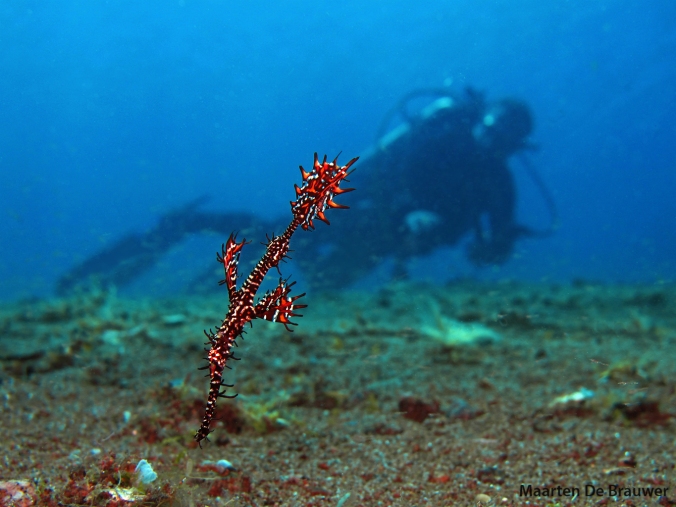
OrnateGhostPipe_RedBlack_Diver

Diver and Ornate ghostpipefish (Solenostomus paradoxus) in Dauin, Philippines

While these numbers might not change anything in your life, they make a huge difference for the thousands of local people that work in this branch of the dive industry. Muck diving is often done in remote locations with limited other forms of income besides fishing. Working as a dive guide and looking at fish is not only more sustainable than catching fish, it also pays a lot better. Roughly $51 million is paid in wages to the local staff working in muck dive tourism annually, and dive guides can earn nearly 3 times more than the minimum wages in the area….

Just stop and think about that for a minute. Imagine the minimum wage in your own country, now triple it. Got the number? OK, now imagine this choice: you can either make that amount by showing cool animals to divers, or you can work your ass off in a factory or risk your life fishing for a third of that amount. Small wonder that many people prefer the first choice, which is great news for marine life in the area, because it means less people fishing and more people trying to protect this valuable source of income.

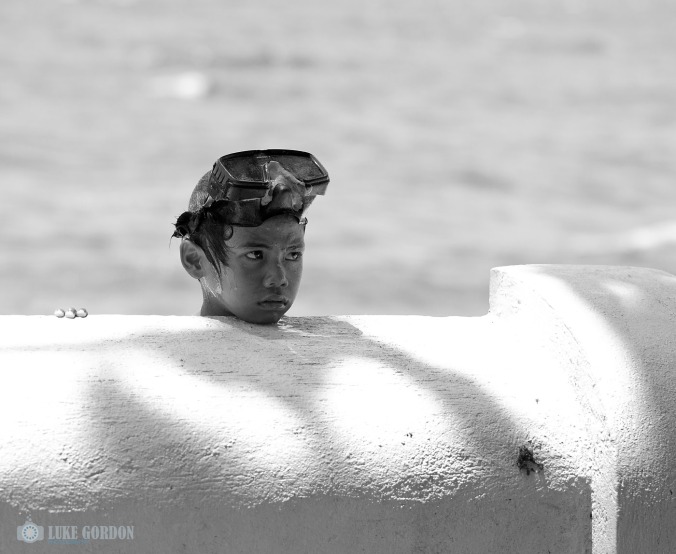
photo-05

The future generation of muck dive guides? Not without a healthy ocean (Photo: Luke Gordon)

That is what it comes down to in the end, protecting these extremely interesting and valuable ecosystems. Make no mistake, muck sites can be threatened as well. Coral reefs might bleach because of climate change, mangroves might be cut to make space for shrimp ponds and seagrass might be dredged to mine for sand, but sandy habitats could face other risks with equally bad consequences. All the habitats above receive far more research and conservation attention than the “barren” sandy sites in the tropics. If this paper proves anything, it is that soft sediment habitats have a very high value, and that it should get more attention to avoid loosing amazing biodiversity and the subsequent loss of income for the thousands of people that depend on it.

And that does not even consider loosing that feeling of pure joy when you finally find a critter you’ve dreamed of seeing for years 😉

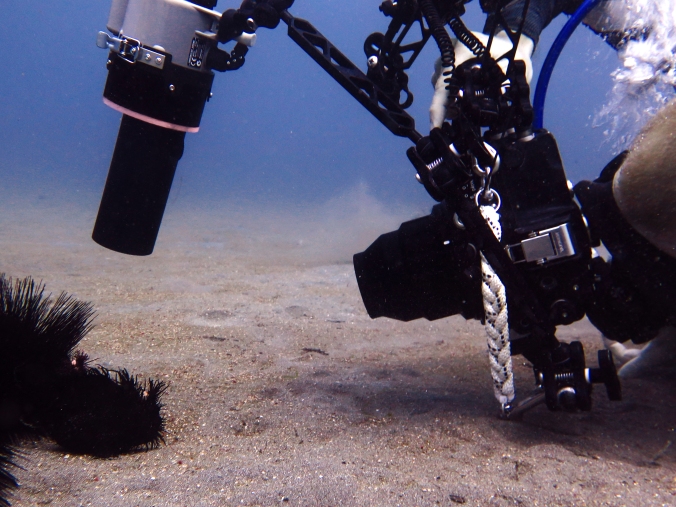
Luke_Snoot_Black Hairy

Muck diving scene: a diver (the science hobbit) taking a picture of a frogfish (black Hairy frogfish – Antennarius striatus)

High school teaching intermezzo

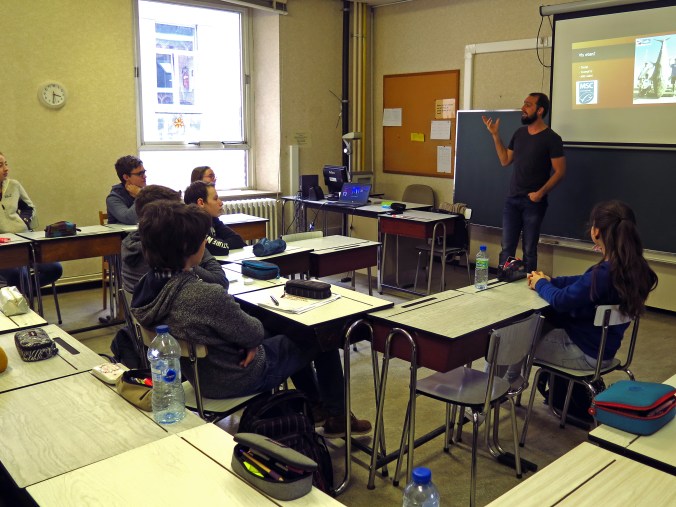
Last month I had to make a short and unexpected trip back to Belgium. In the short time I was there, two friends who are high school teachers decided to enlist my services to teach a few guest classes. So I (rather surprisingly) ended up talking to a bunch of 14-to-16- year-olds about how great weird fish are.

To say that this was a different crowd to my usual audience (scientists, enthusiastic divers, etc.), would be a bit of an understatement. Communicating about the ocean with teenagers living in a big city, most of which have never snorkeled in their lives, was a refreshing challenge. How do you get high school kids whose main interests are.. (what are they even?) to listen to stories about fish?

Turns out the trick is….the same way as getting most other people’s attention: by piquing their interest with stories about gore and sex,  and cool videos. Not of the gore and sex (that wouldn’t be allowed in high school I think). Showing videos of hunting frogfish, or of flamboyant cuttlefish wandering around definitely worked better than just pictures. Not-so-much to my surprise, telling stories about the aberrant mating habits of fish and comparing it to teenagers’ normal school interactions with the opposite sex also seemed to get their attention. So much actually, that it inspired me to write the sex under the sea post from last month!

teaching

Not my usual setting – teaching in a high school in Belgium

Why the ocean matters and why we should talk more about how awesome it is…

This week I attended the CommOcean 2016 conference in Belgium. CommOcean was all about marine science communication and what the best ways are for marine scientists to interact with the general public. Science communication is about more than just reaching non-scientists, but also about making an impact and transforming how people perceive the ocean, it’s about making a positive change. But why would anyone really care about the ocean, or even more, change their day-to-day behaviour for it? A question particularly relevant if you live far away from the sea or don’t have a taste for fish.

15317838_337598576633265_7576656498167989292_n

The CommOcean2016 crowd in front of the beautiful conference venue in Bruges

The thing is, the ocean matters big time, for everyone, everywhere. On a global scale, the ocean produces more than 50% of the oxygen we breathe (more than trees!). If breathing isn’t your thing, the ocean also provides other trivial things such as food, cures to certain cancers and other diseases, a way to transport most goods around the globe (90% of international trade), and so much more. Current human impacts such as climate change can and will have effects on everyone, even those living furthest away from the sea.

For the people fortunate enough to live close to the coast, the ocean is even more important. Over 1 billion people depend on the sea as their main source of protein, which explains why overfishing is such a big issue. Besides food, the sea also provides a way to make a living as fishermen, through trade, industry, or tourism (muck diving being only one example). For people living on low islands, rising sea levels are a very real and very large threat. Entire countries might sink below the ocean and will have to move elsewhere. Countries like Tuvalu and Kiribati are already negotiating with Australia about possibilities to move their entire population there. Popular holiday destination Maldives has even gone further and is already buying up land in other countries to prepare for relocating its people.

Communicating ocean science is often challenging when people aren’t faced with the ocean in a way the Maldivians or other islanders are. Not being able to see what is below the waves might be the biggest challenge to get people to care about our oceans. It is hard to comprehend  just how amazing life in the sea can be without diving in it, or without the help of talented filmmakers and photographers to show us.

The fact that many scientists are still perceived to live in their “ivory tower of knowledge”, without interacting with people does not help either. The issues facing the oceans are often more complicated than those on land and often seem overwhelming. If the only news people hear about the oceans is bad news, they won’t be keen to listen to the yet another doomsday talk. Most marine scientists are not trained to be communicators and are often too worried about oversimplifying their message, resulting in nuanced, scientifically correct communication that is unfortunately understand by nobody else but scientists. Lastly, in a world where Twitter, Facebook, etc. are increasingly the main source of information for people, it is hard to get attention with a science message. After all, who wants to read about weird fish, if you could be reading about what a Kardashian had for breakfast or that your favourite soccer player went wild on a party last night?

15380513_10154757504941565_3592208402805027098_n

Rita Steyn explaining the ins and outs of Twitter

So what is the solution? How do you get the message across that the oceans matter? I’m in no way an expert, but luckily there were experts around at CommOcean. The first step is to adapt you message to the people you are talking to, don’t go wild on the crazy science talk, have a clear message. (in case you forgot: “Oceans are awesome! Get the news out there!“). Ideally try to interact directly with the people to whom your research is important, stop talking over people’s heads and listen to what they care about. Using social media is a good thing, but do it right and don’t get stuck on just one method. Not everyone uses Twitter or visits websites about science, many people don’t have smartphones and might prefer written media, etc. Don’t forget that humans are visual animals, presenting your message in a more attractive way than dry text will get more attention.


Lastly, maybe most importantly, don’t forget to give the good news. There might be a load of bad news out there, but the ocean is still a beautiful place, something I feel everyone should know about too. Telling people about the beauty that can be found and offering practical tips on how to do something about protecting it can go a long way.

In the long run, what we really need is ocean science to become ingrained in all levels of education. As one of the most important ecosystems in our world, the ocean deserves more attention. After all, as long as people are not aware of the importance of the ocean (and the issues facing it), they cannot change their attitudes about the ocean and they will definitely not change their behaviour to preserve it.

15391398_10157926887225473_5668082405720644482_o

PS: In the spirit of using different communication channels, crittersresearch is now also live on twitter as @DeBrauwerM.

PS: All photos sourced from the CommOcean2016 Facebook page