Fluorescence update

A few weeks ago I posted about biofluorescence in fish. So when National Geographic posted the news about a fluorescing Hawksbill turtle, I was very interested. The original article can be found here. But the short version is: “Holy sh*t! Hawksbill turtles are biofluorescent! Who’d have thought?!?”

Fluorescent Hawksbill Turtle (Capture from NatGeo video)

Fluorescent Hawksbill Turtle (Capture from NatGeo video)

This just shows how much we still have to learn about the oceans in general and how new this whole fluorescence research really is. If a creature as large as a sea turtle is fluorescent and we only found out now, what else is out there to be discovered? And what does it all mean? The reason this is extra exiting, is that it’s the first instance of a marine reptile being recorded to fluoresce. The possibilities seems endless, so keep your eyes open for more fluorescence to come!

Surveys: What do we actually do?

So far I have mostly been writing about muck diving, critters, dive sites, but I haven’t really explained how researching all of this works. What do we get up to when we are diving? Do we look at weird critters and think “that’s pretty cool!” or do we actually do something more?

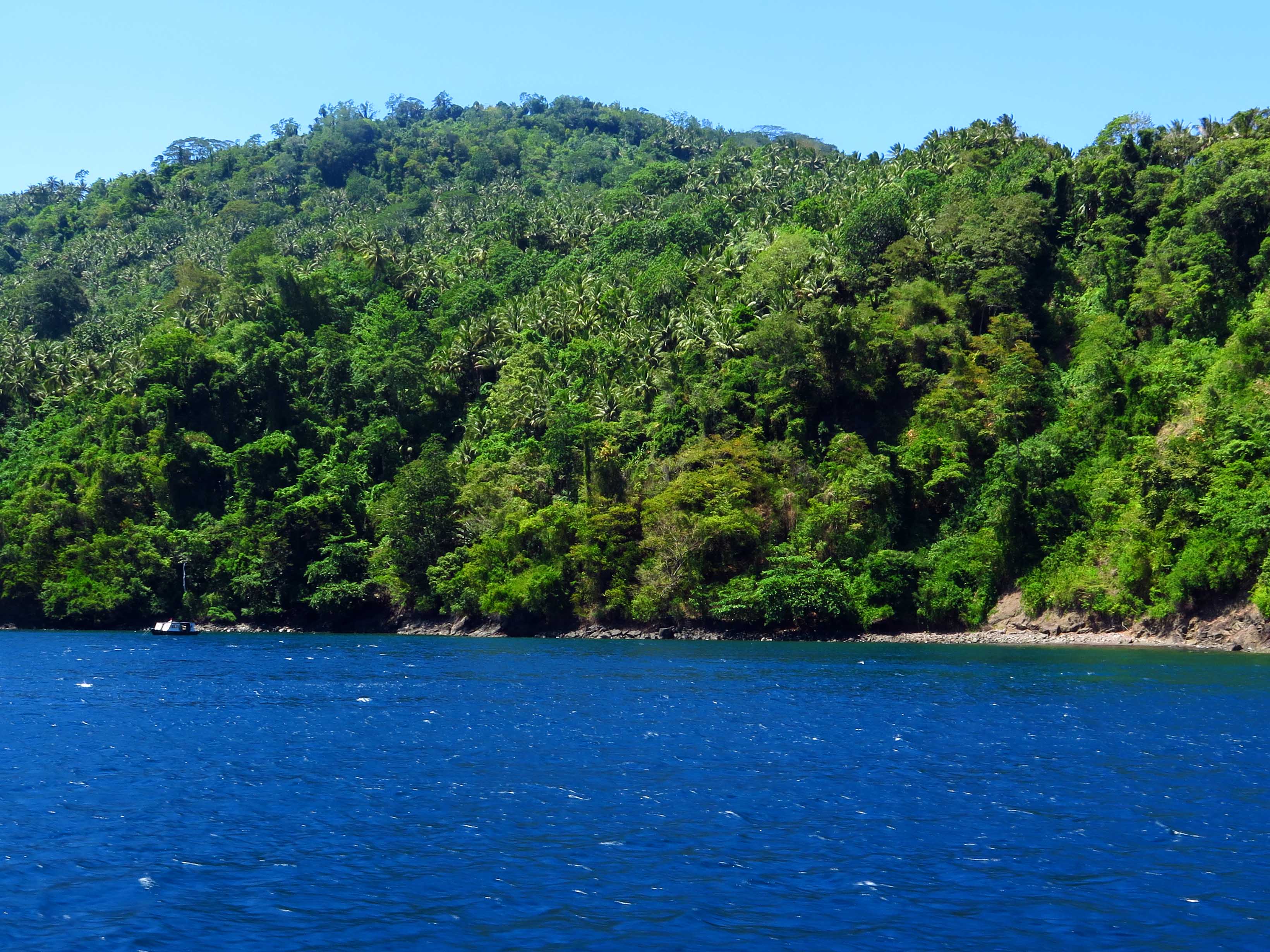
Perks of the job: Air ajo 3, one of the survey sites

Perks of the job: Air ajo 3, one of the survey sites

First off: Yes, Luke and me very often think, talk and even shout under water about how very cool our critters are. We do however, try to get a bit more scientific than that. Since May this year we finished nearly 200 transects on 20 different sites, besides that we have also been collecting sediment samples and we took many, many pictures of the bottom of the sites we surveyed.

Running a transect

Running a transect

Surveying sites by running transects (we are actually doing “belt transects”, but that’s a technicality that’s not important now) is a way to try to tell how many fish there are in that area. The idea is to have a fixed measuring unit, so you can compare your counts to other sites. It would not make sense to just swim for a while, counting fish if you don’t know how much area you have covered. Without a measuring unit you might swim 500m in one dive, 300m on the next one and 900m in yet another one, making comparisons impossible. One way to deal with this, is by simply taking a measuring tape with you so you know how much you area you have covered. Before you do this, you have to decide how long your transects will be and how far away from the tape measure you will count fish. This way I know that with every transect, I cover an area of 50m2, and per site I investigate 500m2 of seafloor(10 transects).

Doing this on every site we investigate allows us to make comparisons. For example, at one site I found 3 Scorpionfish, but at another site I found 35 Scorpionfish. Since I used the same methods (both covered 500m2), I can conclude that there really are more Scorpionfish in one site than the other.

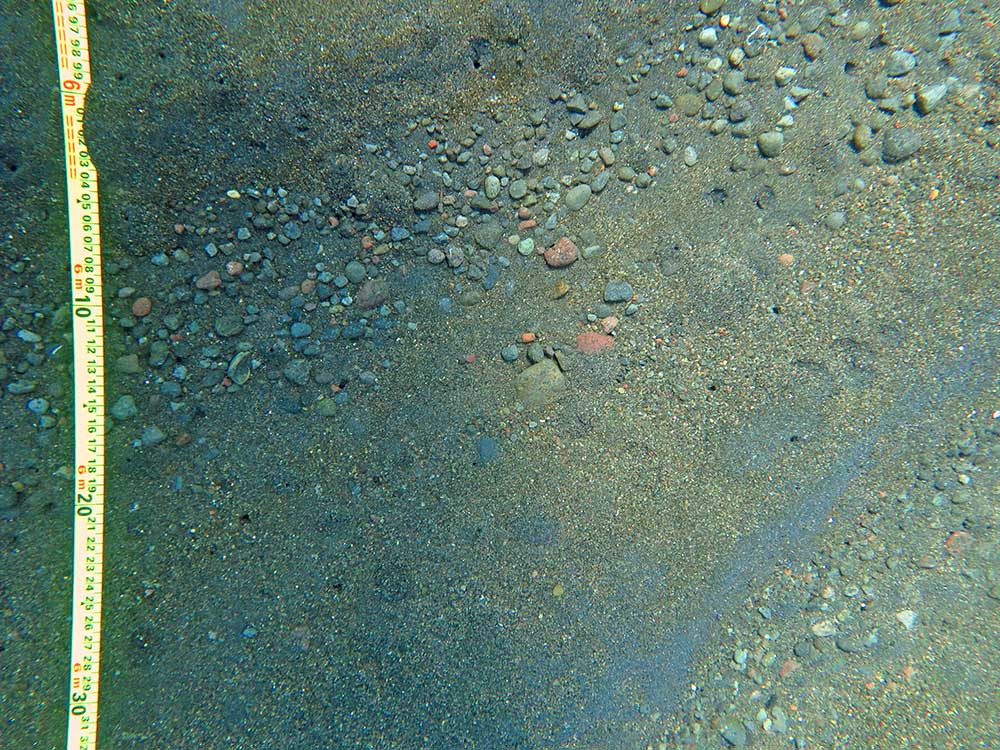
Benthic cover???

Benthic cover???

This obviously does not explain WHY there are more fish on one site than another. To try and explain some of the differences, we gather data on a few other things per site. Besides noting the depth we found species, we look at a few more environmental factors that might vary. The main two are benthic cover and the actual sediment. Benthic cover is just a fancy way of saying “stuff that covers the bottom”, to investigate this we take multiple photos of the bottom at each transect. Afterwards the photos get analysed to decide how much of the bottom was sand, algae, coral,…

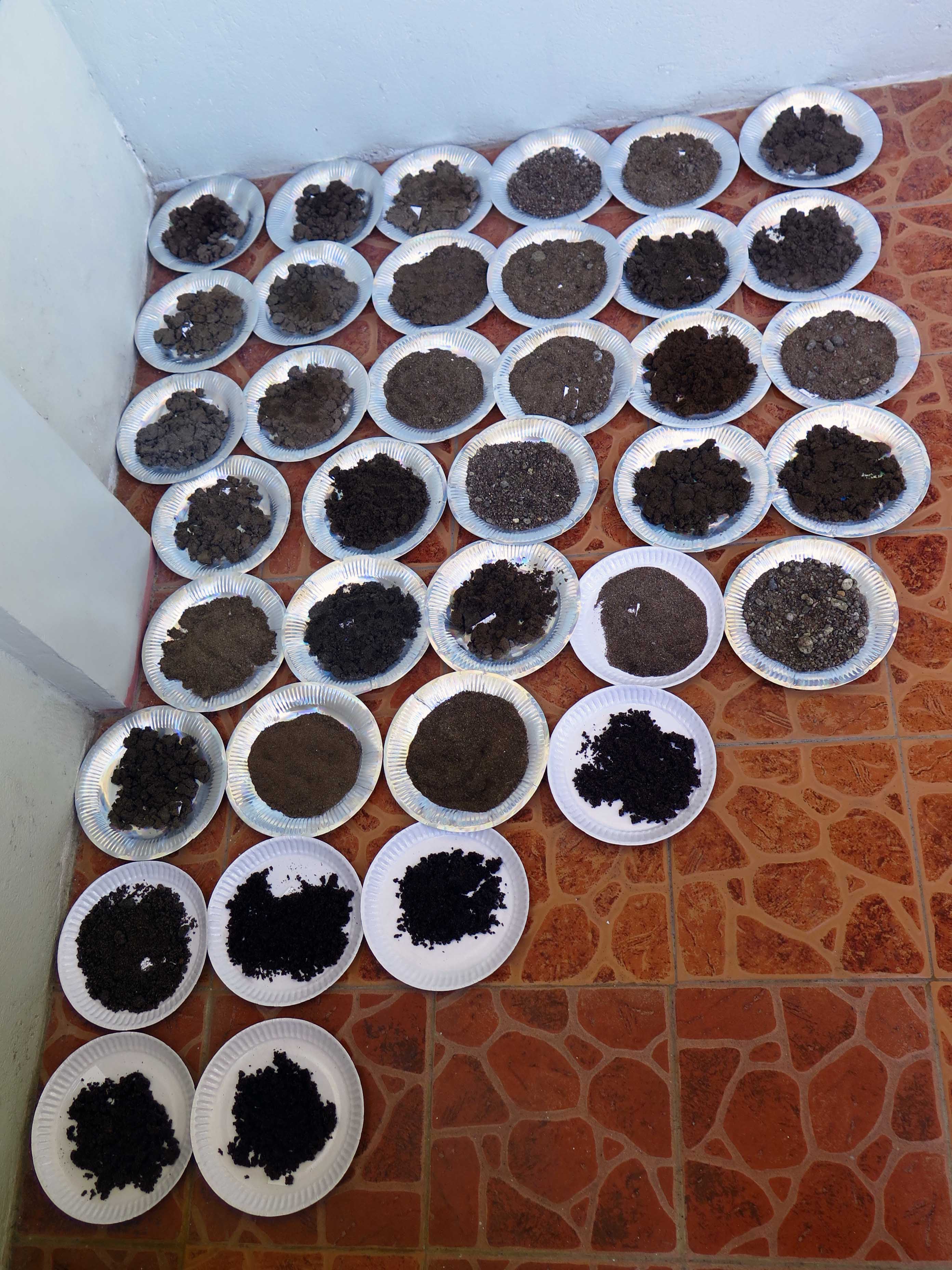
Initial sediment drying

Initial sediment drying

Sediment sampling is a bit more intensive. First step is easy, scooping up about sand at each transect under water. Next the samples have to be dried, packed and transported to the lab. In the lab it all gets wet-sieved, dried again, and then I can start the actual analysis. By the end of this month we will have collected about 200 samples, each of which take about an hour to process (+48 hours drying time). So a lot of hours of playing with sand ahead of me, let’s just hope it results into something useful 😉

Sediment collecting

Sediment collecting

The value of muck dive critters

One of the benefits of doing fieldwork from a dive resort instead of a research station, is that I get to talk to a lot of people who aren’t scientists, but are still interested in the species I am investigating. I frequently get questions that are very relevant, but that you’d rarely get from professional researchers.
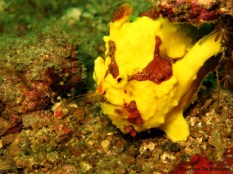
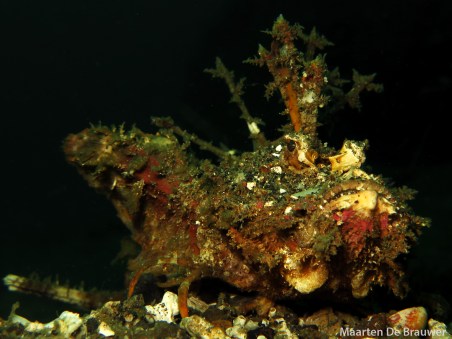
Is it a sponge? Is it a rock? It's a Warty Frogfish! (Antennarius maculatus)

Is it a sponge? Is it a rock? It’s a Warty Frogfish! (Antennarius maculatus)

One of those returning questions is: “WHY are you doing this research?”. What is the point of spending over 3 years of your life looking at animals that most people have never heard about, let alone care about? Experienced divers are usually interested in the results, but non-divers can be baffled by the fact that I would like to know everything there is to know about animals that look like sponges and move about as much as well. What is more, I’m not just interested in their biology, I also want to know how much they are worth economically.

As divers and photographers, assigning an economic value to the species we like to observe might sound like a strange idea. Finding, watching and photographing amazing underwater life is an experience that is invaluable to many of us. It’s more than just ticking boxes, it is an experience that takes us out of everyday life and inspires us. It is something to talk about and share with fellow divers, friends and family. Putting dollar signs on that might seem like selling out, until you realise divers are not the only ones using the marine environment.

The protection of species or ecosystems frequently competes with other economic interests, such as palm oil plantations and fishing. While these are important sources of income, they can decrease the value and health of the natural environment. Determining the monetary value of dive tourism allows us to make comparisons with other industries and with different uses of marine resources. Case studies show that tourism can be a valuable, sustainable alternative to more destructive uses of the natural environment.

A good example is shark diving in Palau, which has been estimated to be worth about US$ 18 million per year. Harvesting the Palauan shark population for fishing instead would be worth less than US$ 11,000. In the light of these numbers, it is clear why it was a good idea from the Palauan government to declare the waters around Palau as shark sanctuary. When practiced in a sustainable manner, dive tourism offers an alternative income for fishing communities, while simultaneously increasing awareness in those communities and the tourists diving in the region.

As part of my PhD, I am investigating the economic value of muck dive tourism in Southeast Asia. Results will hopefully stimulate conservation and research interest in the species that are important to divers, but are often poorly understood by science. Besides interviewing divers, dive guides and dive centre owners, I have also developed an online survey to investigate which species are most popular with muck divers.

If you would like to help out (and haven’t done so already) please take the survey. It should take you no more than 5 minutes. To access the survey please follow this link. If you want to learn more about reason why we should protect endangered species and how economic value plays an important role, this article on BBC Earth is a great read. It explains better than I ever could why I am spending my days looking at critters in the sand.

This is an adapted version of an article I wrote last month for Wetpixel, if you’d like to read more, you can find the full article here

Indian Ocean Walkman (Inimicus didactylus)

What would the value be of this adorable fish? (Indian Ocean Walkman -Inimicus didactylus)

Stupidity in scientific research

I have found a good reason to call myself stupid without being ashamed for it! This essay written by Martin Schwartz is a very interesting read. Have a read if you’ve got a minute and want to feel better about not knowing everything.

A few quotes:

“Science makes me feel stupid too. It’s just that I’ve gotten used to it. So used to it, in fact, that I actively seek out new opportunities to feel stupid. I wouldn’t know what to do without that feeling. I even think it’s supposed to be this way.”

“One of the beautiful things about science is that it allows us to bumble along, getting it wrong time after time, and feel perfectly fine as long as we learn something each time.”

“The more comfortable we become with being stupid, the deeper we will wade into the unknown and the more likely we are to make big discoveries.”

Here is the link to the original essay, enjoy your read….