Photo Story: Hidden Treasures Amongst the Muck – Guestblog by Luke Gordon

Luke

Time to kick of December with a new guestblog, this one by none other than my good friend and science hobbit Luke Gordon! Luke is a very talented photographer whom I’ve been having ocean adventures with for many years. He is currently based in Canada, but continues his photography work there. Increasingly he uses his art as more than mere beautiful pictures, but instead uses it to tell important stories about ocean conservation issues. You really should have a look at his site, but until you do, here is an introduction to his most recent story.


Diverting the majority of my photography work towards conservation photo journalism has been an incredibly rewarding experience so far. I am very lucky to have met various people & organisations over the years which has now allowed me to get up close and personal to certain issues such as, establishing sustainable fisheries in Fiji, and now looking at salmon enhancement projects in British Columbia, (and of course Maarten, the first person worldwide to be dedicating a PhD solely to the soft sediment world & the creatures living there).

photo-01

A ‘barren habitat’ could not be further from the truth, life here as evolved in the most intricate of ways, mimicry is the name of the game on the muck slopes. Species such as this Giant Frogfish (Antennarius commersoni) have evolved near perfect mimicry of sponges as they sit in wait for unsuspecting prey.

The critters of the muck for me, and I am sure for the large majority of photographers who have experienced this world, are the perfect definition of evolution and beauty of the natural world. Everything about this underwater paradise captivates me. From the story of its discovery to the most elusive of its organisms, muck is a magical world.

Let us start at the discovery, muck was discovered by chance by Bob Halstead, a man credited for pioneering the liveaboard industry and diving in Papua New Guinea, the story goes that whilst on a liveaboard in PNG the boat had moored up in Milne Bay for the night where it was calm, Bob Halstead still wanted to go for a night dive and despite the attempted dissuasion from local dive masters they went for a dive right beneath the boat. As the dive masters had predicted the bottom was just endless sand (soft sediment) from where the name of ‘muck’ originated, however the dive masters were wrong about one thing, and that is that there was no life down there, quite the contrary, what they found were creatures that looked like extra terrestrials, creatures that even the like had never been seen before, muck diving was born.

photo-06

A tiny, recently settled juvenile Ornate Ghost Pipefish hangs above a crinoid. Even though this little critter doesn’t know it, the large ‘creature’ in the background is paving the way forward for future research into this unique habitat.

This all happened in the 1980’s, the diving community took a while to catch on, but boy has it caught on, muck diving now is a booming industry which supports thousands of people across Southeast Asia, as Maarten’s research will soon shed more light on. Divers and photographers (and now researchers of course) alike will travel half way across the world just to glimpse these weird and wonderful creatures, and these creatures are not behemoths like the African mammals, no, they are tiny critters which have evolved perfect mimicry and other adaptions to survive in a sandy desert, perfect photography subjects.

So how does a photo story fit into all of this?

Luckily enough for me (well not that lucky, I am referred to as a science hobbit by Mr. De Brauwer, yes, there is an earlier blog about this!) I was able to help Maarten with a large proportion of his fieldwork in North Sulawesi & Bali, Indonesia and on Negros, The Philippines. This gave me a fantastic opportunity to tell a story about this industry and now, the research being conducted. Currently it is quite staggering how many divers travel to muck locations around the world and it is equally staggering how little we know about the ecology, abundances and diversities of these creatures and the threats they face. This is a huge problem, as I have already mentioned thousands of people now rely on the jobs created by the industry and the money the industry brings into countries such as Indonesia and The Philippines. On top of this there is also no baseline data outlining the abundances and diversities of the creatures that have traditionally existed in these habitats, we have no way of gauging how these habitats are responding to the huge increase of direct and indirect anthropogenic pressures.

photo-04

Arjay Salac is a dive master and one of the figure heads for Atmosphere Resort & Spa’s dive centre. Arjay is from a family of fishermen who live on the adjacent plot of land to the resort, after initially being employed as a landscaper when the resort first opened Arjay took a keen interest in the dive world going on. Enthusiasm and work ethic allowed him to move into a boat crewman position. Through continued excellence in the role he was offered the opportunity of being put through the resorts PADI dive master scholarship. Needless to say Arjay excelled and six years later is now one of the most respected dive guides in the area, eagle eyes are a description which fit Arjay perfectly.

This story is a way for everybody, diver or not, to understand how and why these organisms are so special, the pressures they face and how these tiny organisms have changed the lives of so many people across coastlines in Southeast Asia, and now, what research is being conducted to answer the many, many unanswered questions we have.

photo-03

A Juvenile frogfish is measured after being caught in one of the S.M.U.R.F‘s. Frogfish, like many of the cryptobenthic organisms, are still unknown to science, this particular individual is most likely a new, undescribed species of frogfish (Antennatus sp.). Note from Maarten: this animal was returned to the ocean alive and well

This blog shows a few small extracts of the story, please visit my site for the full photographic story.
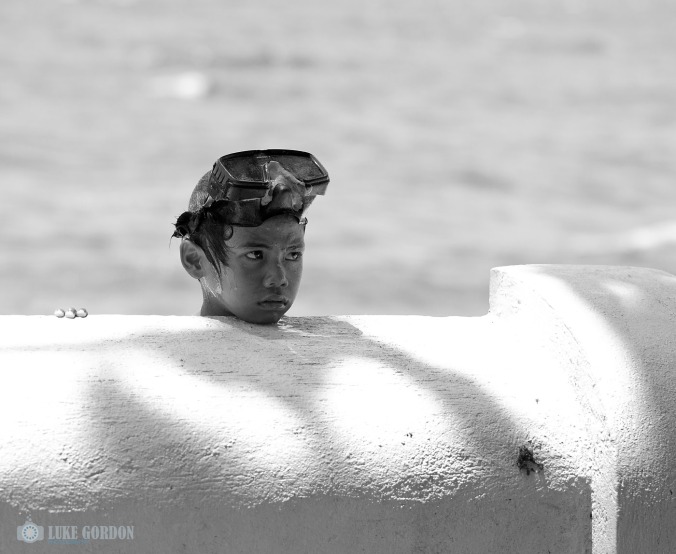
photo-05

The future generation of instructors, dive masters and dive guides.
Fluo time

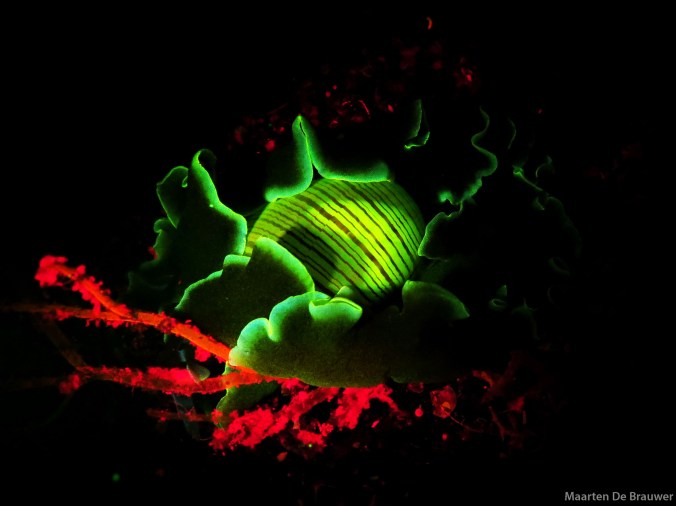
If this isn’t the first time you’ve read this blog, you probably know I am interested in the phenomenon of biofluorescence. I’ve previously talked written about what it is and what it might be used for. In the near future I’ll be tell you all about the details what I was actually doing. But I realized I haven’t shared any pictures recently that show just how beautiful and otherworldly it can be. So here is a random selection of fluo shots I took over the last two years. Enjoy!

bubbleshell

A bubble snail (Hydatina physis) photographed in Lembeh Strait, Indonesia


hippocampus-histrix_fluo_4

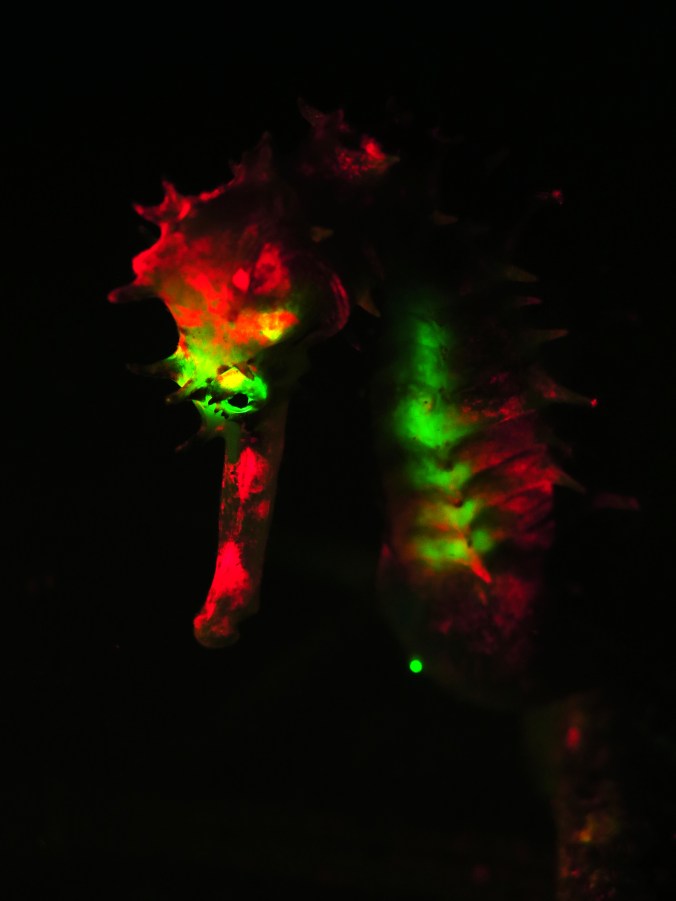
Thorny seahorse (Hippocampus histrix) in Bima Bay, Indonesia


seahorse_fluo_mdb

West Australian Seahorse (Hippocampus subelongatus) in Perth, Australia


coral_fluo

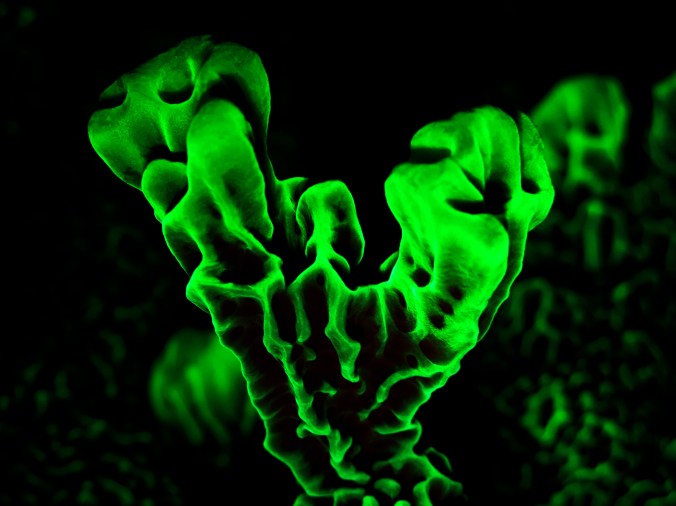
Amazing coral in Raja Ampat, Indonesia


snake-eel

Reptilian Snake Eel (Brachysomophis henshawi) in Amed, Indonesia


lizardfish

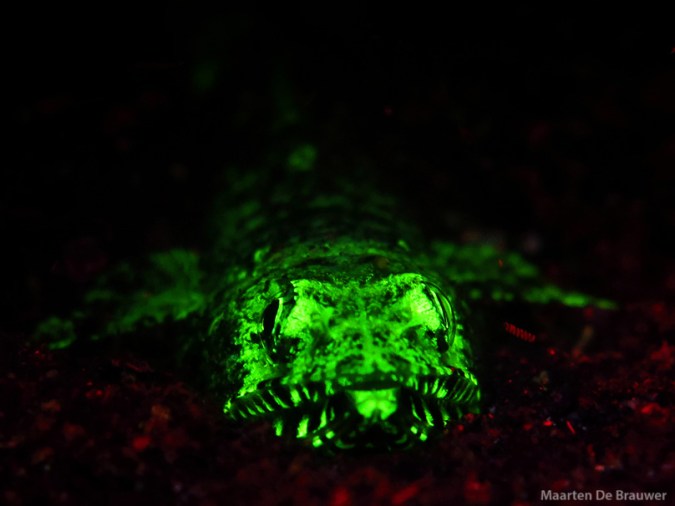
Lizardfish (Synodus sp.) in Lembeh Strait, Indonesia


ablabys

Cockatoo Waspfish (Ablabys sp.) in Lembeh Strait, Indonesia


picnogonid

Sea spider (Pycnogonid sp.) in Tulamben, Indonesia


a-pictus_fluo_small

Painted frogfish (Antennarius pictus) in Lembeh Strait, Indonesia


a-pictus-fluo

Juvenile Painted frogfish (Antennarius pictus) in Dauin, Philippines)


echidna-polyzona

Barred moray (Echidna polyzona) in Nusa Kode, Indonesia


Keeping seahorses

The last two months I have been running an experiment that involves keeping more than 30 seahorses in aquaria. Not because I am trying to become a marine aquarium expert or because I like seeing fish in tanks. On a personal level I think there are too many environmental issues with aquarium trade to get into it myself. Overfishing of species like Banggai Cardinalfish and Mandarinfish are two examples that come to mind. But this post is not about the aquarium trade, so I will leave those particular issues for another time. While I prefer seeing seahorses in the ocean, for this experiment it was necessary to bring them to the “Curtin Aquatic Research Laboratories” (CARL). This blog explains some of the challenges that come with keeping seahorses healthy in an aquarium. If you are considering ever keeping seahorses yourself, please read this blog carefully.

14808071_10154728145537608_910910029_o

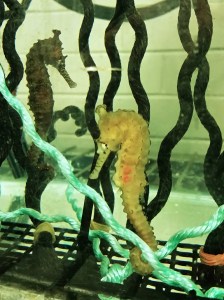
West Australian Seahorses (Hippocampus subelongatus) in their artificial seagrass home

DISCLAIMER: This blog describes scientific research, catching seahorses as a private person is NOT allowed in Australia. If you have any questions about keeping seahorses, feel free to contact me in the comments section.

First challenge: Permits. It takes a lots of paperwork to be allowed to do research on seahorses in captivity. Seahorses are on Appendix II of CITES (Convention for International Trade in Endangered Species), which means they cannot be traded internationally if they are smaller than 10cm. But it does not mean that seahorses cannot be fished. As a matter of fact, they are caught in their millions for traditional Chinese medicine! For this experiment it was crucial to use wild-caught West Australian seahorses (Hippocampus subelongatus), which meant applying for permits from the Department of Fisheries and seeking approval from the Department of Parks And Wildlife. Besides government paperwork, doing any kind of research with animals means writing up extensive application (close to 40 pages) for the universities’ ethics committee to ensure proper treatment of the animals while in my care.

seahorse_tank

Seahorse tag with red elastomer so it can be identified later

Second challenge: Catching seahorses. As anyone who has ever looked for seahorses can attest to, they are hard to find. There are a few sites around Perth where there are plenty of seahorses to be found, but getting all seahorses from one location would have a huge impact on that particular site. To limit the impact of my collecting, I spread out my fish-catching over multiple sites. To further reduce impact, I did not take any pregnant males or any seahorses that were clearly couples ready to mate. Since I needed a variety of sizes and a similar amount of males and females, collecting enough seahorses took a lot of dives spread out over a few weeks. Once seahorses were caught, they also needed to be transported safely to our facility, which meant not going too far, and using specialised tools to  (sturdy catch bags, coolers, oxygen, etc.) to reduce stress for the animals during transport.

Third challenge: High quality aquaria. Seahorses  are notoriously difficult to keep in tanks. They are very sensitive to bad water quality, which can lead to all kinds of issues. Preparing the aquaria started 6 weeks ahead of catching the seahorses. This is  done to ensure that the biofilters that ensure good water quality get properly established. The tanks themselves need to be large and high enough to house seahorses, and they need hold-fasts that mimic seagrass so the seahorses have something to cling on to.

img_7536

First arrivals in the tanks

Seahorses live in salt water, so getting seawater is another issue. Our labs are not directly by the ocean, so we need to import seawater. This then gets sterilised (using UV filters) before we use it. Water quality needs to be monitored daily and adjustments made where needed. This means no weekends off since minor problems could mean dead seahorses. While we have the aquaria and equipment available at CARL, the costs of this would be considerable for a private person.

Fourth challenge: Food. This is probably the biggest challenge of them all. Wild-caught seahorses only eat live food and will not eat dry or frozen fish food. So we need small shrimp to feed them. In our case we are using artemia (= sea monkeys = brine shrimp). Artemia are tiny (less than 1mm) when they hatch, but our seahorses will only eat them when they are about 1cm in size, which means  they have to be grown out for a few weeks before feeding. So we prepared 3 different artemia cultures, each one set up 2 weeks apart to ensure a constant supply of right-sized food. The artemia also need to be fed, in their case with algae. This means 5 cultures of different species of algae to make sure our seahorse-food stayed healthy and fat. Both algae and artemia water quality also need to be monitored, since dead algae/artemia would ultimately mean starving seahorses. To top it off, artemia are not naturally nutritious enough to be the only food source for seahorses. So we added an artemia enrichment-tank (where we add a fatty mix of all nutrients needed for healthy seahorses), which needs to be set up, cleaned, and harvested every day.  The result is that for 3 tanks with seahorses, we have 9 tanks for their food preparation. I’m not sure if you have enough space for that at home?

Fifth challenge: Feeding. As if breeding the food was not hard enough already, feeding them makes it even more complicated. Seahorses have no real stomach to speak of, so they are lousy at digesting their food properly. Because of this they need to eat almost constantly, which is possible in the wild, but harder in an aquarium where too much food will lead to bad water quality. In our case it means feeding them three times per day, every day (bye bye weekends or late nights!). Since our guys have been caught so recently, we can’t just drop the food in the tank and leave it. What works best is hand feeding them with a pipette to make sure they see the food and eat it. Each feeding session takes about 30 minutes, with longer sessions (90 minutes) in the morning, since food has to be harvested first and then a new culture prepared for the next day.

14786903_10154728145307608_1893594246_o

Feeding the seahorses using a pippette

Sixth challenge: Keeping them healthy. Seahorses kept in aquaria are prone to infections, so besides good water quality  it is important to keep everything clean. This means sterilizing all the equipment we use, only handling seahorses with surgical gloves on, keeping workspaces clean, etc. Regardless of this, infections can still happen. So far I have had to treat one infection with freshwater baths. Earlier this week two males had bubbles in their pouch (common in tank-kept seahorses), which needed to be removed using syringes and gentle pouch-massaging. You read that correctly, my PhD involves giving belly-rubs to seahorses.

All of this is needed just to keep our seahorses alive. I won’t go into what it means to actually run the experiments as well. But if you managed to read this entire post, it should be clear that keeping seahorses means a LOT of work. I am only able to do this because I can use the great facilities at Curtin University and because I have the support of experienced lab technicians, dedicated volunteers, and supervisors with experience in aquaculture. After 2 months of caring for my seahorses, I feel even more strongly than before that seahorses should be in the ocean and not in a small aquarium. If you do want to keep them yourself, think it through before you begin. Make sure you have the right setup BEFORE buying seahorses, only buy captive bred animals and be prepared to sacrifice a lot of your free time for your seahorses.

To finish, here is a short video of one of our seahorses eating artemia:


Flamboyant Cuttlefish

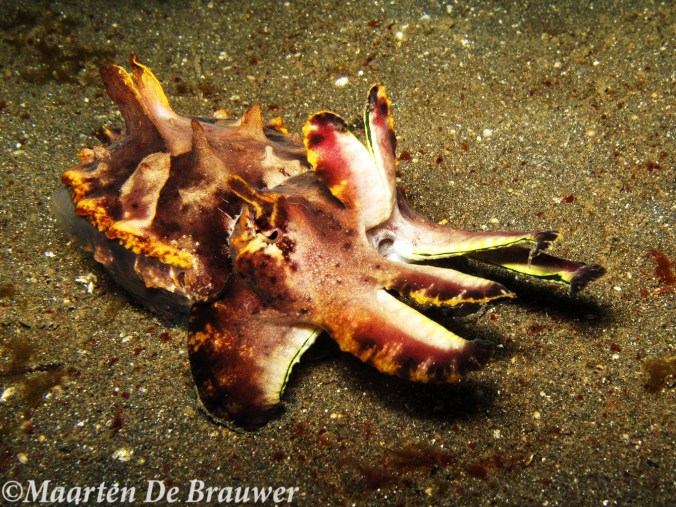
It’s been a long time since I put a critter in the spotlights, so it’s time for one of my personal favourites: the Flamboyant Cuttlefish! I am definitely not the only one to like this amazing little animal, for most divers it is high in the top 10 of critters to see. With good reason as well, Flamboyant Cuttlefish are one of the most beautiful and intriguing inhabitants of sandy dive sites.

flamboyant-cuttlefish2

Flamboyant Cuttlefish (Metasepia pfefferi) striking a pose

The small cephalopod many divers call “Flamboyant Cuttlefish” are in fact two species: the Flamboyant Cuttlefish (Metasepia pfefferi) and the Paintpot Cuttlefish (Metasepia tullbergi). The first one lives in Malaysia, Indonesia, Papua New Guinea and the north of Australia. The Paintpot Cuttlefish is found further north, from the Gulf of Thailand all the way up to southern Japan. Both species are classic muck dive critters, they only occur on muddy or sandy bottoms, so you will have to move away from coral reef to encounter them.

flamboyant-cuttlefish3So why does this animal deserve the effort of searching sandy plains for days on end, in the hope catching a glimpse of it? To start with (the name is a bit of a give-away) they are very flamboyant critters. We are talking yellows, pinks, blacks and whites, all at once! If that wasn’t enough, they often change their colours into “traveling waves”, even more so than normal cuttlefish or octopuses. From my experience, smaller Flamboyant Cuttlefishes have the brightest colours and make the most extravagant displays. When I write small, I do mean really small: adults do not grow much bigger than 8cm. They ideally sized Flamboyant Cuttlefish for the best colour-show  would be around 3-5 cm!

If finding an animal that size seems difficult, you might also want to consider the following. When they are not disturbed, hunting, or mating, Flamboyant Cuttlefish are anything but flamboyant. In their “standard” state, they blend in perfectly with their background, so they will be a mottled grey, brown, or black. For this reason some divers or photographers are tempted to disturb the animal to better see its colours. It is obvious that this is a bad idea, as it will stress out the cuttlefish. Be patient  instead, observe it for a while and you might even be rewarded by seeing it hunt small shrimp, lay eggs, or even mate!

Another thing that is special about them is that they do not swim, but walk across the bottom. To do so they use two of their arms and an adaptation of their mantle. They can swim, but only do so when they’re startled and over short distances. I could easily spend an entire dive watching these guys wander across the seafloor, little blobs of colour on a quest to eat as many shrimp as possible. It might be because of the awkward way they walk, but I always imagine them to be mildly grumpy animals. A bit like an old man with stiff joints who can’t walk that well, grumbling to himself about how the terrible weather…

flamboyant-cuttlefish4

A juvenile Flamboyant cuttlefish (M. pfefferi) walking across the rubble

An interesting mystery surrounding these animals is whether or not they are toxic. Their colours would suggest some form of aposematic colouration, in the same way nudibranchs advertise their toxicity with bright colours. Some authors have even suggested flamboyant cuttlefish might mimic nudibranchs such as the Ocellate Phyllidia (Phyllidia ocellata). I have however, not read a single bit of conclusive evidence of this. It seems to be one of these “facts” people have assumed, written about and then it just got copied. To date there seem to be no papers out their describing whether or not Flamboyant Cuttlefish really are toxic, and which toxin they would produce. If anyone would have come across that information, I would be very grateful if you could share it with me and the rest of the world.

As is often the case with small critters, we don’t know very much about them. But that doesn’t have to stop us enjoying looking at them. Which is why I couldn’t resist adding a video of one of these guys. The title is a bit too sensational, but the footage is great, enjoy!